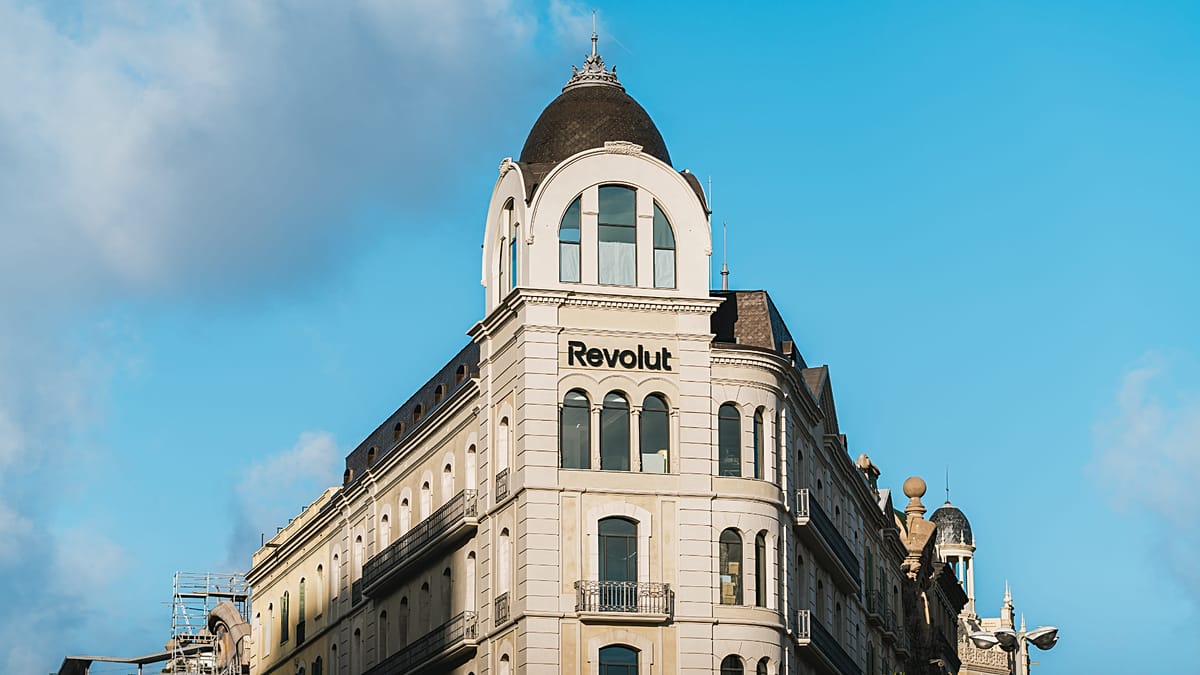
Revolut, the London-headquartered fintech giant, is taking a significant step beyond its digital origins by opening its first permanent physical store in Barcelona. The company confirmed the plans exclusively to Euronews, marking a strategic pivot as digital-first financial firms seek to build trust through physical presence.
“We chose Barcelona as the place to pilot our physical stores because it combines local density, global relevance, tourism and innovation,” a spokesperson told Euronews Business. The store is intended to engage directly with consumers and make financial technology more accessible, though the company stressed it will “by no means be a traditional bank branch” but rather a “high-visibility, immersive space.”
The exact location and the specific services to be offered on-site have not been disclosed. The project remains in early stages, with the opening timeline dependent on construction progress. Revolut said it is keen to complete the project soon but could not confirm whether the store will open this year.
From Digital App to Physical Presence
Founded in 2015 by Nikolay Storonsky and Vlad Yatsenko, Revolut initially offered multi-currency accounts and instant money transfers. It has since expanded into loans and broader banking services, positioning itself as one of Europe’s leading digital banking platforms. The company now serves around 70 million customers worldwide and is Europe’s most valuable start-up.
The move into physical retail comes as Revolut reports record 2025 results: revenue rose 46% and profit before taxes increased 57%, driven by higher customer fees and strong growth in lending. Its loan portfolio grew 120% over the year. “2025 was another landmark year. We have built a diversified, resilient business that is profitable at scale, providing the foundation for our next phase of growth,” co-founder and CEO Nik Storonsky said in a statement.
Revolut is pursuing banking licences in multiple countries as part of its global strategy. It secured UK banking status this year and is targeting approvals in France and the United States. Across Europe, France, Spain, and Poland are among its strongest markets, with more than 30% of adults opening an account in the past three years.
In its outlook for 2026, Revolut reaffirmed a £10bn (€11.6bn) investment plan over five years, including 1,000 new jobs in the UK. The company expects to reach 100 million customers by mid-2027.
Barcelona as a Strategic Hub
Barcelona is already a key European city for Revolut. The company plans to open a new office there and hire 300 people by 2028, bringing total local staff to around 1,000. It also plans to open a new office in Madrid by the end of the year, with a further 500 hires expected by 2028. The city’s mix of local density, global relevance, tourism, and innovation made it the natural choice for the pilot store.
The physical store is part of a broader trend among fintech firms to build trust through brick-and-mortar presence. As Europe's AI Dilemma: Can the EU Keep Its Industrial Giants at Home? highlights, European tech companies are increasingly balancing digital innovation with physical engagement to compete globally.
Investors are closely watching Revolut’s plans for an initial public offering (IPO). The Financial Times reported last week that Revolut is aiming for a valuation of up to $200bn (€170bn) in a stock market listing, though this is not planned before 2028. The company’s expansion in Spain, including the Barcelona store and new offices, signals its commitment to the European market.
Barcelona itself has been a focal point for debates on overtourism and urban planning. As Athens Mayor Proposes Hotel Permit Freeze to Avoid 'Barcelona-Style' Overtourism notes, the city’s popularity has prompted other European capitals to consider similar measures. Revolut’s choice of Barcelona underscores the city’s enduring appeal as a hub for innovation and global business.
The store’s opening is a milestone for Revolut and for the broader fintech sector, demonstrating that even the most digital-native companies see value in physical spaces. Whether this model will be replicated in other European cities remains to be seen, but for now, Barcelona is leading the way.