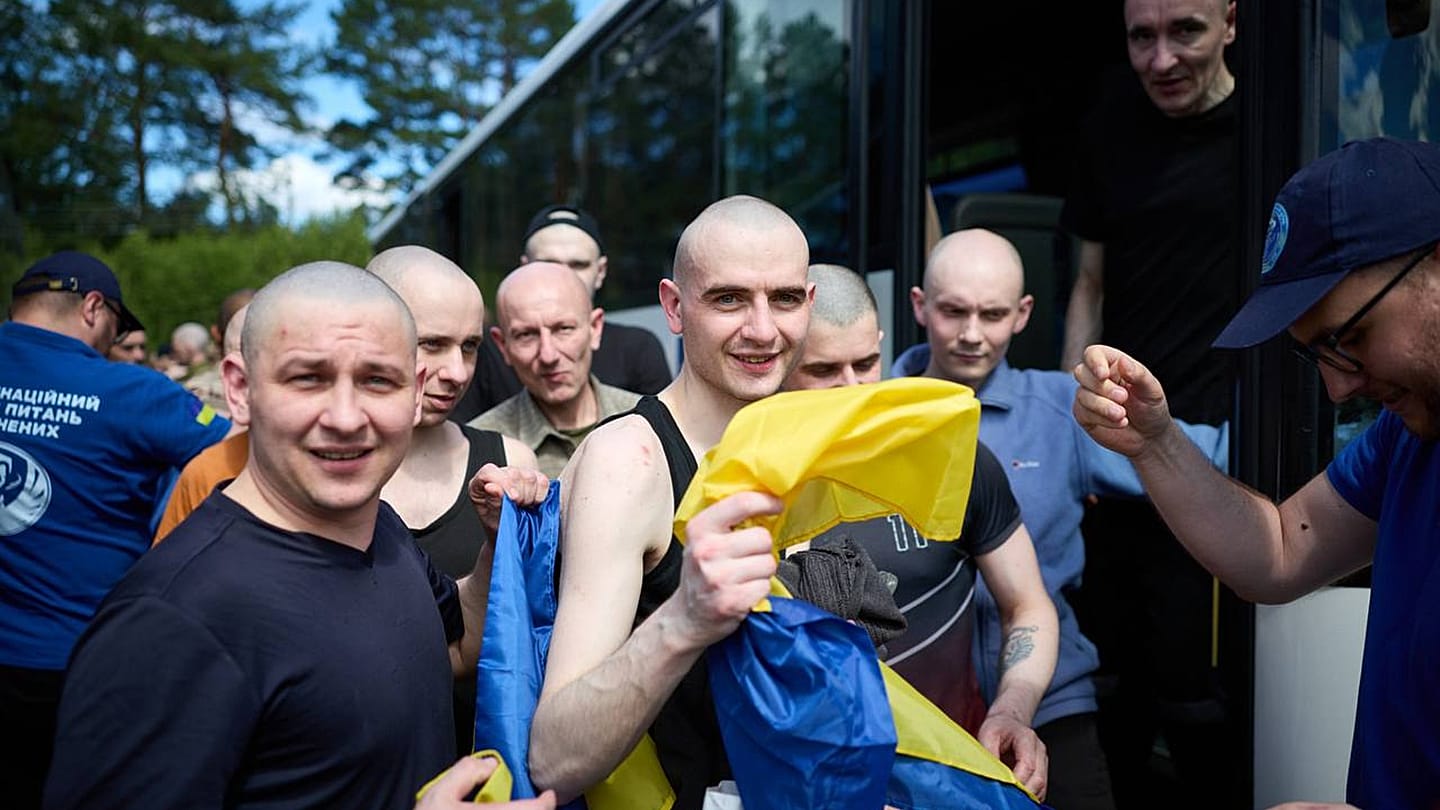
In the latest round of prisoner exchanges between Moscow and Kyiv, Russia and Ukraine each handed over 160 soldiers on Wednesday, bringing home fighters who had been in captivity since the early stages of the full-scale invasion. The swap, mediated by the United Arab Emirates, marks one of the larger exchanges in recent months, though far from the largest since the war began in February 2022.
Ukrainian officials confirmed that the returning soldiers include members of the National Guard, border guards, and armed forces, many of whom were captured during the first weeks of the conflict, particularly in the southern and eastern regions. Russian authorities similarly stated that their servicemen were being repatriated and would receive medical and psychological support.
The exchange comes amid a broader diplomatic push by the UAE, which has positioned itself as a neutral broker in the conflict, facilitating several previous swaps. Abu Dhabi's role has been notable for its ability to maintain channels with both capitals, even as Western sanctions and military aid to Ukraine have deepened the rift between Russia and NATO countries.
Ongoing Humanitarian Efforts
Prisoner swaps have been one of the few areas of sustained cooperation between Ukraine and Russia since the war's onset. Both sides have periodically exchanged lists of captives, with the largest single swap occurring in September 2022, when over 200 prisoners were released on each side. The process is often painstaking, involving negotiations through intermediaries such as the UAE, Saudi Arabia, and Turkey.
Ukraine's Coordination Headquarters for the Treatment of Prisoners of War reported that the latest exchange was the result of weeks of behind-the-scenes talks. The released Ukrainian soldiers are expected to undergo rehabilitation in Kyiv and other cities before being reintegrated into military service or civilian life.
Meanwhile, the war continues to exact a heavy toll on civilians. On the same day as the swap, a Russian missile and drone attack struck the city of Zaporizhzhia, setting an office building ablaze and injuring at least nine people. The attack underscores the persistent threat to urban centers even as diplomatic efforts inch forward on humanitarian issues. For more on the situation in Zaporizhzhia, see our earlier report: Russian Missile Strike Sets Office Ablaze in Central Zaporizhzhia, Nine Injured.
The prisoner exchange also highlights the broader European context of the conflict. The European Union has been a key backer of Ukraine, providing billions in financial and military aid. In recent weeks, the EU released a €3 billion loan to Ukraine as part of a larger package, and discussions continue on using frozen Russian assets to fund reconstruction. For details on the latest EU financial support, see: EU Releases €3 Billion Loan to Ukraine as US-Iran Nuclear Talks Falter.
However, European unity on Ukraine is not without cracks. A proposed EU ban on Russian combatants has stalled as France and Italy raised legal objections, reflecting the delicate balance between supporting Kyiv and maintaining legal norms. For more on this, read: EU Ban on Russian Combatants Stalls as France and Italy Raise Legal Objections.
Beyond the EU, the United Kingdom has also reaffirmed its commitment to Ukraine. Foreign Secretary David Lammy recently stated that UK foreign policy will maintain its course on Ukraine and EU ties after Prime Minister Keir Starmer's government, signaling continuity in London's support. For more, see: Lammy: UK Foreign Policy to Stay Course on Ukraine and EU Ties After Starmer.
The prisoner swap, while a humanitarian bright spot, does little to alter the broader trajectory of the war. Both sides remain entrenched in a grinding conflict of attrition, with no immediate prospects for a ceasefire or peace negotiations. Ukraine has launched a 40-day campaign to force Russia to negotiate, but Moscow has shown little willingness to compromise on its core demands.
As the war enters its third year, the human cost continues to mount. Thousands of prisoners remain in captivity on both sides, and families await news of their loved ones. Each exchange brings relief to a few, but the path to a comprehensive resolution remains elusive.