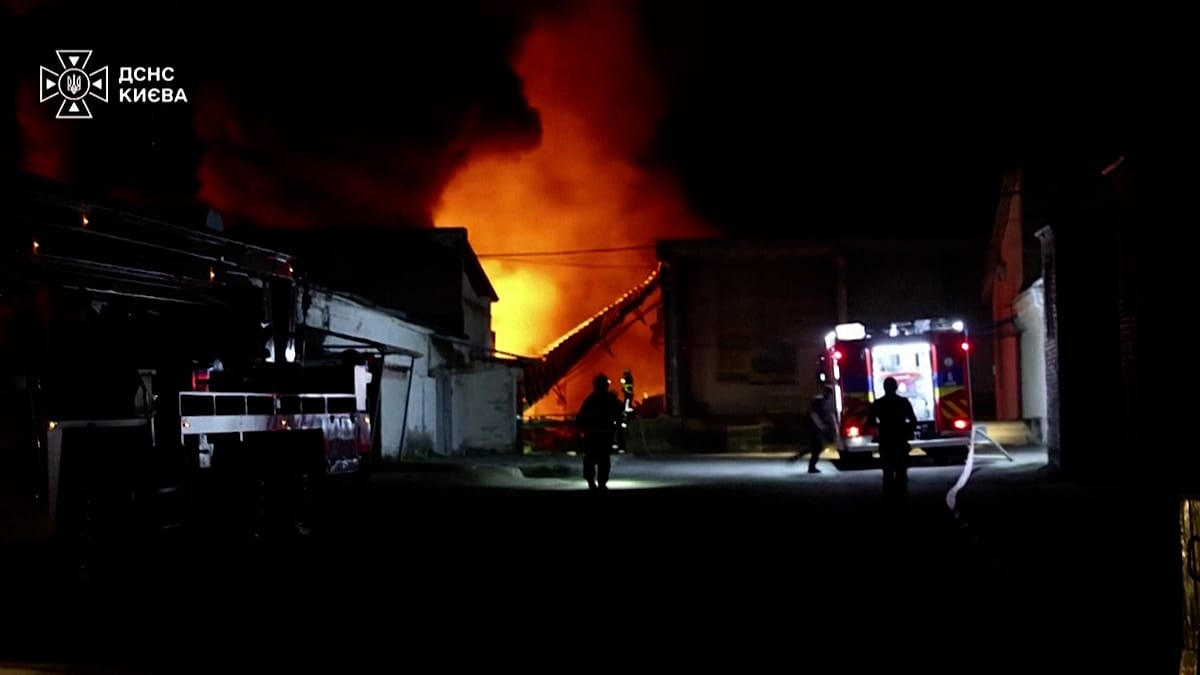
A wave of Russian missiles and drones swept across Ukraine overnight, killing at least nine people and wounding dozens more, according to regional authorities. The attacks targeted the capital Kyiv, the southeastern city of Zaporizhzhia, and the Dnipropetrovsk region, marking one of the heaviest bombardments in recent weeks.
In Kyiv, debris from intercepted drones fell on residential districts, sparking fires and damaging apartment blocks. Mayor Vitali Klitschko reported that at least two people were killed in the capital, with several others injured. Emergency services worked through the night to extinguish blazes and rescue residents trapped under rubble.
In Zaporizhzhia, a missile strike hit a residential area, killing at least five people, according to the regional governor, Ivan Fedorov. Rescue teams continued searching for survivors into the morning. The city, located near the front line, has been a frequent target of Russian attacks throughout the war.
In the Dnipropetrovsk region, authorities reported two more deaths, including in the city of Dnipro. Governor Serhiy Lysak said that a drone attack damaged infrastructure and residential buildings, and that several people were wounded. The full extent of the damage was still being assessed.
Ukraine's air defences under strain
The overnight barrage involved a combination of cruise missiles and Iranian-designed Shahed drones, launched from multiple directions. Ukraine's air force said it intercepted a significant number of the projectiles, but the sheer volume overwhelmed some defences. The attacks come as Ukraine continues to press its long-range campaign against Russian military targets, including strikes on a space centre and air base.
Ukrainian officials have repeatedly called on Western allies to provide more air defence systems and ammunition. President Volodymyr Zelenskyy, in his nightly address, condemned the attacks as "deliberate terror against civilians" and reiterated the need for faster deliveries of promised support. He also noted that Ukraine's own drone production is increasing, but that missile defence remains a critical gap.
The attacks come amid a broader escalation in cross-border strikes. In recent days, overnight drone and missile attacks have killed 12 people across both Russia and Ukraine, underscoring the war's intensifying tempo. Ukrainian drones have also targeted Russian oil refineries and logistics hubs, contributing to fresh fuel shortages inside Russia.
European leaders have condemned the latest strikes. In Brussels, EU foreign policy chief Kaja Kallas said the bloc is preparing tougher sanctions against Russia this autumn, focusing on energy revenues and evasion networks. The attacks are likely to reinforce calls for more robust military aid to Ukraine, including long-range weapons and additional Patriot systems.
On the ground, the human cost continues to mount. In Zaporizhzhia, residents described waking to explosions and the smell of smoke. "We heard a loud blast and then everything shook," said one local, who asked not to be named. "Our building's windows were blown out. It's terrifying."
Ukraine's emergency services said that rescue operations in all affected areas have concluded, but that the death toll could rise as debris is cleared. The United Nations has documented thousands of civilian casualties since the start of the full-scale invasion, and this latest attack adds to a grim tally.
As the war enters its third year, both sides are locked in a grinding attritional struggle. Ukraine's military has made some gains in the southeast, recapturing 26 settlements in a six-month push, but Russian forces continue to press in the east. The overnight barrage is a stark reminder that the conflict shows no signs of de-escalation.
For now, Ukrainians are left to count the dead and repair the damage, while their leaders appeal for more support from Europe and beyond. The coming weeks will test both the resilience of Ukraine's air defences and the resolve of its allies.