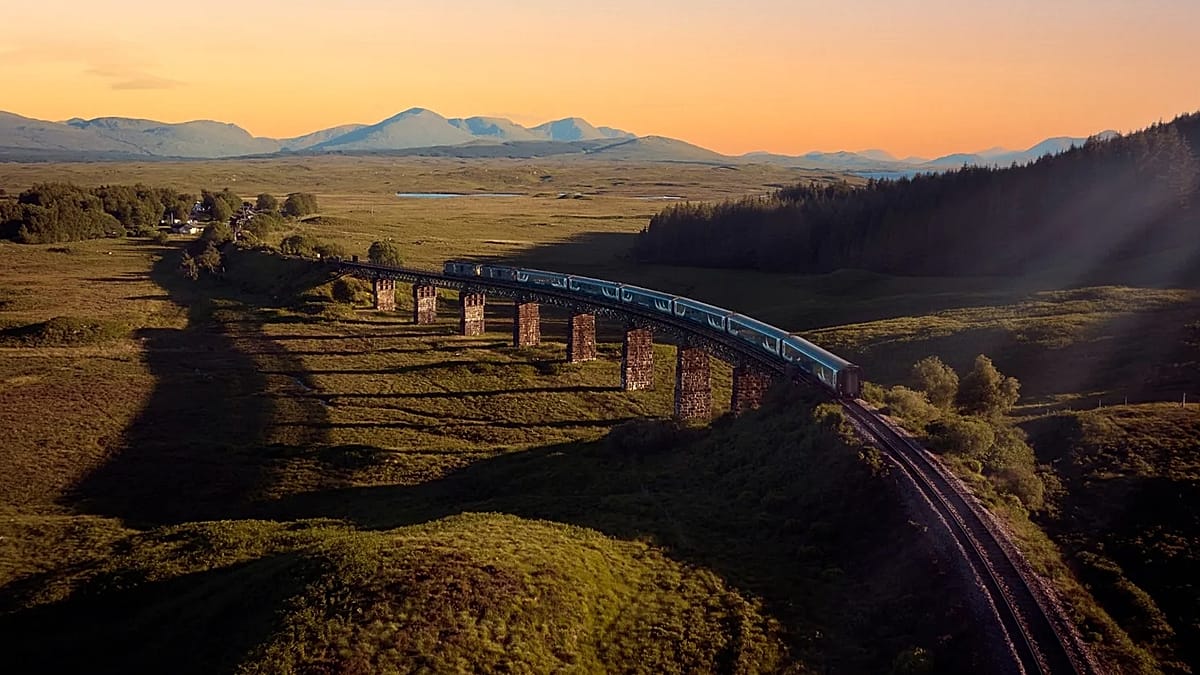
Scotland's iconic Caledonian Sleeper train service could one day run directly to mainland Europe, as a new working group begins investigating the feasibility of extending the route beyond London. The announcement, made on 4 August, brings together Transport Scotland, Scottish Rail Holdings and Caledonian Sleeper to assess the "technical and commercial viability" of such a service, along with the potential obstacles.
Stephen Flynn, Scotland's Cabinet Secretary for Economy, Tourism and Transport, said the working group marks an important step in exploring the possibility. "The establishment of this working group marks an important first step in delivering that commitment and will help ensure the feasibility study is informed by the expertise of our rail partners," he said. "This is an early-stage exercise and the study will focus on understanding the practical, technical and commercial considerations involved. The findings will provide an evidence base to inform any future decisions."
A sleeping giant of European rail?
The Caledonian Sleeper currently operates five routes between London Euston and Scottish destinations, running six nights a week. Services terminate at Glasgow Central and Edinburgh Waverley on the lowland route, and at Fort William, Inverness and Aberdeen on the highland route. The journey from London to Glasgow takes around 7 hours 45 minutes, while Aberdeen is 10 hours 35 minutes and Fort William 12 hours 45 minutes.
If extended to mainland Europe, the service would join a growing network of overnight trains across the continent, where sleeper services have seen a revival in recent years. The prospect of boarding in Edinburgh or Glasgow and waking up in, say, Paris or Brussels is an attractive one for travellers seeking a low-carbon alternative to flying. Indeed, rail already beats air on several key European routes, and a direct sleeper would strengthen that case.
The working group will examine the practicalities of running trains through the Channel Tunnel, which would require approval from authorities in France and the UK, as well as the commercial case for such a service. The study will also consider the technical challenges, including rolling stock compatibility and customs arrangements.
The Caledonian Sleeper's current fleet comprises 40 sleeper coaches, each with six club ensuite rooms featuring twin bunk beds, a private bathroom and shower, with breakfast included. There are also four classic rooms with twin bunks. Fares start from £270 (€314.95) for a Club Solo room and £210 (€244.98) for Classic Solo. The train also includes 11 Club Cars, each seating up to 30 diners, with a galley and seven booths, including space for wheelchair users.
Before boarding, passengers can relax in Caledonian Sleeper guest lounges at London Euston, Fort William and Inverness, where they can freshen up and grab a snack. The service is also pet-friendly, welcoming up to two pets per guest for a cleaning fee of £30 (€34.99) per room per journey.
The move comes as Scotland seeks to enhance its rail connections and promote sustainable travel. A direct link to Europe would not only benefit tourists but also business travellers, potentially boosting economic ties between Scotland and the continent. It would also align with broader EU efforts to expand night train services, as highlighted by initiatives such as the EU's push to strengthen cross-border rail.
However, significant hurdles remain. The Channel Tunnel's safety and security regulations, the need for new rolling stock capable of operating on both UK and European networks, and the commercial viability of a long overnight journey are all factors that could determine the project's fate. The working group's findings, expected in the coming months, will provide the evidence base for any future decision.
For now, the Caledonian Sleeper remains a beloved institution for those travelling between Scotland and London, offering a unique way to traverse the country. But the prospect of waking up in continental Europe is an exciting one that could transform how Scots and visitors alike think about rail travel.