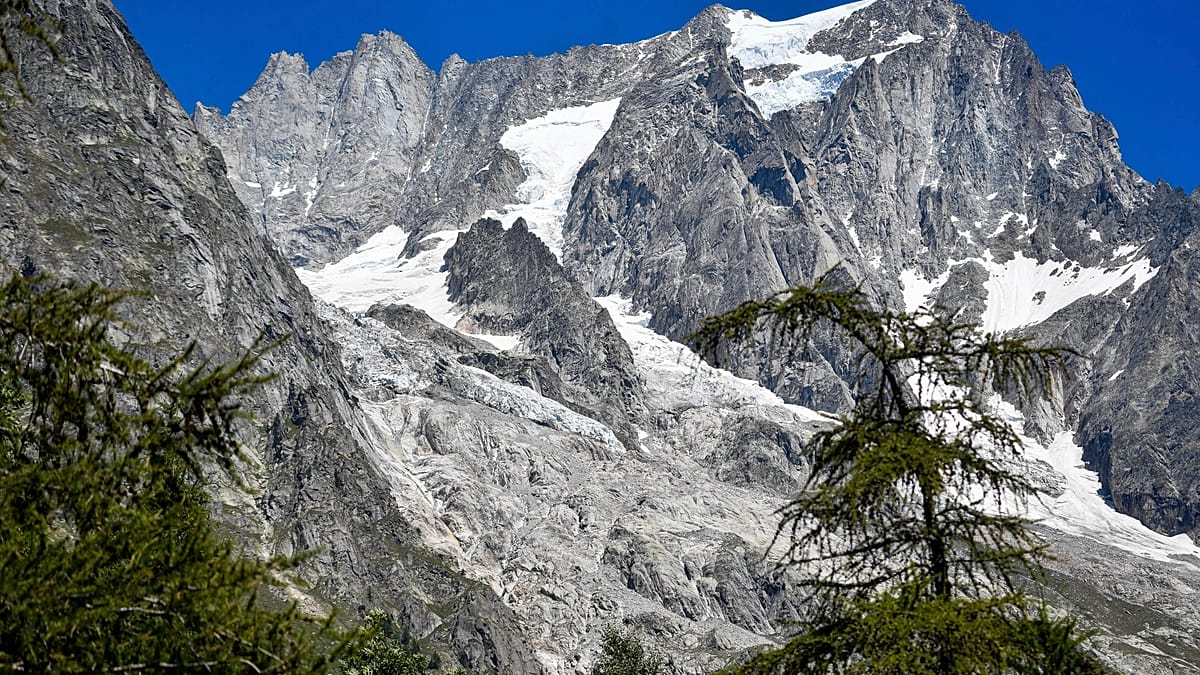
As a second heatwave of 2026 grips parts of Europe, the Bossons Glacier in France’s Chamonix Valley is showing fresh signs of rapid retreat. New aerial images reveal extensive ice loss across the glacier, which descends from the Mont Blanc massif above the popular Alpine resort of Chamonix. Meltwater streams can be seen flowing from the ice, while a large hole that emerged in the glacier's lower tongue in 2025 remains visible.
The Bossons Glacier has long been one of the most recognisable glaciers in the French Alps. In the 1980s, its ice extended to the valley floor, but decades of rising temperatures have led to a dramatic reduction in its size. Scientists say glaciers across the Alps are shrinking at an accelerating pace as climate change drives hotter summers and shorter winters.
The latest heatwave across Europe has increased melting rates, exposing more rock and reducing snow cover that would normally help protect the ice. This event follows a pattern of extreme weather that has seen school closures, train cuts, and alcohol bans across the continent.
Impact on the Alpine Region
The accelerated melting of the Bossons Glacier is not an isolated phenomenon. Across the Alps, from Switzerland to Austria, glaciers are losing mass at an alarming rate. The European Environment Agency has warned that if current trends continue, many Alpine glaciers could disappear by the end of the century.
In Chamonix, the retreat of the glacier has significant implications for local tourism and mountaineering. The town, which relies heavily on summer visitors, is seeing changes in its landscape that affect hiking routes and the safety of climbing paths. The hole in the glacier's lower tongue, now a permanent feature, poses a hazard for those venturing onto the ice.
The heatwave has also had broader societal impacts across France. In Paris, residents have been flocking to the Canal Saint-Martin to cool off, while authorities have imposed restrictions on alcohol sales at events like the Fête de la Musique. Tragically, the heat has also led to deaths, including two young children in a car in southern France and three elderly people in Bordeaux suburbs.
Scientific Perspective
Glaciologists from the University of Grenoble have been monitoring the Bossons Glacier closely. Dr. Marie Dupont, a leading researcher, noted: “The rate of ice loss we are observing is unprecedented in the modern record. The second heatwave in a single year is compounding the damage, as the glacier has not had time to recover from the first.”
The melting of Alpine glaciers contributes to sea-level rise and affects water supplies for millions of people who rely on glacial meltwater for drinking, irrigation, and hydropower. The European Union has invested in renewable energy solutions, such as heat pumps that saved Europe €9.7 billion in gas imports last year, but the pace of climate change continues to outstrip mitigation efforts.
As the heatwave persists, authorities across Europe are urging caution. The French meteorological service has issued red alerts for several departments, and health officials are advising people to stay hydrated and avoid strenuous activity during peak heat hours. The situation underscores the urgent need for coordinated European action on climate adaptation and emissions reduction.