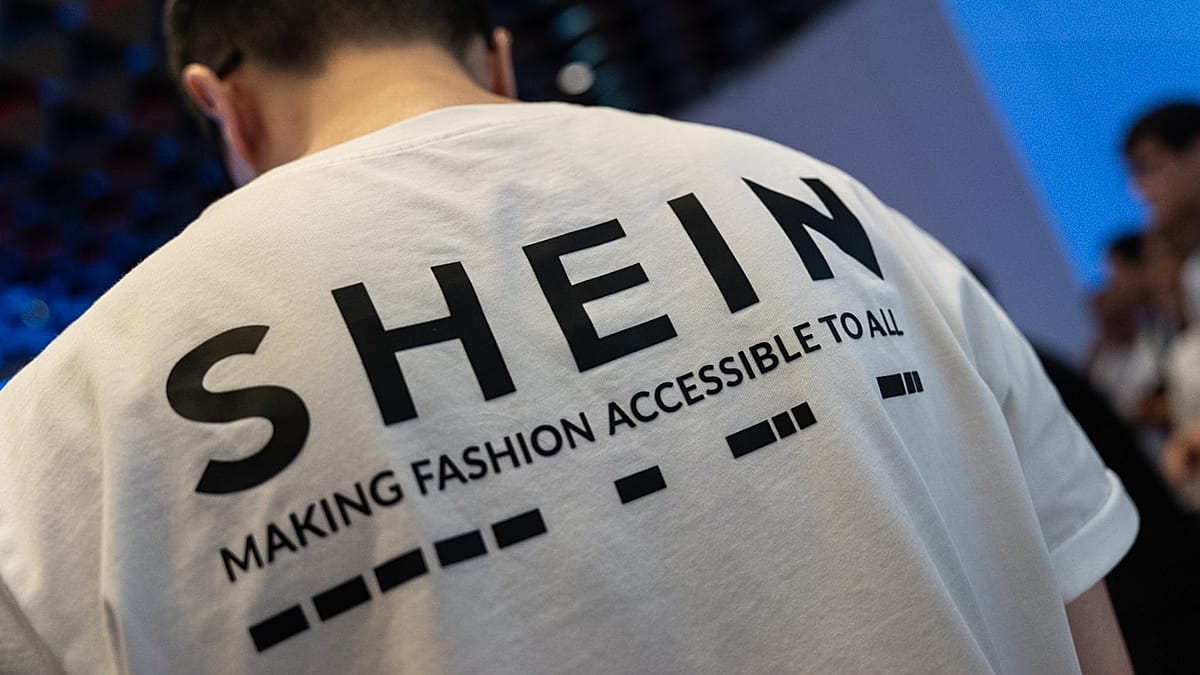
Shares in fast-fashion retailer Shein fell by as much as 10% during their first day of trading on the Hong Kong Stock Exchange on Tuesday, before paring some losses. The debut marks the end of a long and circuitous path to the public markets, after earlier attempts to list in New York and London were abandoned amid regulatory scrutiny.
The company priced its initial public offering at HK$48.56 (€5.33) per share, raising approximately $1.7 billion (€1.46 billion) — one of Hong Kong's biggest share sales this year. But by early trading, the stock had slipped to below HK$44 (€4.83) before recovering slightly.
Shein's listing comes at a difficult time for the company. New tariffs imposed by the United States and the European Union on low-value parcels from China have eroded the cost advantage that underpinned its ultra-fast, affordable fashion model. In addition, rising shipping costs linked to the conflict in Iran have further squeezed margins. The company swung from a profit of $395 million (€340 million) in the first quarter of last year to a loss of $99 million (€85 million) in the same period this year.
Tariffs and logistics pressure
The end of the so-called "de minimis" exemption in the US and the EU has meant that parcels valued below a certain threshold — which previously entered duty-free — are now subject to import duties. This directly affects Shein, which ships most of its products directly from China to consumers in Europe and North America. The EU's recent €3 levy on small parcels has already cut Chinese imports by up to 40%, according to industry data.
"Tariff costs have forced Shein to raise prices, cutting into its main advantage," said Jacob Cooke, CEO of WPIC Marketing + Technologies. Higher logistics costs, driven partly by the war in Iran, have also added to the pressure on the company's low-price business model.
Back to its roots
Shein, pronounced "she-in," was founded in China in 2012 and later moved its corporate headquarters to Singapore in 2021. The company had explored listings in New York and London, but faced increasing scrutiny from regulators in the US, Europe, and Beijing over its Chinese supply chains. That led to a pivot back to Hong Kong, a move that also signals a renewed embrace of its Chinese origins.
"Guangdong is Shein's roots, and the starting point of our journey," founder Sky Xu said in a speech in February. The province's small-batch, fast-response manufacturing model is a key competitive advantage, noted William Ma of GROW Investment Group, adding that such a supply chain system "only exists" in Guangdong.
Shein has also faced other hurdles in Europe. In February, the EU launched a probe into the company focusing on "illegal" products, including alleged child sexual abuse material. In May, Shein acquired San Francisco-based eco-friendly clothing retailer Everlane, a move some analysts questioned as a poor strategic fit.
Hong Kong's IPO boost
At listing, Shein's market value stood at roughly $27 billion (€23.2 billion) — a fraction of its peak valuation a few years ago. "Shein has probably missed its golden listing window due to the shift of momentum toward AI and tariffs, which can affect valuations and profitability," said Gary Ng, senior economist for Asia Pacific at French bank Natixis.
Despite the weak debut, Shein's listing is a welcome boost for Hong Kong, which has been working to solidify its status as a global financial hub after a downturn in 2023. The city's stock exchange has raised more than $40 billion (€34.4 billion) so far this year, and there is a backlog of companies waiting to list, said Lorraine Tan of Morningstar.
Leigh Gui, Shein's chief financial officer, described the listing as "a new starting point" in a short speech at the ceremony. Whether the market agrees remains to be seen, as investors weigh the company's long-term prospects against the mounting cost pressures from tariffs and logistics.