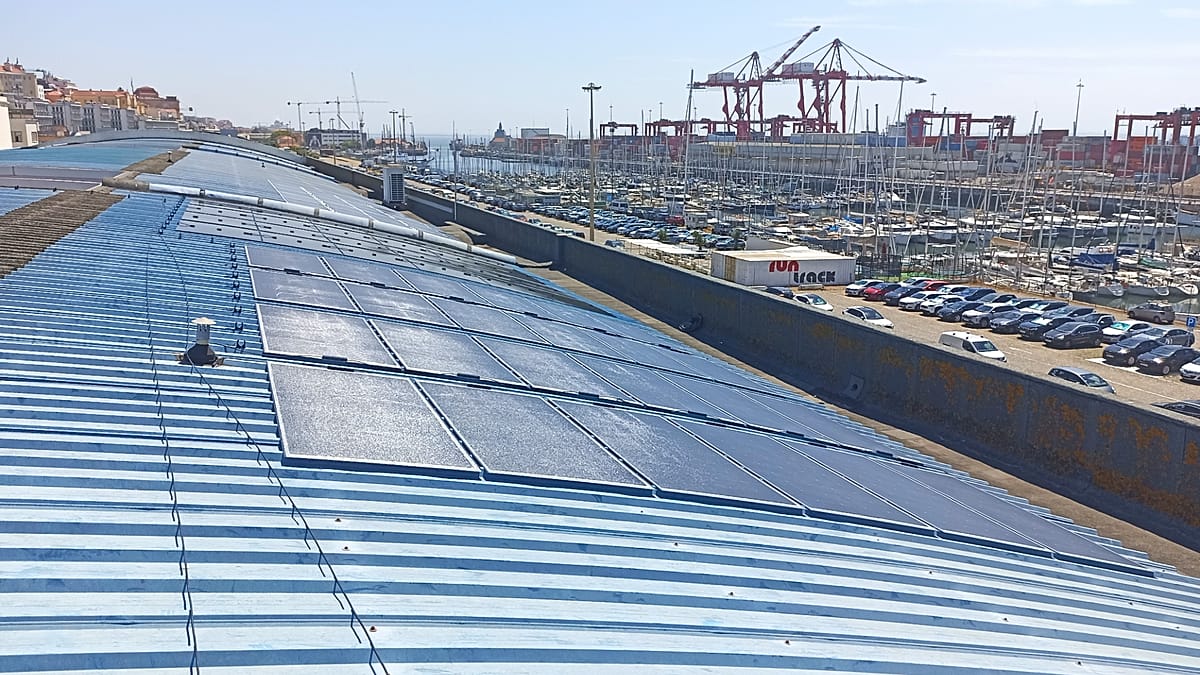
For the first time on record, solar power was the leading source of electricity generation in Portugal during July, according to data from grid operator Redes Energéticas Nacionais (REN). Photovoltaic systems supplied 19% of the country's electricity consumption, edging out hydropower (16%) and wind (13%), with biomass contributing a further 5%.
Renewable sources collectively accounted for 53% of Portugal's electricity use in the seventh month of the year. The milestone underscores a broader shift in the Iberian energy mix, where solar capacity has expanded rapidly in recent years. REN also noted that solar output peaked on 29 June at 13:30, reaching a record 3,800 megawatts (MW).
Renewables dominate the year so far
Looking at the first seven months of 2026, clean energy supplied 68% of Portugal's electricity consumption. Over that longer period, hydropower remains the top source at 27%, followed by wind at 24% and solar at 12%. Biomass held steady at 5%.
Despite the strong performance, both solar and wind productivity in July were below their historical averages, with indices of 0.89 and 0.71 respectively. Hydropower, by contrast, outperformed at 1.26, reflecting favourable rainfall in the spring.
Non-renewable generation covered 13% of the electricity system in July, while the remaining 34% was imported from Spain. This reliance on cross-border flows highlights the interconnected nature of the Iberian grid, a pattern that has become more pronounced as Europe's hydropower faces climate pressures.
Electricity consumption rose by 3% in July compared with the same month last year, and by 3.5% over the January–July period. Natural gas use increased by 4.1% in the first seven months of 2026, with Nigeria and the United States remaining the primary suppliers, accounting for 53% and 33% of imports respectively.
The rise of solar in Portugal is part of a wider European trend, though adoption varies. While countries like Spain and Germany have embraced photovoltaics, others lag in integrating solar infrastructure such as car parks. Portugal's achievement offers a concrete example of how a southern European state can leverage its abundant sunshine to reshape its energy mix.
Analysts note that the shift toward solar is not without challenges. Intermittency requires robust storage and grid flexibility, and the country's reliance on imports from Spain for a third of its electricity in July underscores the need for continued investment in interconnections and domestic capacity.
Still, the July data marks a symbolic turning point. For a country that once depended heavily on imported fossil fuels, having solar as the top power source—even for a single month—signals a tangible transition. As Portugal continues to expand its renewable fleet, such milestones are likely to become more frequent.