On Thursday, 20 August, South Korea staged a nationwide civil defence drill, a key component of the annual Ulchi Exercise. The exercise, which involves government agencies, local authorities, and millions of citizens, is designed to test the country's readiness for a range of national emergencies, including air raids and other potential attacks.
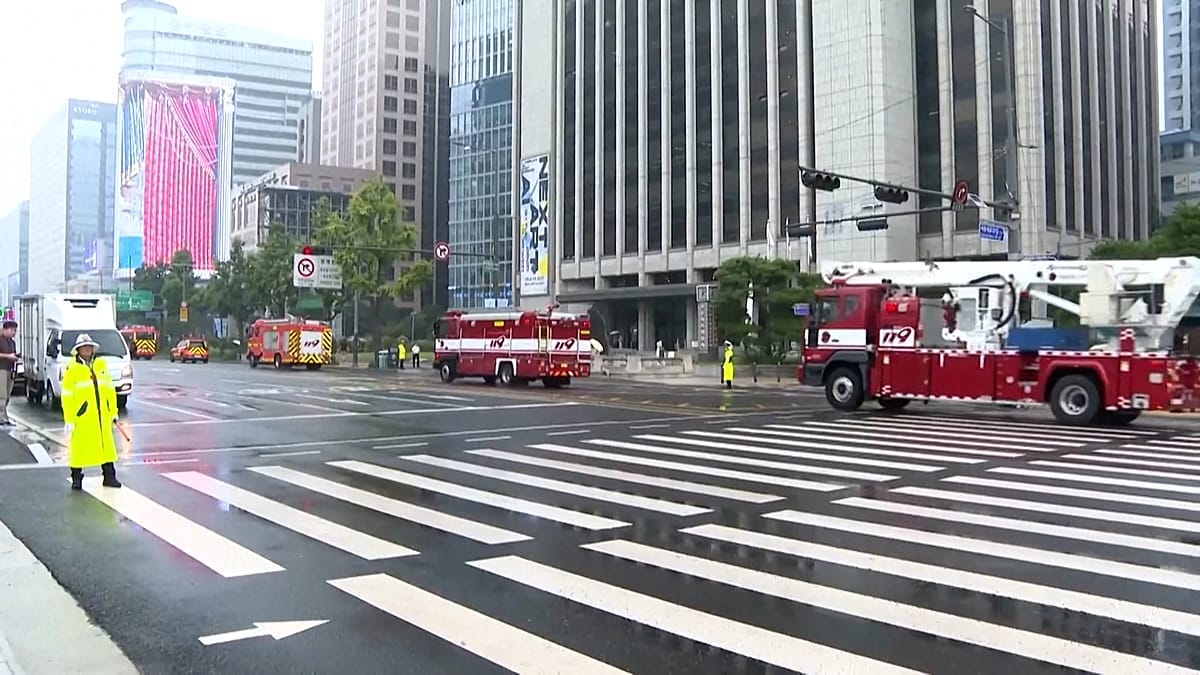
The drill saw sirens wail across Seoul and other major cities, prompting residents to move to designated shelters. In the capital, office workers and shoppers were guided to underground car parks and subway stations, while schools and public buildings conducted their own evacuation procedures. The scenario simulated a sudden attack, with authorities practising emergency communications, casualty management, and the coordination of civil defence volunteers.
The Ulchi Exercise has been an annual fixture in South Korea since 1968, named after the ancient general Ulchi Mundeok. It is traditionally linked with the US-South Korea joint military exercises, which have often been a source of tension with North Korea. However, this year's iteration has been notably scaled back, reflecting a broader trend of reduced US involvement in the region's military manoeuvres.
Washington's decision to cut back on joint exercises has been met with mixed reactions. While some see it as a diplomatic gesture towards Pyongyang, others worry about the impact on deterrence. North Korea has dismissed the reduction as a meaningless gesture, insisting that it will not alter its military posture. The cancellation of amphibious drills, in particular, has raised questions about the readiness of combined forces to respond to a crisis on the Korean Peninsula.
Civil defence in focus
With the military exercises reduced, the civil defence component has taken on greater prominence. The Ulchi Exercise is now seen as a crucial test of the country's ability to function during a national emergency, especially given the dense urban environment of Seoul, where a large portion of the population lives in high-rise apartments and relies on complex infrastructure.
Authorities used the drill to test the effectiveness of the country's shelter system, which includes thousands of designated underground locations. In many districts, residents were instructed to remain in shelters for a set period, while emergency services simulated the treatment of casualties and the decontamination of affected areas. The exercise also involved the activation of emergency broadcasting systems, with messages sent to mobile phones and public address systems.
For many South Koreans, the drill is a routine part of life, but it carries a deeper significance given the unresolved conflict with the North. The Korean War ended in 1953 with an armistice, not a peace treaty, leaving the two Koreas technically at war. The capital, Seoul, lies just 50 kilometres from the demilitarised zone, making it one of the most exposed major cities in the world to a potential artillery or missile attack.
The exercise also comes at a time of heightened regional uncertainty. The US has been shifting its strategic focus towards other global hotspots, and its commitment to the defence of South Korea has been a subject of debate. The cancellation of amphibious drills due to strain from the Iran conflict has further fuelled concerns about the reliability of the US security umbrella.
Despite these worries, South Korean officials have emphasised that the civil defence drill is not a reaction to any specific threat, but rather a routine exercise to maintain readiness. "We must be prepared for any contingency," said a spokesperson for the Ministry of the Interior and Safety. "The Ulchi Exercise ensures that our citizens and authorities know exactly what to do in an emergency."
The drill is also an opportunity to test the resilience of critical infrastructure, including power grids, communication networks, and transportation systems. In a crisis, these systems would be under immense strain, and the exercise helps identify vulnerabilities that could be exploited by an adversary.
For European observers, the situation on the Korean Peninsula offers a stark reminder of the importance of civil defence, a topic that has gained renewed attention in Europe following Russia's invasion of Ukraine. The Ukrainian resistance has demonstrated how civilian preparedness can play a role in national defence, and many European countries have begun to revisit their own civil defence plans.
As South Korea continues to navigate a complex security environment, the Ulchi Exercise remains a vital tool in its national defence strategy. While the scale of military drills may fluctuate with diplomatic winds, the commitment to protecting its citizens remains unwavering.