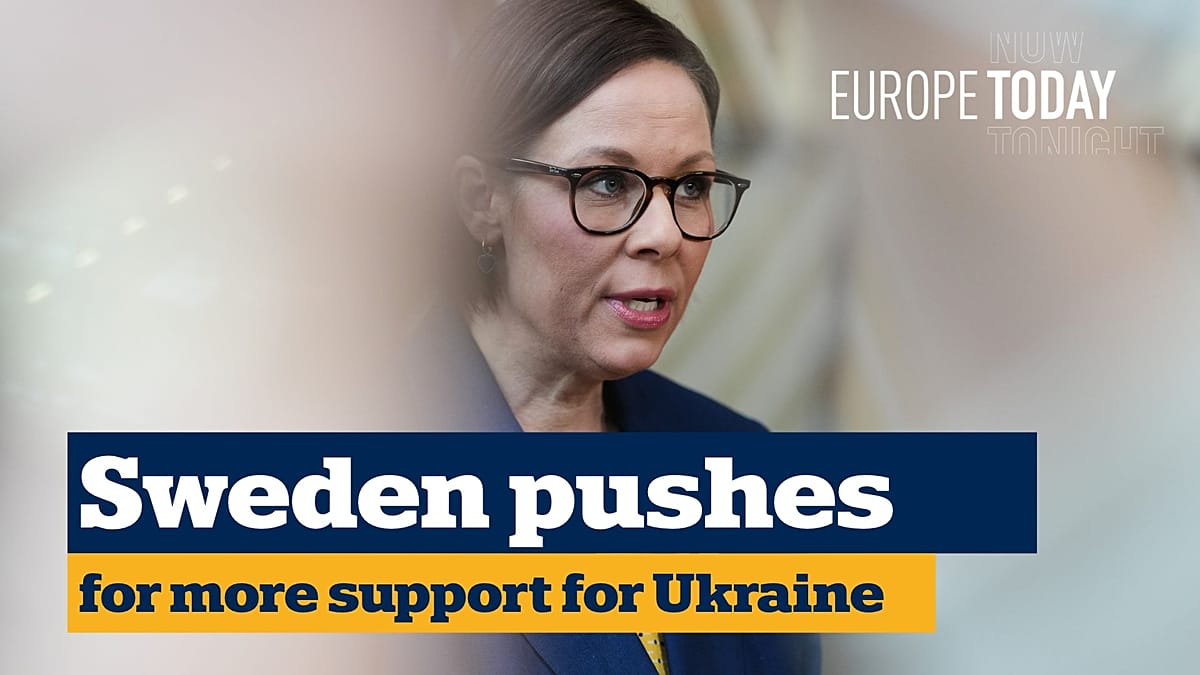
As European Union foreign ministers gathered in Brussels to coordinate their approach to Ukraine, Sweden used the occasion to press for a more assertive continental strategy. Maria Malmer Stenergard, Sweden's foreign minister, argued that the bloc must move beyond rhetorical support and deliver concrete military assistance, particularly air defence systems, while tightening sanctions against Moscow and finding legal ways to use frozen Russian assets to finance Kyiv's reconstruction and defence.
“We need to be clear that Ukraine's fight is Europe's fight,” Stenergard said in an interview, reflecting a growing sentiment among member states that the EU cannot afford to be sidelined in the negotiations that will shape the continent's security architecture. Her comments come as Washington and Moscow signal a possible return to direct talks, raising fears in European capitals that the EU could be reduced to a bystander in decisions that directly affect its eastern flank.
Europe's search for a single voice
The urgency was echoed at the informal European summit in Dublin last week, where Latvia's Prime Minister Andris Kulbergs warned that Vladimir Putin is playing tactical games and that Europe must display greater strength and confidence. “We have to show that we are not afraid, that we are united, and that we are ready to defend our values,” Kulbergs told Shona Murray, a European Pulse correspondent. His remarks underline the frustration among frontline states that the EU's response has been reactive rather than proactive.
The challenge of forging a common position is not new. The EU has often struggled to speak with one voice on foreign policy, and Ukraine is no exception. While some member states, particularly those in the east, advocate for maximum pressure on Moscow, others remain cautious about escalating tensions or jeopardising energy supplies. The Dublin summit was an attempt to bridge those divides, but the outcome was a declaration of intent rather than a concrete plan.
Meanwhile, the diplomatic landscape is shifting. Recent reports suggest that Moscow has softened its stance on the EU's role in peace negotiations, a development that could open a window for European participation. However, the EU's own internal divisions—highlighted by the expansion of the peace team to include Italy and Poland at the expense of the bloc's top diplomat, Kaja Kallas—suggest that coherence remains elusive.
Cyber threats on the rise
Beyond the battlefield, Europe is facing a less visible but equally dangerous assault: a wave of cyberattacks targeting government institutions, critical infrastructure, and businesses. Juhan Lepassaar, Executive Director of the EU Agency for Cybersecurity (ENISA), described the threat landscape as increasingly sophisticated, with state-backed hackers and criminal groups exploiting vulnerabilities in Europe's digital backbone.
“We are seeing a clear increase in the number and severity of incidents,” Lepassaar said. “Russia and other hostile actors are using cyber as a tool to test our resilience and to create instability.” The attacks range from ransomware campaigns to espionage and disinformation, often targeting energy grids, transport networks, and financial systems. The EU has responded with new legislation and a strengthened mandate for ENISA, but Lepassaar stressed that member states must invest more in defensive capabilities and information sharing.
The threat is not hypothetical. In recent months, several European countries have reported cyber incidents linked to Russian intelligence services, including attempts to disrupt undersea cables that carry the continent's internet traffic. The UK has proposed 14-year jail terms for sabotage of undersea cables, but experts argue that more physical redundancy is needed to ensure resilience.
Who pays for Ukraine's defence?
As Ukraine faces a new political test, with presidential elections looming and the war entering a critical phase, the question of financing is becoming more urgent. Czech MEP Danuše Nerudová of the European People's Party told European Pulse that the EU must decide who is prepared to pay for Kyiv's defence and how far the bloc should go in confronting Moscow.
“We cannot rely on the United States forever,” Nerudová said. “Europe has the economic weight to support Ukraine, but it requires political will and a clear strategy.” She called for a dedicated EU fund for Ukraine's defence, financed through a combination of member state contributions and revenues from frozen Russian assets. The idea has gained traction in Brussels, but legal and political hurdles remain.
The debate over burden-sharing is not just about money; it is about credibility. If Europe wants a seat at the negotiating table, it must demonstrate that it can back its words with action. As the US envoys push for a European role in the talks, the EU has an opportunity to shape the outcome. But time is running out, and the cost of inaction is rising.
For now, the EU's foreign ministers are expected to agree on a new package of military aid, including air defence systems and ammunition, but the details remain contentious. Sweden's push for tougher sanctions and the use of frozen assets is likely to face resistance from some member states, but the momentum is clearly in favour of a more robust European stance.
As the war in Ukraine enters its third year, the continent is at a crossroads. The decisions made in the coming weeks will determine not only the fate of Ukraine but also the future of European security. The question is whether Europe can overcome its internal divisions and act as a united force—or whether it will remain a spectator in its own neighbourhood.