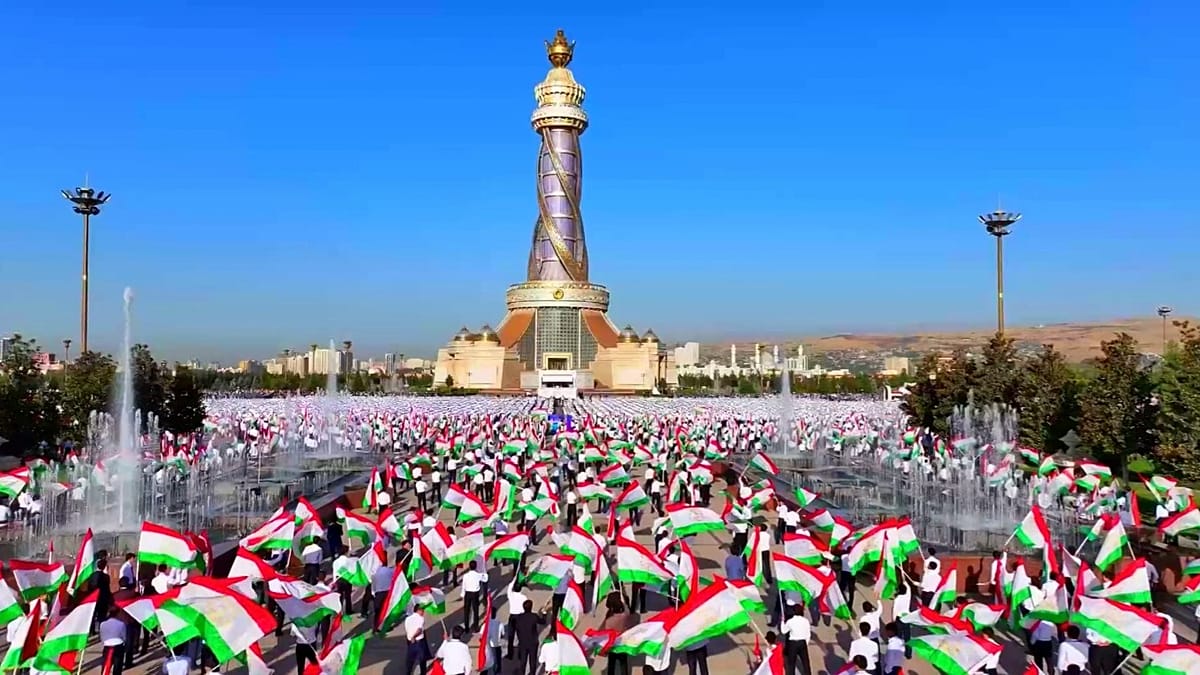
Tajikistan marked 35 years of independence this week with parades, concerts, and official ceremonies across the Central Asian nation. But beyond the festivities, the anniversary served as a platform for President Emomali Rahmon to lay out a forward-looking agenda focused on economic transformation and global engagement.
In a speech delivered in Dushanbe, Rahmon emphasised the need to shift from a primarily agrarian economy to one driven by industry and technology. He highlighted green energy, modern infrastructure, and workforce development as the pillars of this transition. "Our future depends on our ability to innovate and to harness our natural resources sustainably," he said, according to state media.
Hydropower at the core
Central to Tajikistan's economic strategy is hydropower. The country possesses some of the largest untapped hydroelectric potential in the world, and the flagship Rogun Dam—currently under construction—is expected to more than double national electricity generation once fully operational. Government officials described energy security as a top priority, noting that reliable power supply is essential for attracting foreign manufacturers and data centres.
Investors at the anniversary events echoed this optimism. Several pointed to Tajikistan's strategic location as a gateway between China, South Asia, and the Middle East, and to its abundant water resources as a competitive advantage in an era of climate change. "The Rogun Dam is not just an energy project; it is a catalyst for regional cooperation and economic diversification," said one European energy consultant attending the celebrations.
International ambitions
The anniversary also provided an opportunity to showcase Tajikistan's efforts to strengthen its international relationships. Rahmon met with foreign delegations, including representatives from Russia, China, and the European Union, to discuss trade, investment, and security cooperation. Officials stressed that Tajikistan is open for business and eager to play a more prominent role in regional affairs.
This push for a stronger international presence comes at a time when Central Asia is gaining renewed attention from global powers. The EU has been deepening ties with the region, and Tajikistan's neighbours—such as Kazakhstan and Uzbekistan—have already attracted significant European investment. Dushanbe hopes to follow suit, particularly in sectors like renewable energy, mining, and digital infrastructure.
However, challenges remain. The country's economy is still heavily reliant on remittances from migrant workers in Russia, and its business climate is often cited as difficult due to corruption and bureaucratic hurdles. Analysts say that real progress will depend on concrete reforms, not just celebratory announcements.
For now, the mood in Dushanbe is one of cautious optimism. The 35th anniversary was a moment to reflect on the achievements since the Soviet era—stability, national identity, and a growing middle class—and to set the stage for the next decade. As one local observer put it, "We have come a long way, but the journey is just beginning."
With the Rogun Dam set to come online in phases over the coming years, and with renewed diplomatic outreach, Tajikistan is positioning itself as a rising player in Central Asia. Whether it can translate its hydroelectric potential into broad-based prosperity remains to be seen, but the direction is clear.