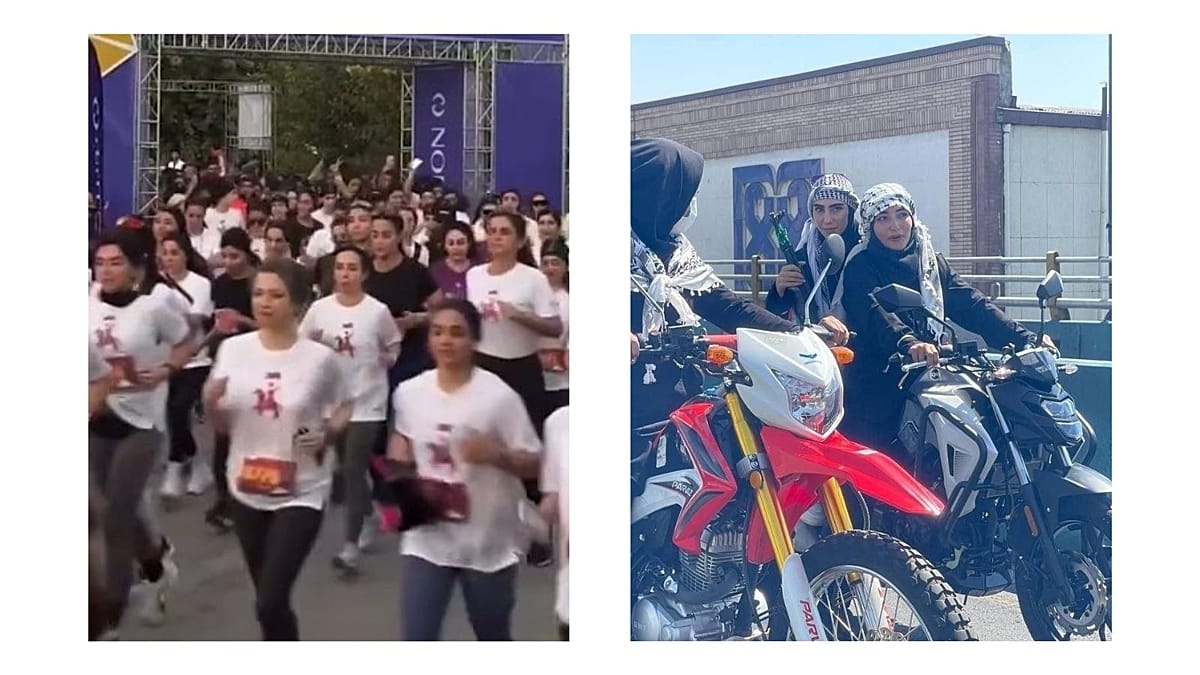
On Friday morning, Tehran presented two irreconcilable images of Iranian womanhood. In one corner of the capital, female runners took to the track for a 10-kilometre marathon, many without the mandatory headscarf, their hair uncovered as they ran. Just a short distance away, tens of thousands of women in chadors and hijabs marched in a state-organised military rally, some cradling machine guns, in a display of loyalty to the Islamic Republic.
The contrast could hardly have been sharper. The marathon, held at Velayat Park, saw women compete in their own division, starting at 5:30 AM, followed by the men's race at 7:00 AM. Photographs from the event showed participants in standard athletic wear—long-sleeved tops and track pants—but with no head coverings, a direct challenge to the country's compulsory hijab law. The race proceeded despite the cancellation of a similar event in Kerman days earlier, where seminary officials had objected to co-ed participation and cited 'religious values'.
Meanwhile, the 'Jan-Fada-ye Iran' (Iran's Self-Sacrificers) rally drew an estimated 313,000 people, according to state media. The procession, which began at Imam Hossein Square and moved toward central Tehran, featured Basij forces, military hardware, drones, and senior officials, including President Masoud Pezeshkian. Among the striking images was a woman in a full chador, a baby wrapped in a keffiyeh perched behind a machine gun—a potent symbol of the regime's militarised mobilisation.
The rally was part of a campaign launched after the outbreak of armed conflict, with officials claiming over 32 million registrations, roughly 35% of Iran's population. Of these, they say 32% are women. These figures, however, come solely from the organisers and cannot be independently verified.
The marathon itself has drawn legal scrutiny. The Tehran Prosecutor's Office announced a judicial case against the organisers over an alleged 'failure to observe legal and religious standards', according to HRANA (Human Rights Activists News Agency). This follows a similar backlash in December 2025, when images of unveiled women running in a Kish Island marathon prompted conservative outrage and legal action.
These events unfold against a backdrop of heightened political and security tensions. Since the start of US and Israeli military strikes on February 28, Iran has seen a crackdown on dissent, with reports of detentions and executions. Yet, four years after the 'Woman, Life, Freedom' movement, defiance has not waned. An increasing number of women openly refuse to comply with the hijab mandate, even as the regime attempts to project unity.
Notably, even within pro-government rallies, there have been signs of change. Images from recent events show some women attending without headscarves or wearing them loosely, suggesting that the strict dress code is no longer universally enforced even among regime supporters. Some establishment voices have argued that women who support the Islamic Republic should still be considered loyalists, even if they do not fully adhere to the hijab rules.
The juxtaposition in Tehran on Friday was a microcosm of a society in flux. On one side, a state-sponsored display of military might and ideological conformity; on the other, a sporting event that offered a glimpse of a different future. The paradoxes are stark, and they are playing out against a backdrop of war and repression.
For European observers, the scenes in Tehran resonate with broader questions about women's rights and state power. The contrast between the marathon and the rally is a reminder that the struggle over women's bodies and autonomy is not confined to any one region. As women in Europe's health sector continue to face pay disparities, and studies show women receive less invasive care for the same conditions, the Iranian example underscores how gender equality remains a contested issue globally.
The events in Tehran also come at a time of heightened military tensions, with Belarus launching military drills near NATO's Suwałki Gap and the US redirecting military aid from Europe and the Middle East. The Iranian regime's mobilisation, while domestic, is part of a broader pattern of militarisation that has implications for regional stability.
As Tehran's streets reveal two worlds, the question remains: how long can the regime maintain its grip while a significant portion of its population, particularly women, visibly rejects its core tenets? The marathon and the rally were not just events; they were statements about the future of Iran.