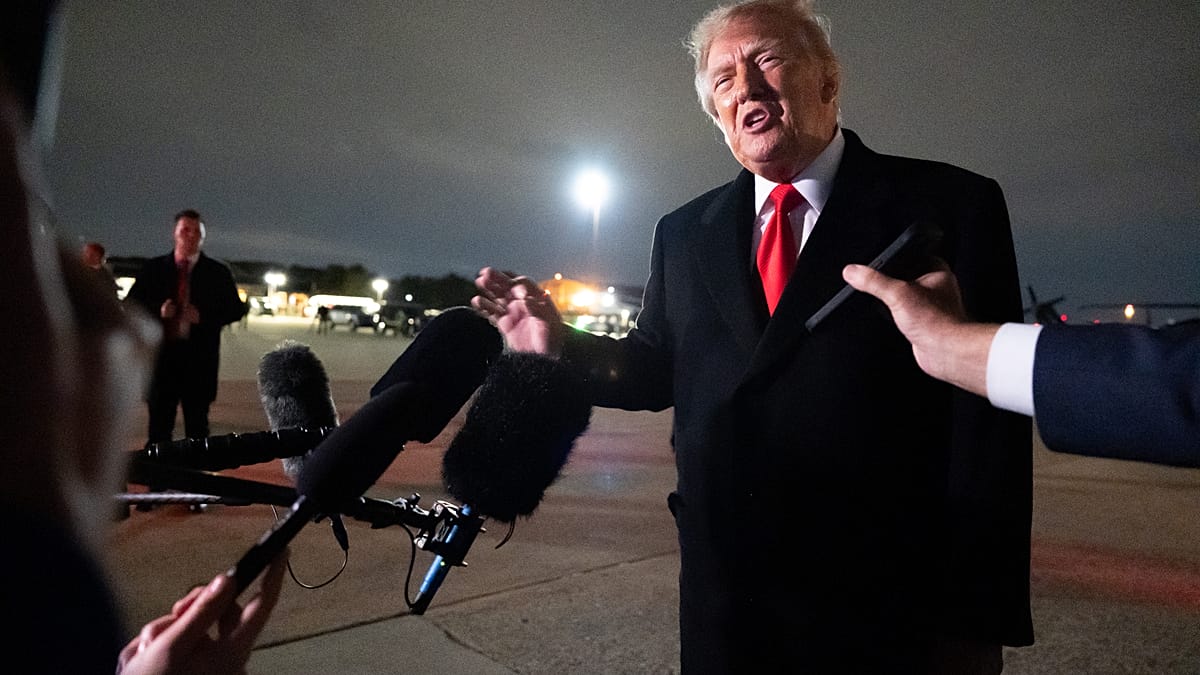
US President Donald Trump declared on Sunday that Russia and Ukraine had agreed to an immediate halt to strikes on each other's energy infrastructure, a move he framed as a breakthrough in the war. Writing on his Truth Social platform, Trump said: "Effective immediately, there is an ENERGY CEASEFIRE in the War between Russia and Ukraine. Both parties have agreed. Do not break it!" He offered no further details, and there was no immediate confirmation from the Kremlin.
Ukrainian President Volodymyr Zelenskyy told Axios that he had not been informed of any such arrangement. "It was news for me. But if Russians agree to an energy ceasefire, Ukraine will agree," he said. He added: "If President Trump negotiated it with Putin, please tell us when the ceasefire begins. We are ready, and we will accept it."
A fragile understanding with no clear terms
The announcement lands amid an escalation of deadly attacks across Ukraine. In recent days, Russian strikes have hit Sloviansk and Kyiv, while Ukrainian drones have targeted Russian oil refineries and a Yandex data centre. The absence of any formal text, timeline or monitoring mechanism raises questions about whether the "energy ceasefire" can hold.
Earlier on Sunday, Zelenskyy had reiterated that Ukraine would be prepared to stop hitting Russian oil refineries if Moscow curbed its attacks on Ukraine's power grid. That position appeared to be a unilateral gesture rather than a negotiated commitment. The Ukrainian leader has consistently said that any pause in strikes must be reciprocal.
The US president's statement followed a public spat with Zelenskyy, who had criticised Washington's decision to temporarily ease sanctions on Russian diesel. Trump responded by blaming Zelenskyy for high diesel prices and suggesting Ukraine should get a new leader — a remark that drew sharp rebukes in European capitals. Zelenskyy hit back, saying that Ukraine's leader is for Ukrainians to choose.
Europe watches with caution
For European governments, the episode underscores the unpredictability of US policy toward the war. The European Union has been pressing ahead with its own support for Kyiv, but EU confronts limits of Ukraine support as Russia intensifies its assault. Member states from the Baltic to the Balkans are wary of any arrangement that could freeze the conflict without guaranteeing Ukraine's security.
Energy infrastructure has been a central battleground. Russia's campaign against Ukraine's power plants and substations has left millions without reliable electricity, while Ukrainian drone strikes on Russian refineries have disrupted fuel supplies and export revenues. A genuine halt to such attacks would mark a significant de-escalation — but only if both sides adhere to it.
Trump's announcement also comes after his administration signalled a willingness to import Russian diesel to the US in a bid to lower prices, a move that alarmed European allies who have spent months trying to reduce revenues flowing to Moscow. The juxtaposition of easing sanctions while announcing a ceasefire has left diplomats in Brussels, Berlin and Paris seeking clarification.
Kremlin spokesman Dmitry Peskov has not commented on the purported agreement. Without confirmation from Moscow, the "energy ceasefire" remains a unilateral statement by the US president. Zelenskyy's openness to it, however, suggests Kyiv is willing to test the idea — provided Russia reciprocates.
Analysts caution that even a limited truce on energy strikes could collapse quickly. Previous attempts at localised ceasefires in eastern Ukraine have faltered without robust monitoring. The lack of detail from Washington has only deepened uncertainty. For now, European officials are treating the announcement as a tentative signal rather than a settled fact, and they will be watching closely to see whether the lights stay on — and the refineries stay quiet.



