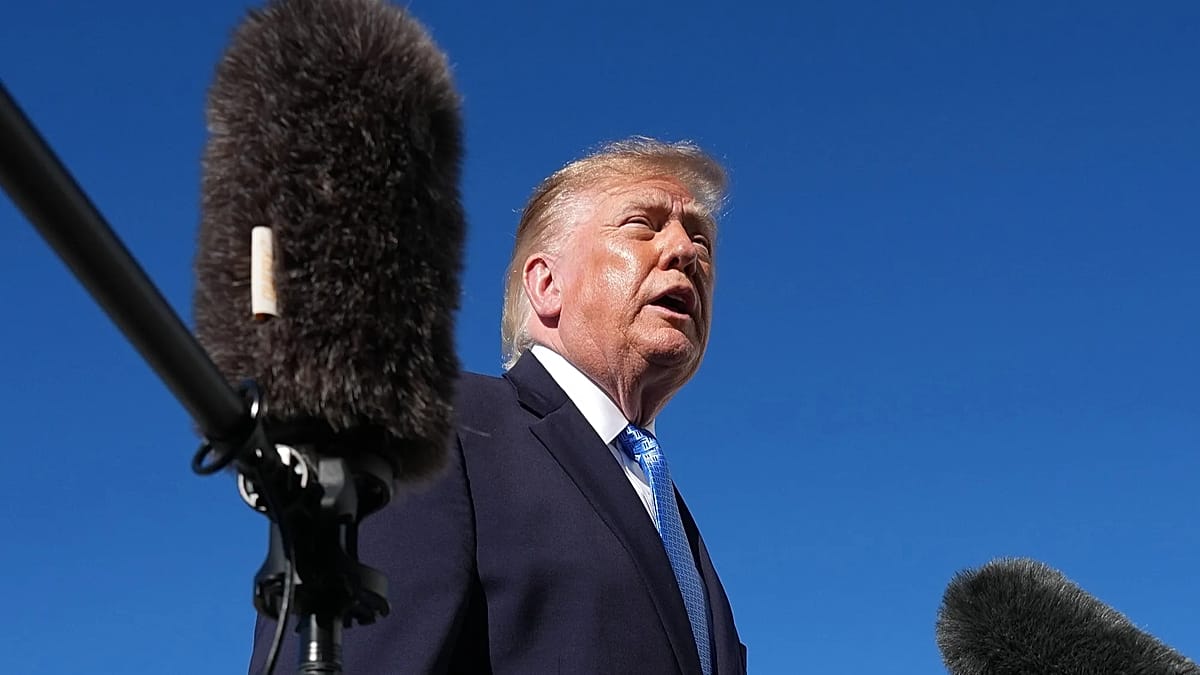
US President Donald Trump has cast doubt on the integrity of Brazil's presidential election, claiming the vote "looked rigged" without offering any evidence. Speaking to reporters on Monday, Trump said the election "looked terrible" and compared it to "another rigged election," though he insisted he had not taken sides.
"I didn't take sides," Trump said. "Elections have to be indisputable, and it looked very bad to me." His remarks came after leftist Luiz Inácio Lula da Silva defeated right-wing candidate Flávio Bolsonaro in a runoff vote over the weekend.
Flávio Bolsonaro, son of former President Jair Bolsonaro, initially refused to acknowledge Lula's victory, calling it "impossible" to accept the result and demanding the election be annulled. He has since said he would "organise the opposition." In a social media video on Monday, he claimed he had been barred from leaving Brazil and had been "served a notice to surrender my passports."
Trump welcomed Bolsonaro to the White House earlier this year, later describing him as a "smart young man who loves his country, Brazil, very much." The Trump administration has celebrated a recent wave of right-wing electoral successes across South America.
European reactions
European leaders have responded with relief and praise to Lula's fourth-term win. Many see his return as a stabilising force for the Amazon and for regional diplomacy. The European Union has long sought closer ties with Brazil on climate and trade, and Lula's victory is expected to revive cooperation on environmental protection.
In Brussels, officials noted that Lula's previous tenure was marked by significant reductions in Amazon deforestation. His reelection is seen as a chance to secure Amazon gains despite a far-right Congress, a challenge he will face in his new term.
European Commission President Ursula von der Leyen congratulated Lula, emphasising the importance of the EU-Mercosur trade agreement and joint efforts on climate change. German Chancellor Olaf Scholz also welcomed the result, calling it a victory for democracy in Latin America.
Some European observers have expressed concern over Trump's unsubstantiated claims, drawing parallels with his repeated attacks on election integrity in the United States. The lack of evidence has been widely criticised, with many pointing to the smooth conduct of the Brazilian electoral process.
Lula's victory halts the conservative wave that had swept across Latin America in recent years, a trend that had been championed by the Trump administration. The shift in Brazil's leadership is likely to have ripple effects across the region, from trade negotiations to diplomatic alignments.
For Europe, the outcome is particularly significant given the EU's strategic partnership with Brazil. The two sides are expected to resume negotiations on a comprehensive trade deal, which had stalled under Bolsonaro's government due to environmental concerns.
As Lula prepares to take office, he faces a deeply divided country and a hostile Congress. Yet his victory has sparked nationwide street celebrations, reflecting the hopes of many Brazilians for a return to more inclusive governance.
European leaders have also expressed support for Brazil's democratic institutions, urging all parties to respect the electoral outcome. The EU has a vested interest in a stable and prosperous Brazil, both as a trading partner and as a key player in global climate politics.
Trump's remarks, however, threaten to undermine confidence in the electoral process, echoing his previous behaviour in the US. Without evidence, his claims remain unsubstantiated, and many in Europe view them as an attempt to delegitimise a democratic result.