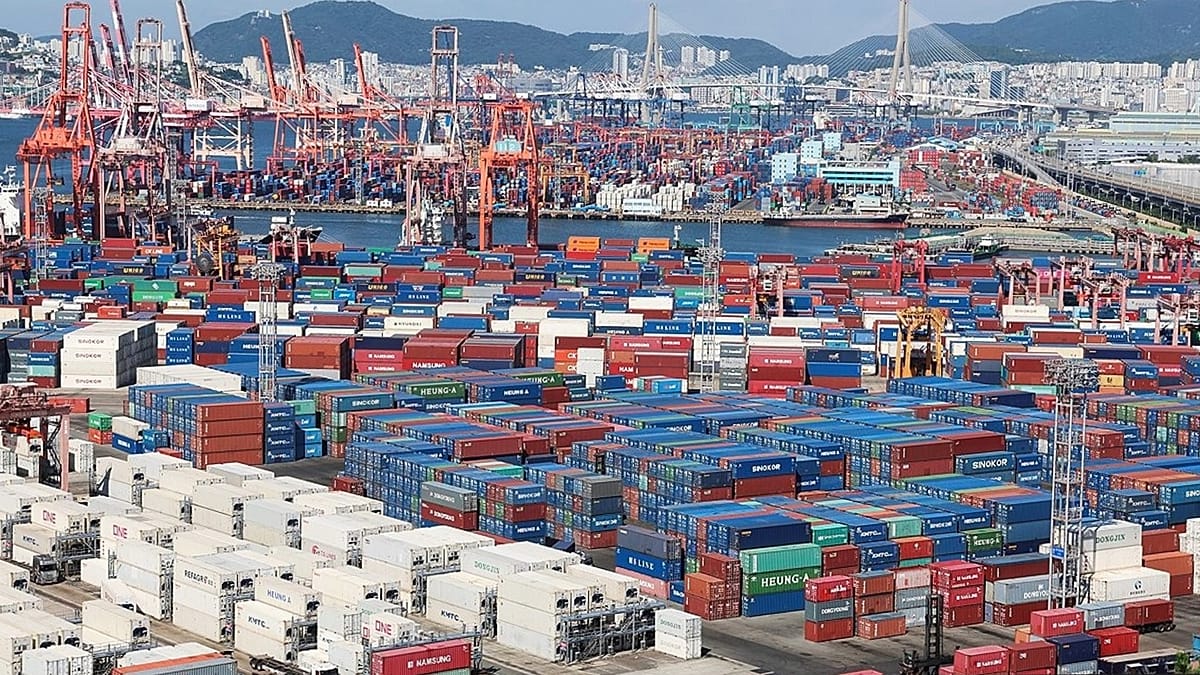
The United Arab Emirates has signed a comprehensive trade agreement with South Korea, marking Seoul's first such pact with a Gulf Cooperation Council state and the wider Middle East and North Africa region. The deal, finalized the day after the UAE announced its departure from OPEC, eliminates or reduces tariffs on 91.2 percent of traded goods, aiming to boost non-oil trade that reached $6.9 billion (€6.3 billion) in 2025.
Known as the Comprehensive Economic Partnership Agreement (CEPA), the pact is designed to ease market access and stimulate investment flows across technology, manufacturing, and logistics. UAE Minister of Foreign Trade Thani bin Ahmed Al Zeyoudi said the agreement would create new opportunities for exporters and deepen bilateral cooperation in key sectors.
The timing is notable: the UAE's exit from OPEC, announced a day earlier, signals a strategic pivot toward diversifying its economy and strengthening ties with Asian markets. This move aligns with broader Gulf efforts to reduce dependence on oil revenues and build resilient supply chains amid shifting global trade dynamics.
Qatar's Parallel Push
In parallel, Qatar is intensifying its own economic engagement with South Korea, pursuing a separate trade agreement. Doha's move underscores a coordinated Gulf strategy to establish a structural trade corridor with Asia, leveraging Seoul's advanced industrial base and the Gulf's energy and logistics strengths.
Qatar's approach comes as the emirate navigates regional tensions, including recent disputes with Iran. The country has also launched initiatives like the 2026 Year of Culture with Canada and Mexico, signaling its broader international outreach.
For South Korea, these pacts represent a foothold in the Middle East at a time when global supply chains are being reshaped by geopolitical realignments. The agreements also complement the EU's own trade efforts, such as the EU-Mercosur trade pact, which recently took provisional effect amid legal challenges.
The Gulf-Asia corridor could have ripple effects for European businesses, which face increasing competition from Asian rivals in Middle Eastern markets. The EU has been cautious about trade liberalization with the Gulf, but the new dynamics may prompt Brussels to reconsider its approach, especially as the bloc deals with US tariff hikes on European cars.
Analysts note that the UAE and Qatar are positioning themselves as hubs for Asian investment, offering stable regulatory environments and access to African and European markets. The CEPA with South Korea is expected to serve as a template for future Gulf-Asia agreements, potentially reshaping trade flows across Eurasia.
As the Gulf states accelerate their pivot eastward, the implications for Europe are twofold: increased competition for trade and investment, but also opportunities for collaboration on infrastructure projects like the Caspian-Central Asia trade corridor, which faces its own infrastructure and security challenges.