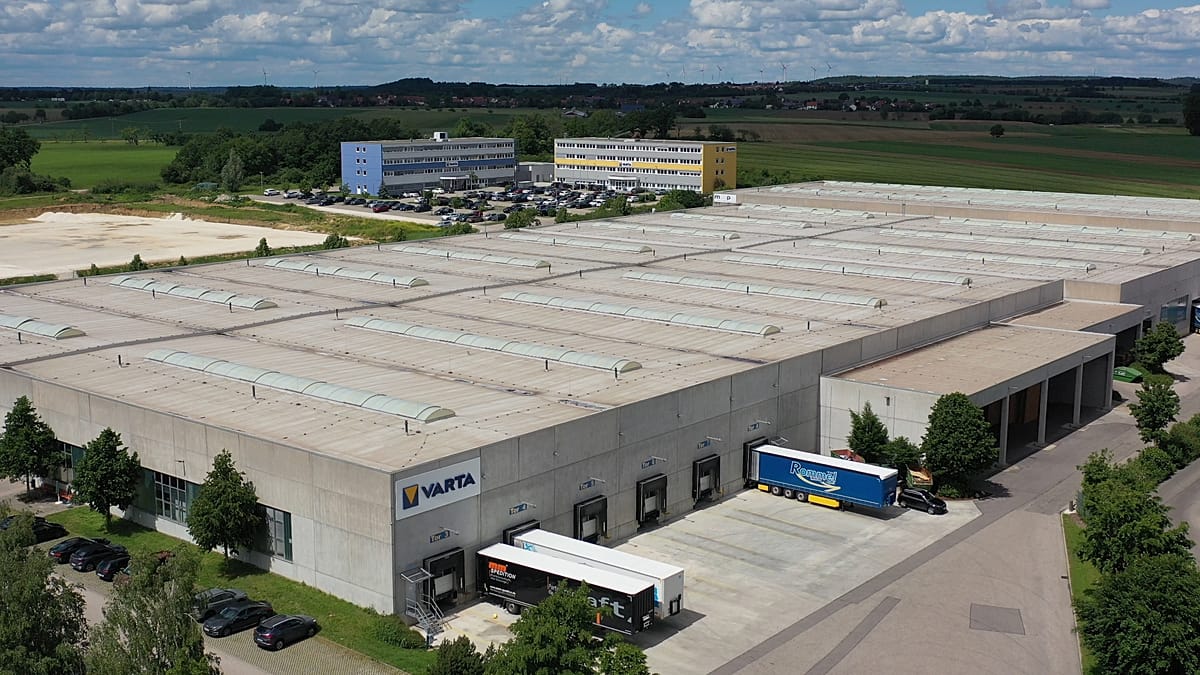
The German battery manufacturer Varta AG has filed for insolvency at the Stuttgart Local Court, seeking to restructure under self-administration. The company, headquartered in Ellwangen, Baden-Württemberg, said the move was driven by a projected structural funding shortfall expected from 2027, not by an immediate inability to meet payment obligations.
Varta blamed a sharp deterioration in market conditions, weaker consumer demand, unfavourable currency movements, and—most critically—the termination of a partnership with a key customer. According to Reuters and German media reports, that customer is Apple, which has decided to source rechargeable CoinPower button cells for its AirPods from Chinese suppliers instead.
Chief executive Michael Ostermann acknowledged the severity of the situation: “VARTA AG has faced significant challenges in recent quarters. We on the Executive Board and in management are fully aware of our overall responsibility to employees, customers, suppliers, and investors, and are working with all our strength to preserve as many jobs as possible, ensure the company's continued sustainability, and create the best possible prospects for all stakeholders.”
Restructuring and ownership changes
Varta was delisted from the Frankfurt and Vienna stock exchanges in March 2025 as part of an earlier restructuring plan, which was declared complete the following month. The company is now privately held. Its shareholders include sports car maker Porsche AG and Austrian investor Michael Tojner, both of whom, Reuters reported, declined to provide additional funding to the struggling firm.
The insolvency filing covers the parent company Varta AG and three operating subsidiaries: Varta Microbattery, Varta Micro Production, and Varta Storage. The profitable household battery division, Varta Consumer Batteries, is legally separate and is not included in the proceedings. Varta said production will continue and employees will continue to receive wages and salaries.
Ostermann described the energy storage market as a future-oriented industry for the company, suggesting that the restructuring aims to refocus on areas with stronger growth potential. The Stuttgart Local Court appointed Tobias Wahl, a lawyer from the restructuring firm Anchor, as provisional supervisor. Under self-administration, Varta’s management retains control of the company while Wahl oversees the process on behalf of creditors.
The crisis at Varta is part of a broader struggle for European battery makers to compete with Asian rivals, particularly in the high-growth segments of rechargeable batteries for consumer electronics and electric vehicles. The loss of Apple as a customer underscores the vulnerability of European suppliers to supply-chain decisions made in Silicon Valley and Shenzhen.
Germany’s battery industry has faced headwinds from rising energy costs, a slower-than-expected transition to electric mobility, and increasing competition from Chinese manufacturers. The Varta case may prompt policymakers in Berlin and Brussels to reconsider support for domestic battery production, especially as the EU pushes for greater strategic autonomy in critical technologies.