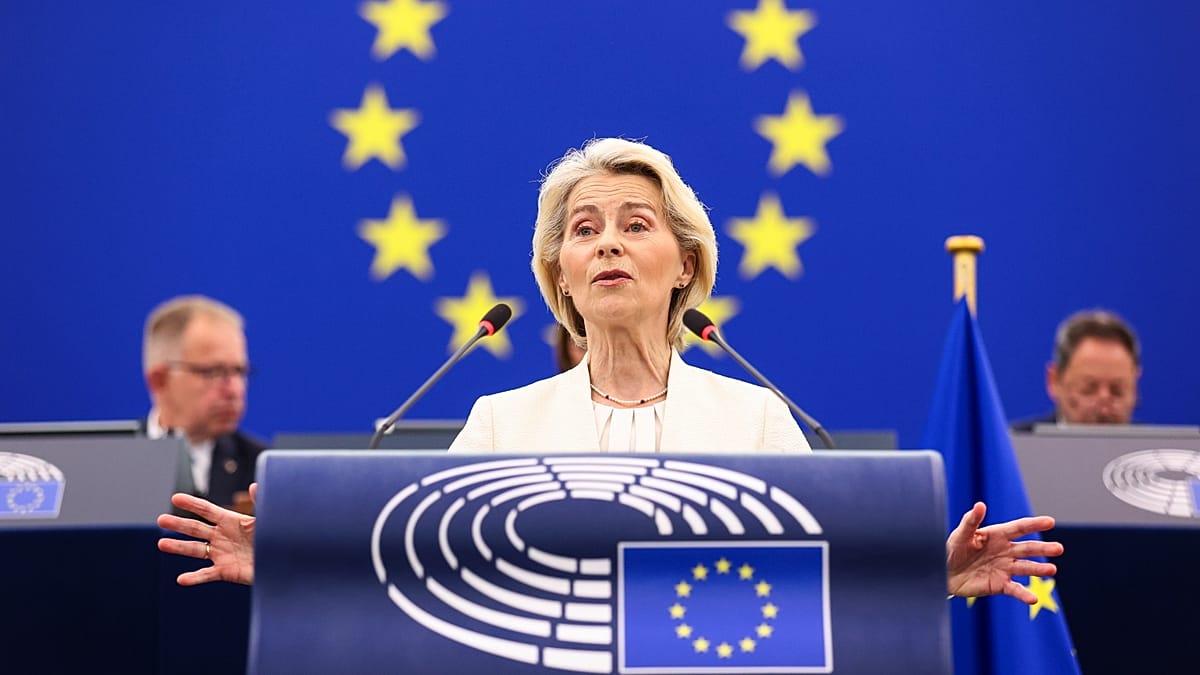
Opening with Charles Dickens's famous line about the best and worst of times, Ursula von der Leyen delivered her annual State of the Union address in Strasbourg, sketching a Europe that is both under threat and determined to forge its own path. The European Commission president told MEPs that in a world of "cold fragility," only a stronger, more independent Europe can offer its citizens true sovereignty.
Here are the five most consequential pledges from her hour-long speech.
Canada moves closer to the EU
The surprise of the day came when von der Leyen offered Canadian Prime Minister Mark Carney, who was the guest of honour in the hemicycle, a tailor-made "associate membership" status. She framed it as the beginning of an "alliance for the future" that would deepen cooperation on economic security, advanced manufacturing, defence, energy, critical minerals, and the Arctic.
Details remain vague, and it is unclear how such a status would fit within the EU treaties. A similar idea floated by Berlin for Ukraine was quickly dropped after resistance from capitals. Still, von der Leyen said the move would bring EU-Canada relations "to the highest level possible," drawing loud applause. A recent Abacus Data poll found 49% of Canadians support joining the EU, a striking figure given the country's transatlantic location and the political fallout from US President Donald Trump's tariffs and annexation rhetoric.
For more on the practical implications, see our analysis of Canada's path to associate membership.
Climate action returns with a "summer of truth"
Von der Leyen called the summer of 2026 the "summer of truth," citing 660,000 hectares burned, 12 million tonnes of crops lost, and over 35,000 additional deaths from heatwaves. She stressed that Europe is warming at twice the global rate, making adaptation unavoidable.
Her immediate answer is a European Heatwave Plan covering early warnings, health preparedness, urban cooling, and protection for vulnerable groups. A new climate resilience framework, due next month, will identify 100 of the bloc's most exposed territories and assign responsibility for managing their risks.
Insurance is another gap she wants to close: only about 25% of catastrophe losses in Europe are privately insured, leaving governments as de facto insurers of last resort. A Climate Insurance Alliance is planned, alongside a European water initiative to fix leaks and a European firefighting fleet. Critics note that adaptation funding still lags behind the rhetoric.
Security: a new mechanism for hybrid threats
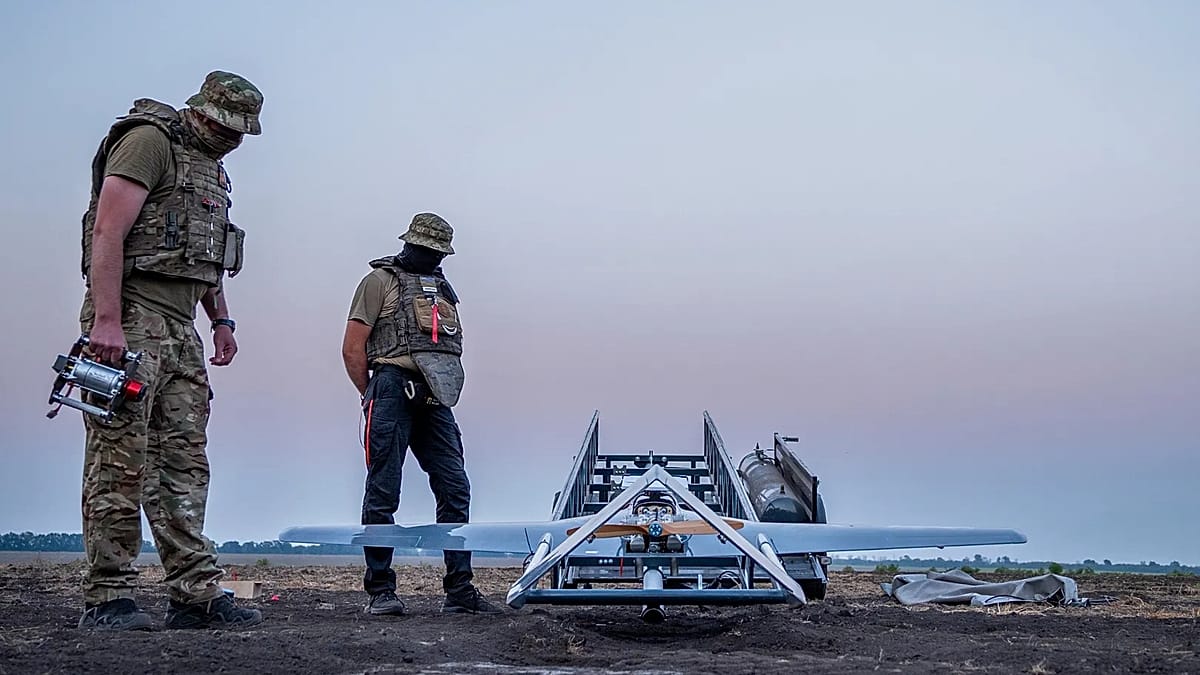
Defence dominated the speech, as Europe faces a wave of cyberattacks, sabotage, arson, and drone incursions, many attributed to Russia. "Hybrid threats facing Europe are less and less hybrid and less and less threats," von der Leyen warned.
She proposed a mechanism inspired by NATO's Article 4, which would allow member states to trigger political consultations in the event of a hybrid attack, aiming to coordinate an EU response and deter escalation. She also floated the creation of a "European Security Council" bringing together leaders from Ukraine, the UK, Norway, Canada, and other democratic partners.
How this council would avoid duplication with NATO, the OSCE, and the Coalition of the Willing remains an open question. The idea is bold, but its operational details are still thin.
Digital safety takes centre stage
Von der Leyen returned to her personal project of protecting children online. She announced the EU Kids Act, which would ban social media access for under-13s and restrict it for under-15s, building on last year's initiative. The proposal is part of a broader push for digital safety, though some MEPs question how enforcement would work across the single market.
The Commission president also touched on artificial intelligence, arguing that Europe must lead in setting ethical standards. She reiterated that AI in healthcare must remain human-centric, a stance she has emphasised before. The EU's digital wallet rollout, meanwhile, has missed deadlines in 24 of 27 member states, casting doubt on the bloc's digital ambitions.
Migration: a call for solidarity and control
Migration was another key theme, with von der Leyen calling for a balance between solidarity and security. She stressed the need for faster returns of those without the right to stay, while also expanding legal pathways for those fleeing conflict. The speech did not offer new legislative proposals, but it set the tone for upcoming debates on the EU's asylum pact.
As the session ended, von der Leyen's message was clear: Europe must act together or risk being buffeted by forces it cannot control. Whether her promises translate into concrete action will be tested in the months ahead. For a deeper look at the gap between rhetoric and delivery, see our assessment of her track record.