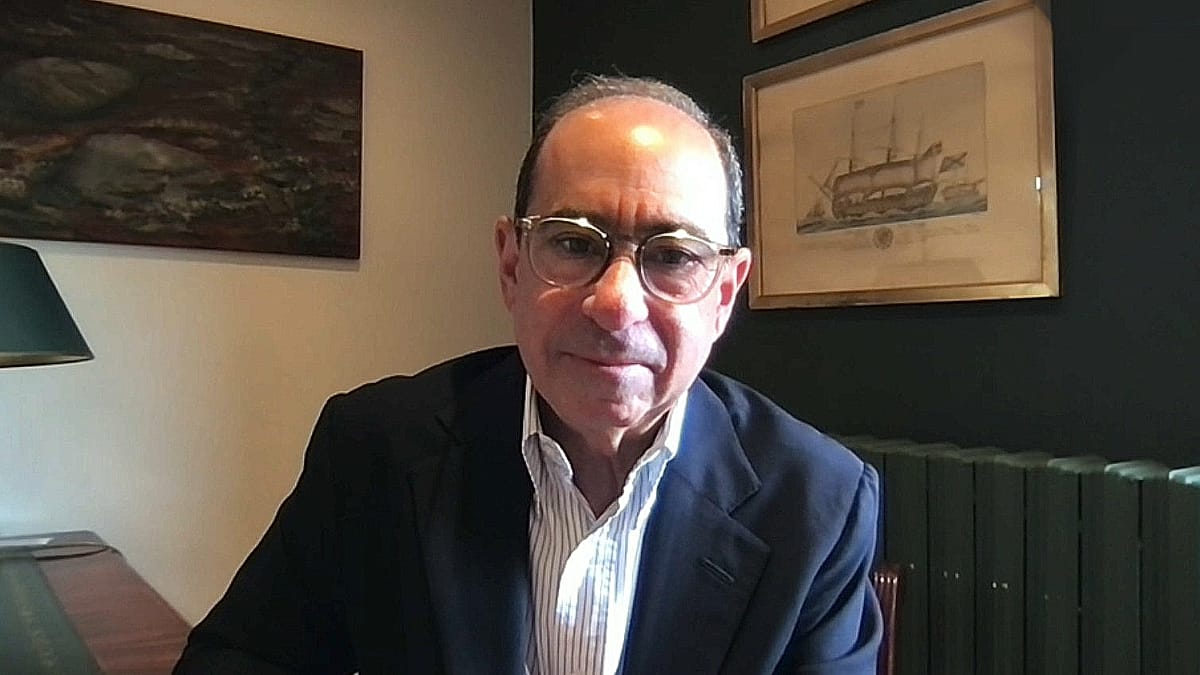
The recent meeting between US President Donald Trump and Chinese President Xi Jinping in Washington was less about concrete agreements and more about the optics of great-power management, according to Ian O. Lesser, a distinguished fellow at the German Marshall Fund of the United States. Speaking to European Pulse, Lesser described the encounter as largely symbolic, aimed at stabilising a relationship fraught with tension.
The summit, the first visit by a Chinese leader to the United States in over a decade, took place against a backdrop of simmering disputes over trade, technology, and regional influence. While both sides sought to project an image of cooperation, Lesser cautioned that the meeting left a lot of unresolved issues on the table.
Trade truce extension: a modest win
One tangible outcome was the extension of the existing trade truce between the world's two largest economies. Lesser called this something of a success, noting that it provides a temporary reprieve from escalating tariffs and market uncertainty. However, he stressed that the underlying structural problems remain, and that a lot of work is still to be done.
The truce, which had been set to expire, will now continue, offering a breathing space for businesses on both sides of the Pacific. Yet, as Lesser pointed out, the agreement does not address the core issues of technology transfer, intellectual property, and state subsidies that have long fuelled friction.
European stakes in the US-China dynamic
For Europe, the outcome of the Washington summit carries significant implications. The European Union, along with the UK, Switzerland, and Norway, watches closely as Washington and Beijing navigate their rivalry. Any escalation in tariffs or technology restrictions could disrupt global supply chains, hitting European manufacturers and exporters particularly hard.
As Europe watches the Washington summit, the extended truce offers some relief, but the continent remains wary of being caught in the crossfire. European leaders have repeatedly called for a rules-based international order, and the US-China standoff tests that commitment.
The meeting also comes at a time when the EU is reassessing its own strategic autonomy, particularly in technology and defence. The EU's defence priorities are being reshaped by global power shifts, and the US-China dynamic is a key factor in that recalibration.
Unresolved issues and the road ahead
Lesser highlighted that the summit's symbolic nature means that the hard bargaining will continue in the months ahead. Issues such as export controls on advanced semiconductors, restrictions on Chinese investment in critical infrastructure, and the future of Taiwan remain contentious. The US government's recent terminology shift on AI underscores the technological competition that is now central to the rivalry.
For European capitals, the key takeaway is that the US-China relationship will remain a defining feature of global politics. The EU's own approach, balancing economic engagement with strategic caution, will need to adapt to this reality. As Lesser noted, the summit was about managing rivalry, not resolving it, and that management will require constant attention from all parties involved.
In the meantime, European businesses and policymakers will be watching for concrete follow-up actions. The trade truce extension provides a window, but it is not a durable solution. The coming months will test whether the two superpowers can move beyond symbolism to address the substantive issues that divide them.