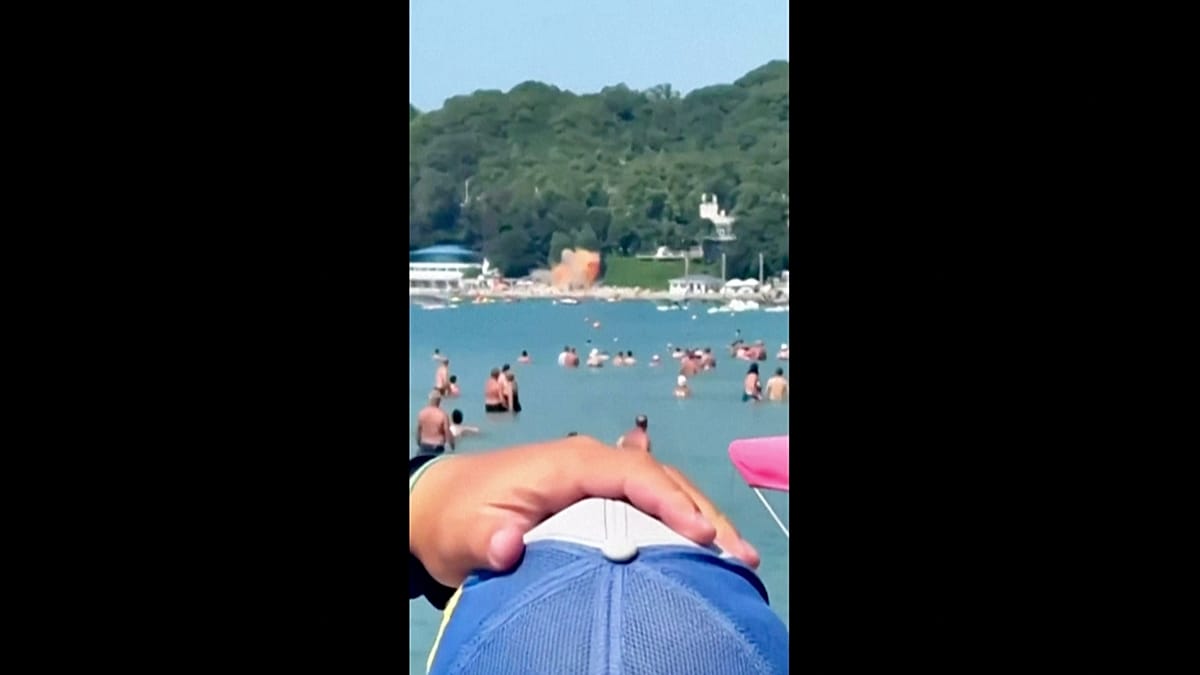
A drone crashed into a crowded beach at Arkhipo-Osipovka, a resort town on Russia's Black Sea coast, on [date], according to social media footage that circulated widely. The video shows the unmanned aircraft slamming into the sand near sunbathers and swimmers, who scramble to safety as a plume of smoke rises. The incident, which has not been officially confirmed by Russian authorities, adds to a growing pattern of drone activity along the Black Sea littoral, a region increasingly entangled in the broader conflict.
A resort under the shadow of war
Arkhipo-Osipovka, located in the Krasnodar Krai region, is a popular summer destination for Russian families, known for its pebble beaches and mild climate. The town lies roughly 200 kilometres from the front lines in southern Ukraine, yet the war has repeatedly intruded on daily life here. In recent months, Ukrainian drones have targeted Russian infrastructure and military sites, but strikes on civilian areas have raised concerns about escalation and the safety of non-combatants.
The footage, verified by open-source analysts, shows the drone approaching from the sea before hitting the beach. No casualties have been reported so far, but the psychological impact on holidaymakers is evident. One eyewitness, speaking to local media, described the scene as “chaotic” and said people ran for cover without knowing where the next strike might land.
This incident follows a series of drone-related events across the region. Earlier this week, a Russian drone targeted a civilian at a market in Kherson, according to police, highlighting the reciprocal nature of such attacks. Meanwhile, Turkey condemned drone strikes on two civilian ships in the Black Sea, underscoring the maritime dimension of the conflict and its impact on regional trade.
Black Sea: a volatile corridor
The Black Sea has become a flashpoint, with both sides using drones for reconnaissance and strikes. Russia has repeatedly attacked Ukrainian ports and grain infrastructure, while Ukraine has hit targets in Crimea and along the Russian coast. The incident at Arkhipo-Osipovka, if confirmed as a Ukrainian strike, would mark a rare direct attack on a civilian beach, though Ukrainian officials have not commented.
Moscow has often blamed such incidents on Ukrainian “terrorist” tactics, while Kyiv frames its drone campaign as legitimate retaliation against Russian aggression. The lack of independent verification makes it difficult to ascertain the full picture, but the visual evidence is stark.
For European observers, the episode raises questions about the war's expanding footprint. The European Union has repeatedly called for de-escalation and the protection of civilians, but the reality on the ground is increasingly complex. The EU's maritime services ban on Russian oil has stalled amid G7 deadlock, complicating efforts to pressure Moscow while managing global energy markets.
Local reactions and broader implications
Residents of Arkhipo-Osipovka expressed shock and fear. “We came here to escape the war, not to see it follow us,” one tourist told a local outlet. The town's mayor urged calm, but many visitors have reportedly cut their holidays short. The incident also resonates beyond Russia's borders, as the Black Sea region is vital for energy exports and regional security.
In a related development, the Italian navy boarded a Russian shadow fleet tanker near Pantelleria, a sign of heightened maritime vigilance across European waters. Such actions reflect the broader concern over Russian activities in the Mediterranean and Black Sea, where civilian infrastructure is increasingly at risk.
As the war grinds on, the distinction between front line and home front continues to blur. The beach at Arkhipo-Osipovka, once a symbol of summer leisure, now serves as a grim reminder of the conflict's reach. For Europe, the incident underscores the urgent need for diplomatic solutions and robust civilian protection mechanisms, even as military dynamics evolve.