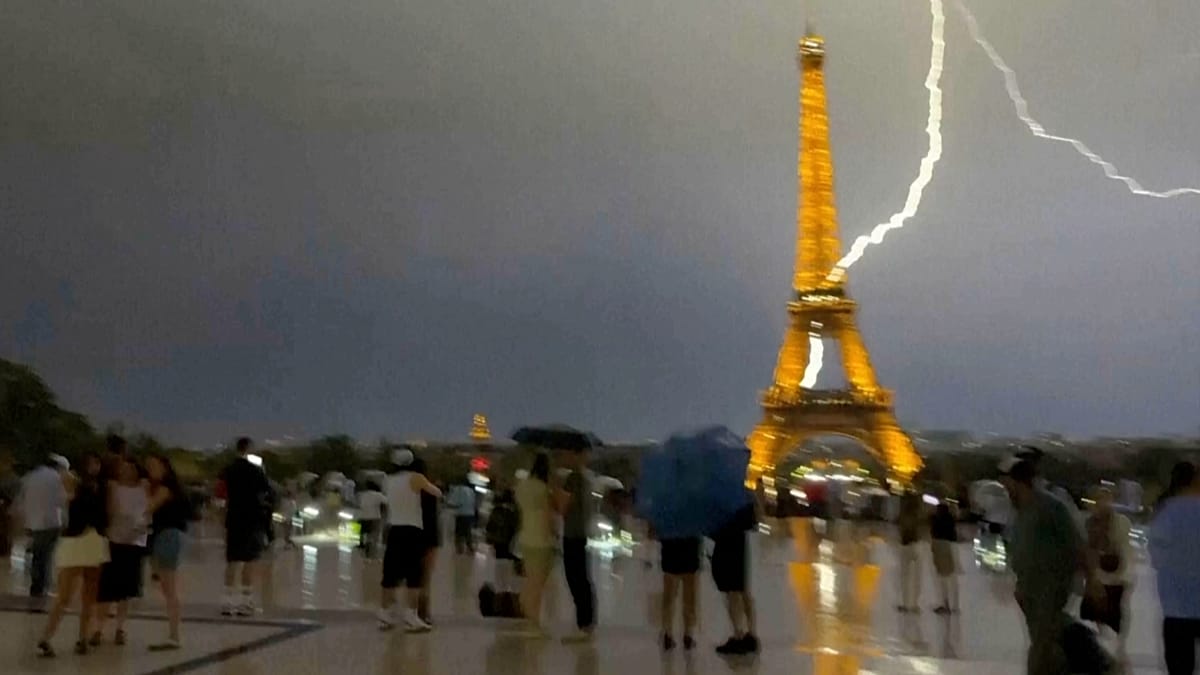
A dramatic thunderstorm swept across Paris on Saturday evening, with lightning striking the Eiffel Tower and sending tourists and residents scrambling for cover. The storm, which brought heavy rain and strong winds, marked a sudden shift from the extreme heat that had gripped the French capital and much of the country in recent days.
Videos circulating on social media captured the moment a bolt of lightning hit the iconic iron lattice structure, illuminating the night sky. The Eiffel Tower, which is equipped with lightning rods and grounding systems, was not damaged, and no injuries were reported. However, the storm disrupted outdoor activities and forced the temporary closure of several public spaces.
Heatwave Preceded the Storm
The violent weather followed a prolonged heatwave that saw temperatures in Paris exceed 40°C. French authorities reported that the extreme heat contributed to a significant increase in mortality, particularly among the elderly and those with pre-existing health conditions. The heatwave had already led to the closure of the Eiffel Tower earlier in the week, as tourist operations were disrupted and visitors were advised to avoid outdoor exertion.
Parisians had sought relief in parks and public gardens, with many sleeping outdoors to escape sweltering attic apartments. The city's iconic zinc roofs, which trap heat, turned many top-floor flats into ovens, exacerbating the health risks. Veterinary clinics also reported a surge in pet heatstroke cases, as owners struggled to keep their animals cool.
Broader European Context
The heatwave and subsequent storm are part of a broader pattern of extreme weather affecting Europe. Across the continent, countries are grappling with the consequences of climate change, from wildfires in southern Europe to flooding in central and northern regions. France, like many EU member states, is under pressure to accelerate its climate action. A recent court ruling ordered TotalEnergies to disclose its indirect emissions and strengthen its climate strategy, reflecting growing legal and public demands for corporate accountability.
Meanwhile, the EU's energy landscape is shifting. As domestic gas production declines, demand has risen, highlighting the bloc's continued reliance on imports. The heatwave also underscored the vulnerability of urban infrastructure, with cities like Lisbon, Prague, and Paris facing some of the worst housing affordability crises in Europe, making it harder for residents to adapt to extreme temperatures.
The storm that struck Paris on Saturday night was a stark reminder of the volatility that climate change brings. While the lightning strike on the Eiffel Tower was a dramatic visual, the underlying issues of heat resilience, energy policy, and urban planning remain pressing for European policymakers.