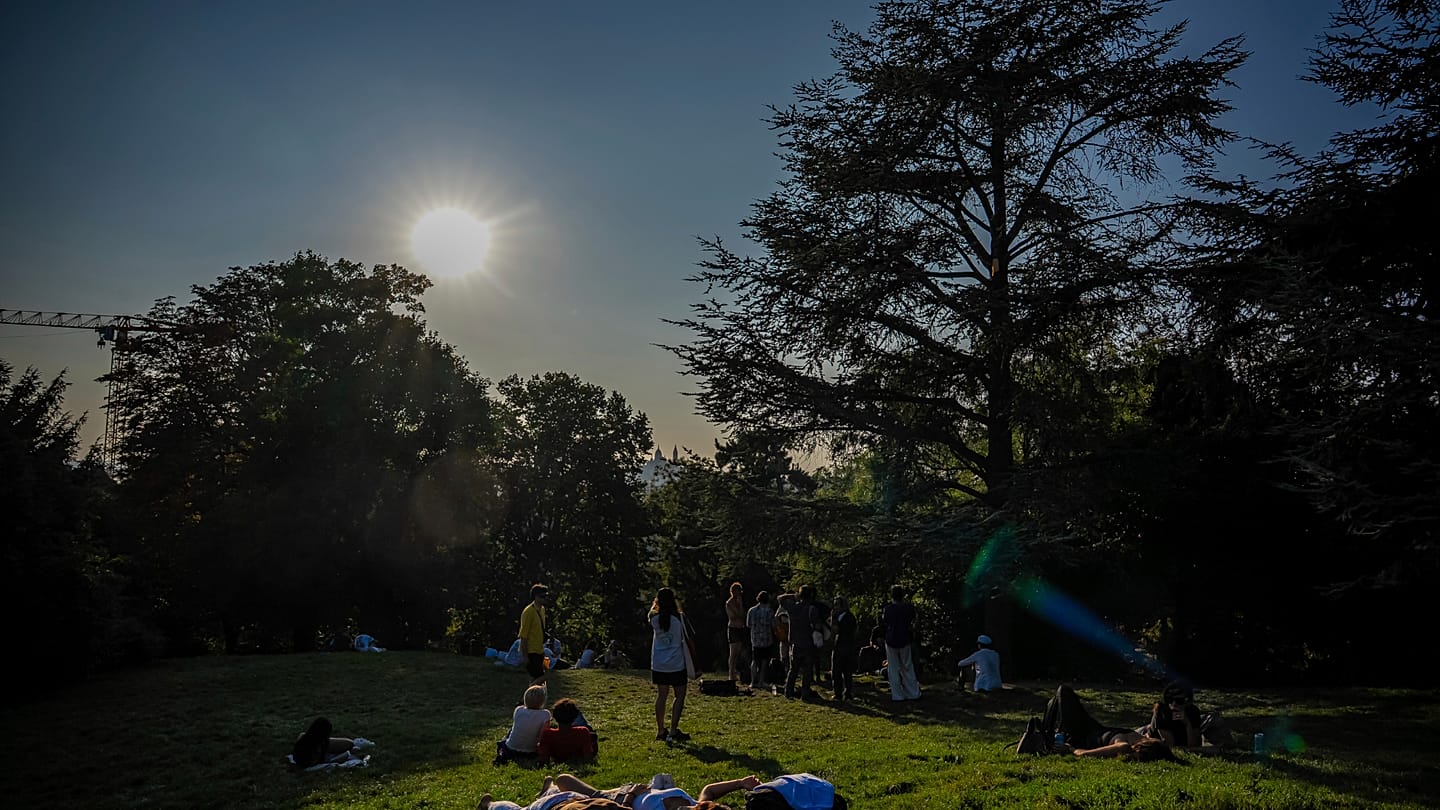
As an intense heatwave continues to bake France, some Parisians have taken to sleeping in the city's parks and public gardens to find relief from the oppressive heat in their apartments. The practice, which has become increasingly common during summer heatwaves, highlights the vulnerability of the city's historic housing stock to extreme temperatures.
Historic Buildings, Modern Problems
Many of Paris's iconic apartment buildings, particularly those with zinc roofs that turn attic apartments into ovens, lack air conditioning. The city's strict preservation laws limit modifications to these structures, leaving residents with few options when temperatures soar. During the current heatwave, which has seen thermometers hit 40°C in the capital, indoor temperatures in some apartments have remained above 30°C even at night.
In the Parc des Buttes-Chaumont in the 19th arrondissement, families and young professionals have been spotted unrolling sleeping bags on the grass after dark. Similar scenes have been reported in the Jardin du Luxembourg and the Bois de Boulogne. The city has kept several parks open overnight to accommodate the displaced, a measure first introduced during the deadly 2003 heatwave that killed an estimated 15,000 people across France.
A Growing Public Health Concern
Public health officials warn that the lack of cool nighttime temperatures poses serious risks, especially for the elderly and those with pre-existing conditions. The World Health Organization has urged European leaders to take action as heat-related deaths mount across the continent. In France, the government has activated its heatwave alert system, opening cooling centres and urging people to stay hydrated.
The phenomenon is not limited to Paris. Across Europe, from London to Madrid, temperatures have neared 39°C, prompting similar responses. In Belgium, health alerts have been issued, and in Spain, the hottest June days on record have been logged. The economic impact is also being felt: low-income households, farm labourers, and working mothers are disproportionately affected, as they often lack the resources to install cooling systems or take time off work.
Urban Planning and Climate Adaptation
The sight of Parisians sleeping in parks has reignited debate about urban planning and climate adaptation. Critics argue that the city's reliance on historic preservation has hindered efforts to retrofit buildings with modern cooling technologies. Others point to the need for more green spaces and tree cover to reduce the urban heat island effect, which can make cities several degrees warmer than surrounding rural areas.
Meanwhile, the heatwave has also strained infrastructure. France has cut nuclear output as river temperatures rise, affecting cooling capacity. The Eiffel Tower was forced to close temporarily, disrupting tourism. As climate change makes such extreme events more frequent, the question of how European cities adapt becomes ever more urgent.
For now, Parisians continue to seek refuge in the city's parks, a makeshift solution that underscores the gap between the city's romantic image and the harsh realities of a warming world.