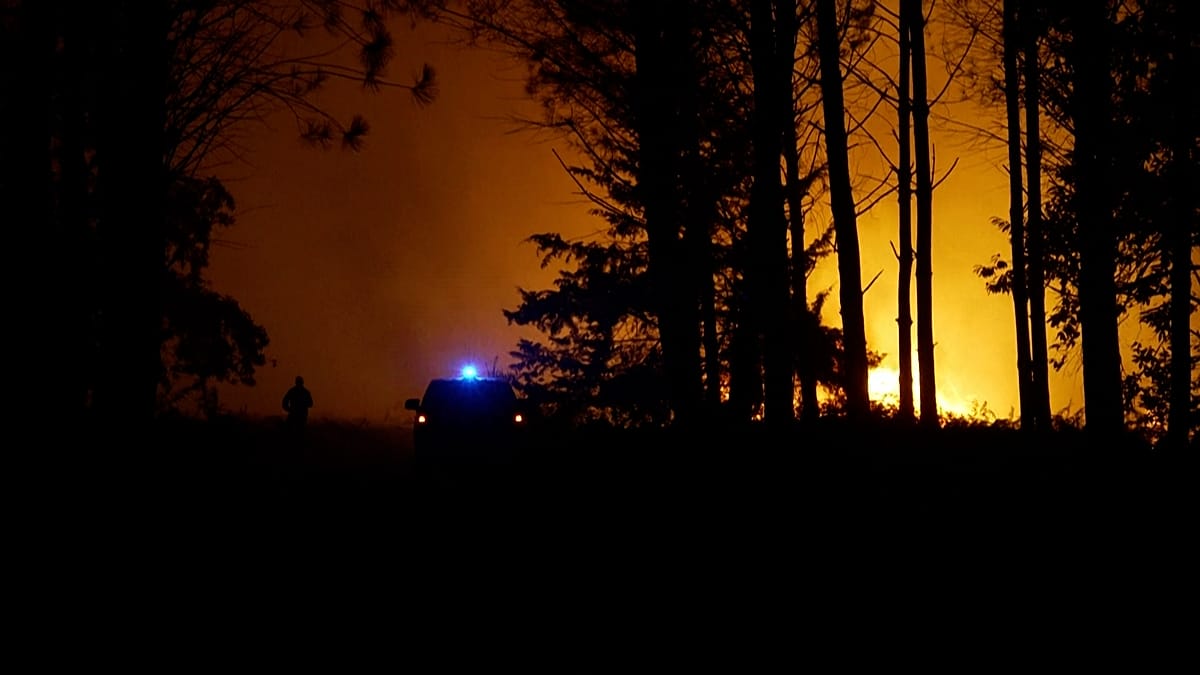
A wildfire tearing through the pine forests of the Landes region in southwestern France forced 525 people to flee the village of Luglon on Thursday, 13 August. The blaze, which spread rapidly in dry and windy conditions, prompted a major deployment of firefighting aircraft and ground crews as authorities worked to protect homes and infrastructure.
The Landes forest, one of the largest man-made forests in Western Europe, is particularly vulnerable to summer fires. This year's prolonged drought has left the region's sandy soils and resin-rich pines exceptionally combustible. Local officials said the fire broke out in the afternoon and quickly grew, driven by gusty winds that made containment difficult.
Evacuations and emergency response
Residents of Luglon, a small commune in the Gironde department, were ordered to leave their homes as the flames approached. Emergency services set up a temporary reception centre in a nearby town, where evacuees were registered and offered assistance. No injuries have been reported so far, but several outbuildings and vehicles are believed to have been damaged.
Firefighters from across the region were mobilised, supported by water-bombing planes and helicopters. The French interior ministry said reinforcements were being sent from other departments, reflecting the seriousness of the situation. By late evening, the fire had burned an estimated 600 hectares, though officials cautioned that the figure could rise as assessments continue.
The blaze is the latest in a series of wildfires that have hit Europe this summer. In recent weeks, fires have forced evacuations in Germany and France, while Belgium recorded its largest wildfire on record. The pattern has raised concerns about the increasing frequency and intensity of such events, which scientists link to climate change.
In the Landes, the fire is a stark reminder of the region's delicate balance between forestry and fire risk. The vast monoculture of maritime pines, planted in the 19th century to drain the marshes and boost the economy, has become a major source of timber and resin. But it also creates a continuous fuel load that can turn a small spark into a major conflagration.
Local authorities have urged residents to remain vigilant and to follow evacuation orders without delay. "The safety of people is our absolute priority," said the mayor of a neighbouring commune, speaking on condition of anonymity. "We are doing everything we can to contain this fire and protect our communities."
The evacuation of Luglon comes as Europe battles a persistent heatwave that has dried out vegetation across the continent. In Croatia, a wildfire near Omiš injured residents and forced mass evacuations, while in the UK, a fire in Stourbridge prompted calls for action on climate change.
Experts say that the risk of wildfires will continue to grow as temperatures rise and droughts become more frequent. In France, the government has invested in firefighting resources and prevention measures, but the sheer scale of this year's fires has tested those capacities. The Landes fire is a reminder that even well-prepared regions can be overwhelmed by extreme conditions.
As night fell, firefighters continued to battle the blaze, hoping that cooler temperatures and higher humidity would help slow its advance. The evacuees, many of whom had only minutes to gather their belongings, spent the night in temporary shelters. For them, the immediate danger may have passed, but the longer-term threat of wildfires remains a growing concern for the whole of Europe.