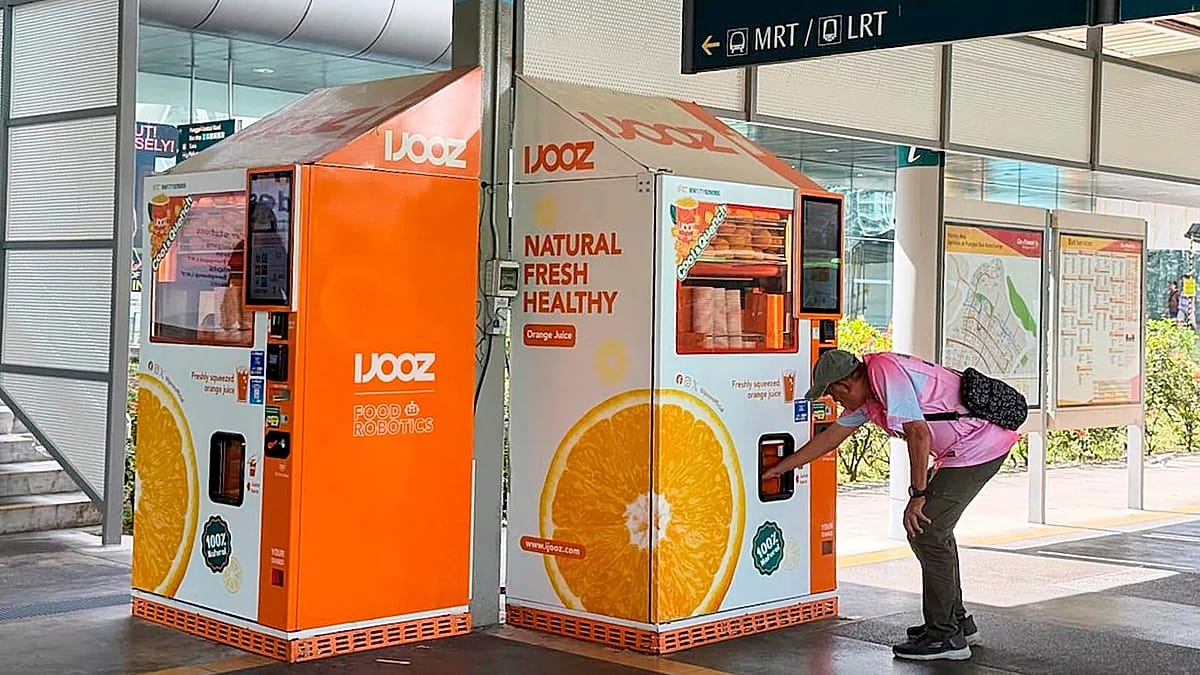
An 18-year-old French student, Didier Gaspard Owen Maximilien, has been charged in Singapore with mischief and public nuisance after a video of him licking a straw from an orange juice vending machine and replacing it circulated widely on social media. The incident, which occurred at a shopping mall on 12 March, has drawn attention to the city-state's strict regulations on public conduct.
Maximilien, who attends a French business school in Singapore, was charged on 24 April and has not yet entered a plea, according to The Straits Times, Singapore's largest English-language newspaper. The court has granted him permission to travel to Manila from 2 to 25 May for a school trip required for his graduation. He is scheduled to return to court on 29 May.
Legal Consequences and Public Reaction
Under Singaporean law, the charge of mischief carries a penalty of up to two years in prison, a fine, or both. Public nuisance is a less severe offense, with a maximum sentence of three months in prison, a fine, or both. The case has sparked debate about the balance between individual behavior and societal norms in a country known for its stringent cleanliness and public order laws.
The operator of the vending machine, IJooz, filed a police report after the video surfaced. The company sanitized the dispenser and replaced all 500 straws inside. In response to the incident, IJooz announced plans to upgrade its machines with individually packaged straws and straw compartments that unlock only after a transaction is completed.
Lawyers for Maximilien declined to comment on the case. The teen is studying at a French business school in Singapore, a hub for international education in Southeast Asia.
Singapore, a small, densely populated city-state, tightly regulates public behavior and cleanliness, with laws that often surprise visitors from more liberal jurisdictions. This case echoes other high-profile incidents where foreign nationals have faced legal action for actions considered minor elsewhere, such as vandalism or littering. The country's legal system, rooted in British common law, has been criticized by human rights groups for its harsh penalties, including the use of capital punishment for drug offenses, as highlighted by the UN Rights Chief's condemnation of Singapore's execution of drug offenders.
For the French community in Singapore, the case has raised questions about cultural differences and the importance of understanding local laws. France, with its own legal traditions, has seen similar debates over public behavior, such as the crackdown on free parties in Marseille. However, the consequences in Singapore are notably more severe.
The incident also highlights the power of social media to amplify minor transgressions into international news. Maximilien's video, which quickly went viral, underscores how digital platforms can expose individuals to legal scrutiny far beyond their original intent. As the case proceeds, it serves as a cautionary tale for travelers and expatriates in jurisdictions with strict public order laws.