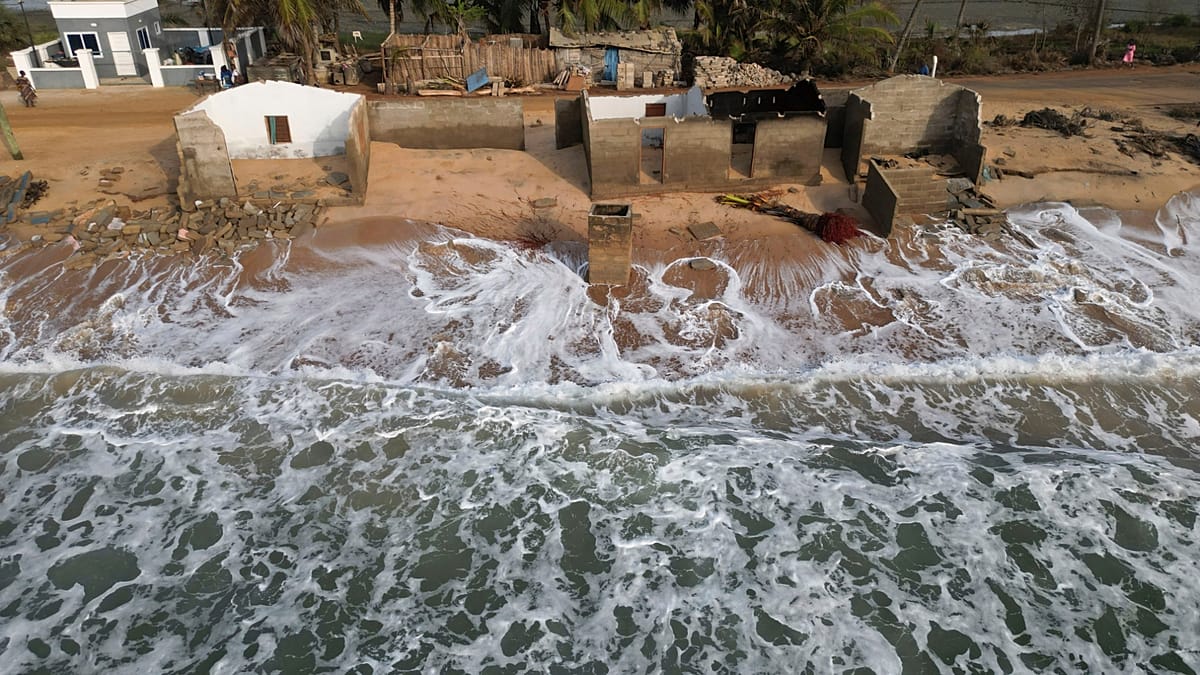
Extreme coastal floods that were once rare are becoming far more frequent as human-caused climate change accelerates sea level rise, according to two new studies published on 10 June. The research, which draws on tide gauge records and climate modelling, provides some of the clearest evidence yet that human activity is reshaping coastal risks across the globe.
Floods that historically had a 1% chance of striking a coastline in any given year are now about 12 times more likely on average, according to a study in Nature Climate Change. Of that increase, roughly four times is directly attributable to human-driven climate change. The findings underscore the growing threat to low-lying coastal communities, from the Wadden Sea to the Adriatic, and from the Baltic to the Mediterranean.
Human Fingerprints on Every Flood
Researchers analysed long-term records from tide gauges at more than 100 sites, combined with climate models, to assess how often extreme sea level events occur. The study covered the period from 1900 to 2005, after which insufficient model data made it harder to isolate human influence. The authors caution that their findings likely underestimate today's risk, as human contributions to coastal extremes have only increased since then.
While sea level changes earlier in the 20th century could largely be explained by natural forces, the scientists found that since the 1960s, human-caused warming has been the dominant factor. “Since the 1970s, it’s by far the dominating factor, and this is of course not good news,” said Sönke Dangendorf, lead author of the Nature Climate Change study and an associate professor at Tulane University. He stressed that the threat is growing and that communities need to do more to prepare.
A separate study in Science Advances supports these conclusions, finding that climate change contributed to about 58% of days with major coastal floods between 2000 and 2018. It also found that climate change has nearly tripled the number of days where the sea exceeds extreme flood levels since the 1970s. “Essentially every coastal flood today has human fingerprints on it through climate change,” said Ben Strauss, chief scientist at Climate Central and a co-author of the Science Advances study. “Without the extra bit of sea level rise caused by global heating, most of these events would not have reached the status of flood.”
Fossil Fuels as the Dominant Factor
The Nature Climate Change study did not fully disaggregate individual human factors, but Dangendorf noted that greenhouse gases from burning fossil fuels—oil, gas, and coal—are the most significant. The research highlights that while natural climate patterns and land subsidence play a role, the burning of fossil fuels is the primary driver of the observed acceleration in sea level rise.
Jeff Williams, a retired oceanographer from the United States Geological Survey who was not involved in either study, said the research shows that planners must take growing threats into account. They need to consider how much funding will be required to bolster coastal protections and who will pay for it. He pointed to New Orleans as an example where current defences “will likely not be adequate beyond the next couple decades.”
Across Europe, nations are increasingly turning to renewable energy sources such as solar and wind. Last year, clean power generation exceeded overall global electricity demand growth, and renewables accounted for more than one-third of the world’s electricity mix for the first time. Even in the United States, where the Trump administration has boosted fossil fuels, solar energy is expanding as coal power declines. Scientists have recently said the world is no longer on track for the worst-case warming scenario—but it is also not on track for the best case.
“The impacts, even of a relatively little sea level rise, can be pretty impactful on our coasts,” Dangendorf said. The findings come as the Copernicus programme warns that record May heatwaves signal a new climate normal for Europe, and as EU Environment Chief declares climate policy is now defence policy. The research also aligns with warnings from the Global Environment Facility, which recently pledged €3.4 billion for climate, biodiversity, and water security.
For European coastal cities like Venice, Rotterdam, and Hamburg, the implications are stark. Rising seas and more frequent extreme floods will require significant investment in infrastructure, from storm surge barriers to nature-based solutions. The studies make clear that the window for effective action is narrowing, and that the cost of inaction will be measured in both euros and lives.