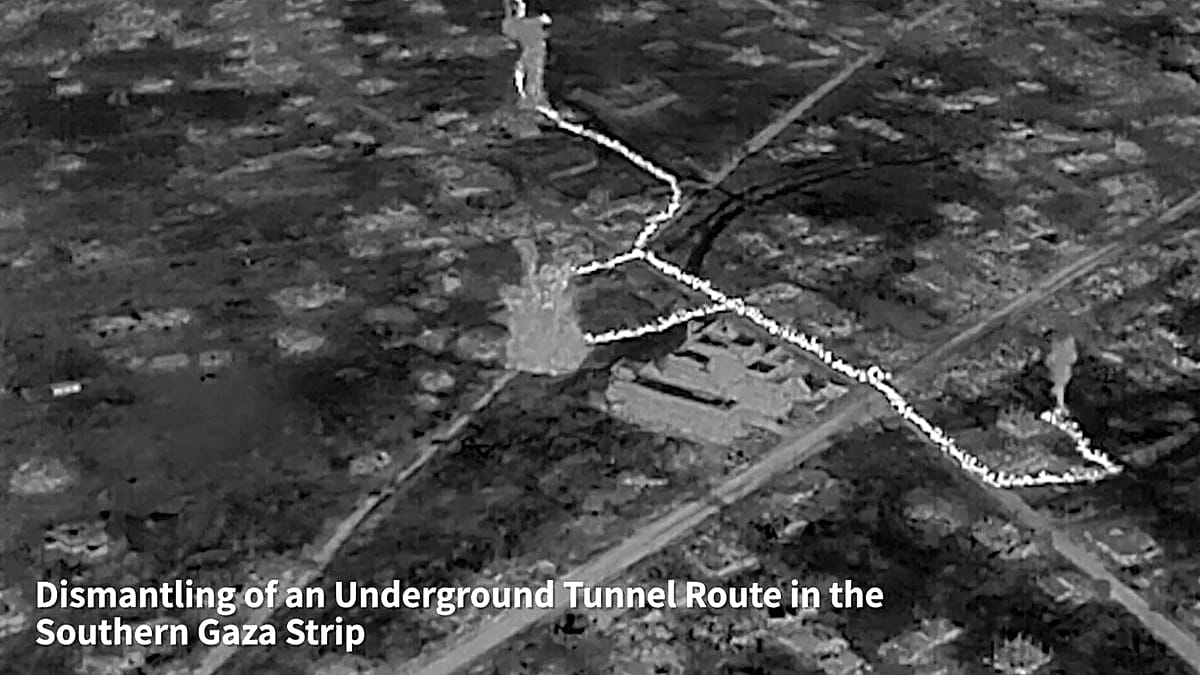
The Israeli military has published video footage that it says shows the demolition of an underground tunnel network in the southern Gaza Strip. The army described the tunnel as approximately two kilometres in length and said it had been dismantled as part of ongoing operations in the area. The footage, provided by the Israeli military, could not be independently verified by news organisations.
The release comes as the conflict between Israel and Hamas, which began on 7 October 2023, continues to exact a heavy toll. According to Israeli authorities, the initial Hamas-led attack killed around 1,200 people and took 251 hostages. In response, Israel launched a large-scale offensive that, according to Gaza's Health Ministry, has killed at least 73,922 Palestinians. The ministry is part of the Hamas-run government in the enclave.
Underground warfare and regional implications
The destruction of tunnels has been a central element of Israel's military strategy in Gaza, aimed at degrading Hamas's ability to launch attacks and move fighters and supplies. The latest video, showing controlled explosions and collapsing underground passages, is part of a broader effort to publicise the military's achievements. However, the inability to independently verify such footage has led to scrutiny from international observers and human rights groups.
The conflict has also had significant repercussions beyond the immediate region. In Europe, the war has sparked debates over security policy, arms exports, and the protection of civilians. The European Union has repeatedly called for a ceasefire and for adherence to international humanitarian law. Meanwhile, the threat of regional escalation remains, with recent incidents such as France sending military assets to shield a Saudi oil hub as Houthi attacks intensify in the Red Sea, highlighting the wider instability.
The humanitarian situation in Gaza continues to deteriorate, with widespread shortages of food, water, and medical supplies. European nations have been among the largest donors of humanitarian aid, but access constraints have hampered deliveries. The EU has also been involved in diplomatic efforts to broker a ceasefire, though progress has been limited.
The release of the tunnel video comes at a time when disinformation and propaganda are increasingly prevalent in conflict zones. In Europe, there have been concerns about fake AI protest videos targeting far-right sentiment, and pro-Russian networks spreading fake German ballot fraud videos, underscoring the challenges of verifying information in the digital age.
For European policymakers, the Gaza conflict has also raised questions about the bloc's role in the Middle East. The EU has struggled to present a unified front, with member states holding divergent views on the conflict. Some, like Germany, have been strong supporters of Israel's right to self-defence, while others, such as Ireland and Spain, have been more critical of the military campaign. This division has complicated efforts to adopt a common EU position.
The military's release of the tunnel footage is likely aimed at domestic audiences in Israel, demonstrating progress in the fight against Hamas. However, for international observers, the video serves as a reminder of the complex and destructive nature of underground warfare, and the challenges of verifying claims in a conflict where information is a weapon.
As the war enters its second year, the prospects for a lasting peace remain uncertain. The human cost continues to mount, and the regional and global implications are far-reaching. For Europe, the conflict has underscored the need for a coherent foreign policy that balances support for allies with the promotion of human rights and international law.