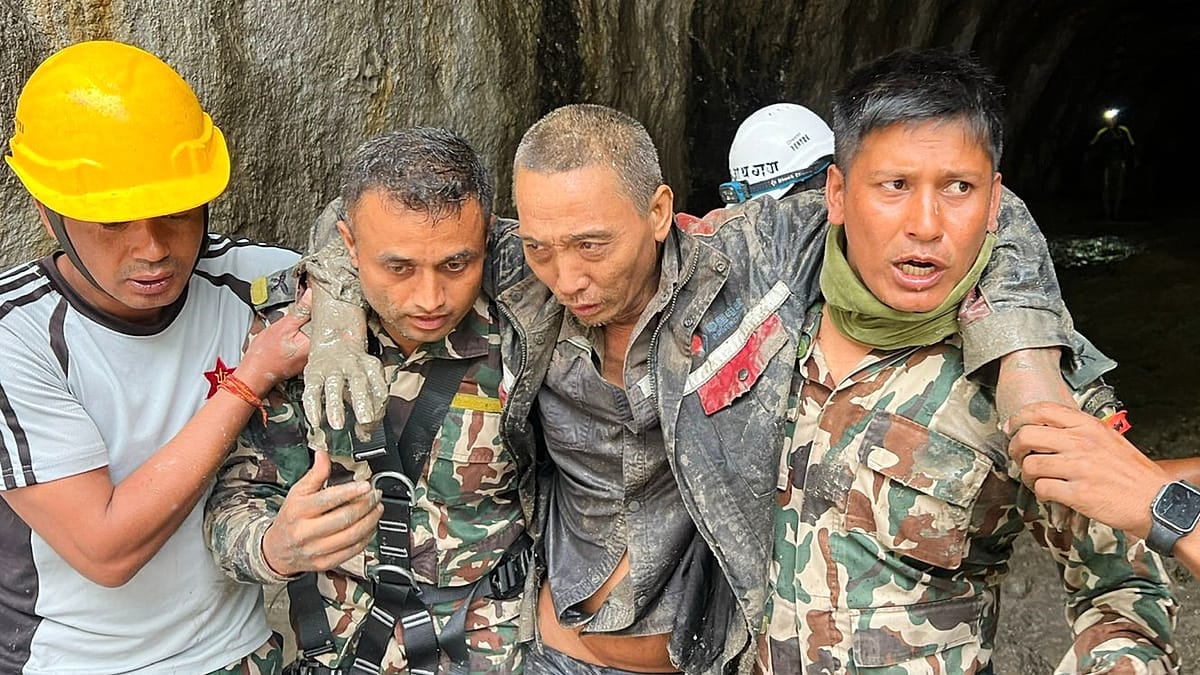
Ten days after catastrophic flash floods and landslides tore through Nepal, rescue workers pulled two people alive from the wreckage on Saturday. A woman and a man were recovered in separate operations, offering a rare glimmer of hope in a disaster that has killed at least 1,300 people and left more than 5,000 missing.
The rescues took place in the hard-hit districts of Sindhupalchok and Kavre, where entire villages were buried under mud and rock. According to the Nepali army, the woman was found trapped under a collapsed house, while the man was located in a debris field near a riverbank. Both were rushed to hospital in Kathmandu, where their conditions were described as stable but serious.
A disaster of staggering scale
The floods, triggered by intense monsoon rains in late September, have wrought destruction across the Himalayan nation. Entire settlements have been swept away, roads and bridges destroyed, and farmland buried under silt. The official death toll has climbed past 1,300, with many bodies still unrecovered. In Kathmandu, families have pinned photographs of missing relatives to hospital walls, hoping for news.
Rescue efforts have been hampered by damaged infrastructure and continuing rainfall. Helicopters have been ferrying supplies to isolated communities, while ground teams dig through rubble by hand. The Nepali government has faced criticism over the speed and scale of its response, with many villages still unreached.
The disaster has also drawn international attention, with rescue teams from several countries, including Nepal's neighbours, joining the effort. The floods have affected the wider Himalayan region, with neighbouring Tibet also reporting casualties.
Grief and anger over mass burials
As the scale of the tragedy becomes clearer, anger is mounting over the handling of the dead. With morgues overflowing and cremation facilities overwhelmed, authorities have resorted to mass burials, a practice that has sparked outrage among families who say their religious rites are being violated. Hindu and Buddhist traditions require specific funeral rituals, and many relatives have protested against the hasty interments.
In Kathmandu, the Pashupatinath temple has become a focal point for mourning, but its cremation ghats are operating at capacity. The government has promised to allow families to conduct proper rites once bodies are identified, but for many, the wait is unbearable.
Missing and displaced
More than 5,000 people remain unaccounted for, according to the National Disaster Risk Reduction and Management Authority. The list includes hundreds of foreign nationals, many of them trekkers and mountaineers who were in the region when the floods struck. Embassies in Kathmandu have been fielding frantic calls from families abroad.
The disaster has displaced over 300,000 people, many of whom are now living in temporary shelters with little access to clean water or medical care. The risk of disease outbreaks is rising, and aid agencies are warning of a secondary crisis.
In a rare moment of relief, the two survivors pulled from the rubble on Saturday have given hope to families still searching. But for the thousands who remain missing, the outlook grows bleaker with each passing day.
The Nepali government has declared a national day of mourning and has appealed for international assistance. Neighbouring India and China have sent aid, and the European Union has pledged €3 million in emergency funding. The disaster is a stark reminder of the growing frequency of extreme weather events across the globe, a trend that scientists link to climate change.
For now, the focus remains on rescue and recovery. But as the debris is cleared, the long task of rebuilding shattered communities will begin, and questions will be asked about whether more could have been done to prevent such a catastrophe.