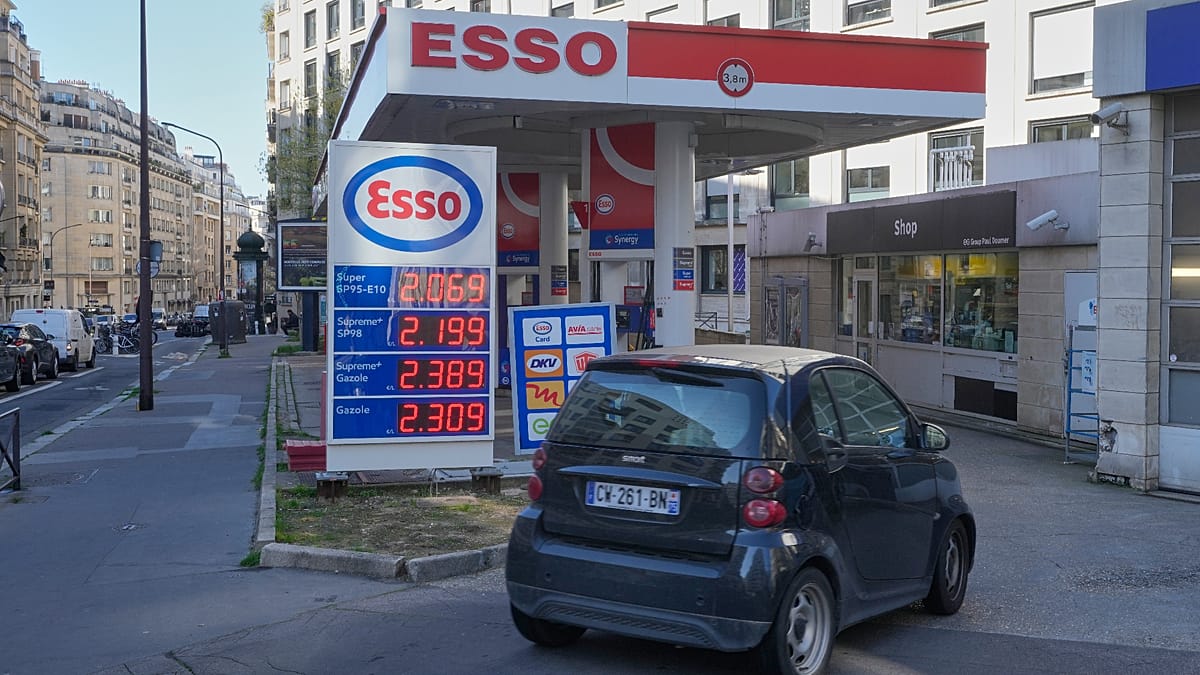
Oil prices climbed sharply on Monday, with US benchmark crude gaining 5.6% to $87.20 a barrel and Brent crude rising 5.3% to $95.16, after Iran reversed its earlier decision to reopen the Strait of Hormuz. The waterway, a critical chokepoint for global oil shipments, remains effectively closed as the stand-off between Tehran and Washington deepens.
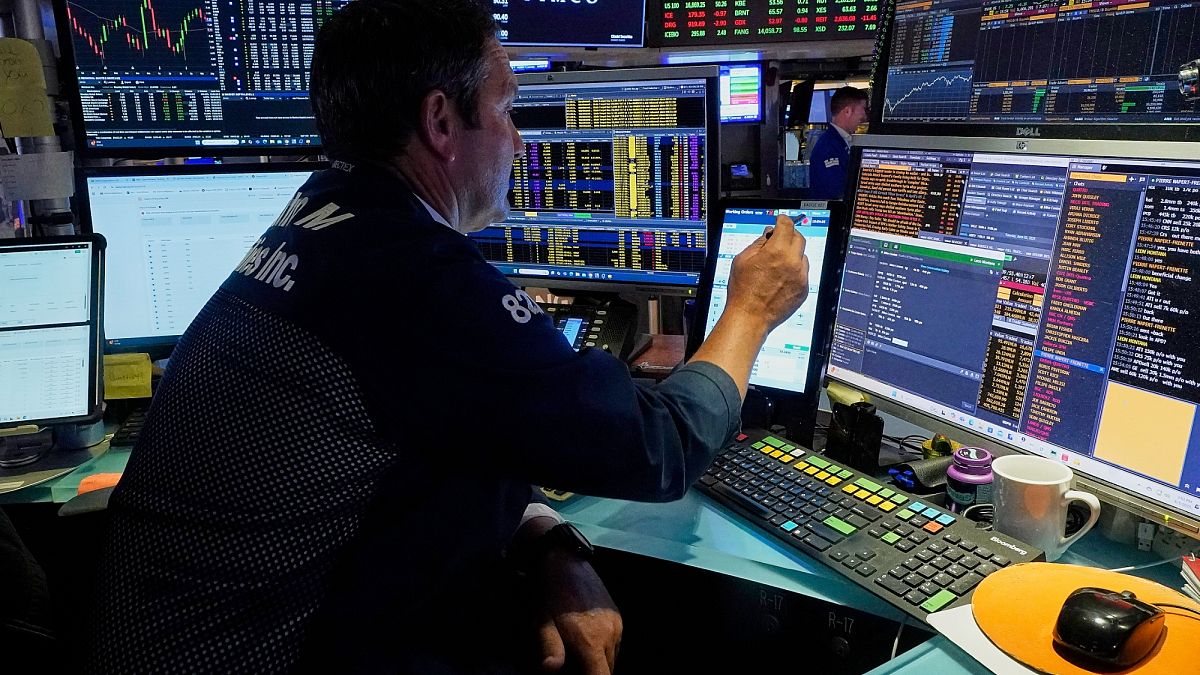
European markets opened lower in response. London's FTSE 100 fell 0.4%, Paris's CAC 40 dropped 1.1%, Frankfurt's DAX declined 1.3%, and Milan's FTSE MIB slipped 1.2%. The renewed uncertainty weighed on investor sentiment across the continent, which is already grappling with high energy costs and inflation.
Strait of Hormuz: A Strategic Flashpoint
The Strait of Hormuz, through which about 20% of the world's oil passes, has become the focal point of the US-Iran conflict. On Friday, Iranian Foreign Minister Abbas Araghchi posted on X that passage for all commercial vessels was “declared completely open,” following a fragile ceasefire in Lebanon. That announcement sent oil prices plunging—US crude fell 9.4% and Brent dropped 9.1%—and US stocks surged to record highs, with the S&P 500 leaping 1.2% to an all-time high of 7,126.06.
But the optimism was short-lived. Over the weekend, President Donald Trump declared on his social media network that the US Navy's blockade of Iranian ports remained “in full force” pending a deal on the war. On Sunday, Trump announced the seizure of an Iranian-flagged cargo ship attempting to bypass the blockade. Iran's joint military command called the seizure an act of piracy and vowed a response.
The ceasefire between the US and Iran, now in its second week, is set to expire on Wednesday. Diplomacy remains stalled, and the tit-for-tat ship seizures have escalated tensions. Investors are closely watching whether new talks can avert a prolonged closure of the strait, which would disrupt global oil supplies and push prices higher.
European Economies Under Pressure
For Europe, the crisis adds another layer of economic strain. The continent is still recovering from the energy shock triggered by Russia's war in Ukraine, and higher oil prices feed directly into inflation, raising costs for transport, manufacturing, and households. The European Central Bank faces a delicate balancing act as it tries to tame inflation without stifling growth.
“The problem for markets is not the absence of hope; it is the overpricing of it,” said Stephen Innes of SPI Asset Management in a commentary. “The latest move higher in equities has started to feel less like conviction and more like momentum feeding on itself.”
In contrast to Europe, Asian markets were mostly higher on Monday. Tokyo's Nikkei 225 gained 1% to 59,045.45, Seoul's Kospi rose 1.1% to 6,260.92, Hong Kong's Hang Seng added 0.8% to 26,373.71, and Shanghai's Composite index advanced 0.6% to 4,075.08. Taiwan's Taiex jumped 1.4%, while Australia's S&P/ASX 200 was nearly flat at 8,943.90.
The divergence highlights how the crisis hits different regions unevenly. Europe's heavy reliance on imported energy makes it particularly vulnerable to supply disruptions in the Middle East. The EU leaders meeting in Cyprus this week are expected to discuss the Hormuz crisis alongside Ukraine and mutual defence commitments, but concrete action remains elusive.
Meanwhile, the surge in oil prices is accelerating a shift toward alternative energy. Renewables have already slashed European electricity prices by 25%, and the conflict is driving a record increase in electric vehicle sales across the EU, which rose nearly 50% in March as fuel prices climbed.
In currency markets, the US dollar edged up to 158.90 Japanese yen from 158.79 yen, while the euro rose slightly to $1.1757 from $1.1742. The relative stability of the euro suggests that markets are not yet pricing in a worst-case scenario, but the clock is ticking as the ceasefire deadline approaches.
The coming days will be critical. If the ceasefire collapses and the Strait of Hormuz remains closed, oil prices could spike further, deepening Europe's economic woes. If diplomacy succeeds, the relief could be swift—but as Innes noted, hope alone is not a reliable investment strategy.