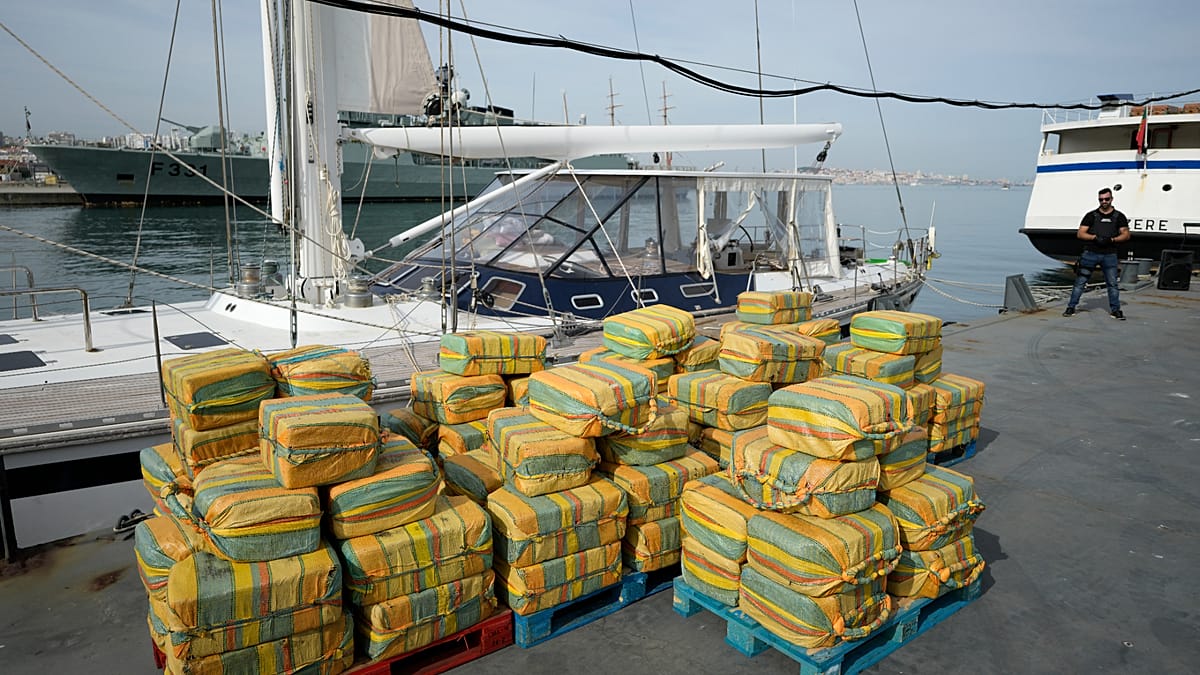
Portuguese authorities have intercepted a cargo ship in the Atlantic and seized approximately five tonnes of cocaine, in what officials describe as a multinational operation. The bust, announced on Tuesday, underscores Portugal's growing role as a transit hub for South American cocaine bound for European markets.
Three foreign nationals were arrested during the operation, though authorities have not yet disclosed their nationalities. The ship was stopped in international waters, and the drugs were discovered hidden among legitimate cargo. The operation involved coordination with several international agencies, reflecting the cross-border nature of modern drug trafficking.
Record seizures in 2026
Portuguese officials noted that this seizure brings the total amount of cocaine confiscated in 2026 to more than the entire amount seized in 2025. This marks a significant escalation in trafficking activity through the Atlantic corridor, which has become a preferred route for South American cartels seeking to reach Europe's lucrative consumer markets.
The port of Lisbon and the Azores have emerged as key entry points, with traffickers exploiting Portugal's long coastline and its historical ties to Portuguese-speaking countries in Africa and South America. The country's geographic position makes it a natural gateway for drugs entering the European Union.
In recent years, Portuguese law enforcement has stepped up cooperation with counterparts in Spain, France, and the UK, as well as with agencies like Europol and Interpol. This operation is a testament to that collaborative approach, which has yielded several high-profile seizures.
The rise in cocaine seizures is not unique to Portugal. Across Europe, authorities have reported record hauls, as global cocaine production reaches historic highs. The UN Office on Drugs and Crime has noted that cocaine supply from Colombia, Peru, and Bolivia has surged, leading to increased trafficking attempts via maritime routes.
Portugal's approach to drug policy, which decriminalised personal possession in 2001, has been widely studied. However, trafficking remains a serious crime, and the authorities are determined to disrupt the supply chains that feed Europe's drug markets.
The three arrested individuals are expected to appear before a judge in Lisbon, where they will face charges of drug trafficking. The investigation is ongoing, and further arrests are possible as authorities trace the shipment's origin and intended destination.
This bust comes amid other news from Portugal, including a sharp drop in fuel prices and the country's growing reliance on solar power. While these stories highlight different aspects of Portuguese life, the cocaine seizure serves as a stark reminder of the challenges the country faces in securing its borders.
As Europe grapples with the consequences of drug trafficking, including violence and addiction, operations like this one are crucial. They not only remove dangerous substances from the streets but also send a message to criminal networks that law enforcement is watching.