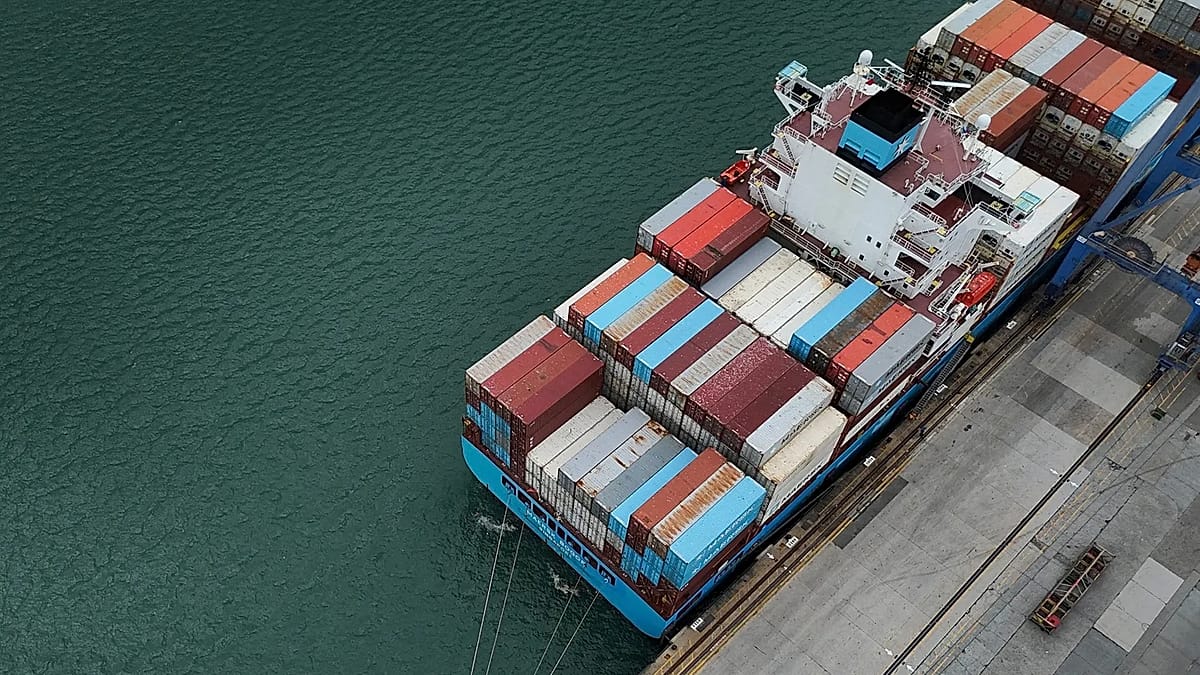
A tanker carrying liquefied petroleum gas has paid a record $5.3 million (€4.5 million) for priority passage through the Panama Canal, as the waterway braces for tighter restrictions linked to the El Niño weather phenomenon. The payment, confirmed by the canal's deputy administrator, underscores the mounting pressure on global shipping routes as drought shrinks the reservoirs that feed the locks.
South Korean firm SK Gas secured the slot for the G. Spirit on 1 September, just two days before authorities are scheduled to reduce the number of daily transits. The auction price, reported by Bloomberg, far exceeds the average of around $55,000 (€47,000) paid for last-minute slots between October 2025 and February 2026.
Drought and El Niño strain a vital artery
Panama declared an emergency over El Niño on Tuesday, as rainfall deficits on the Pacific side reach up to 60% and 11 watersheds face water stress. The canal relies on freshwater from lakes Gatún and Alhajuela, which have been depleted by the prolonged dry spell. In 2023, water levels fell so low that daily transits were cut from 38 to 22, causing lengthy queues and forcing some carriers to reroute.
The current restrictions will see daily crossings drop from 36 to 34 on 3 September, and further to 32 later in the month. El Niño is expected to intensify in the coming months, with effects potentially lasting until May 2027, according to forecasters.
The canal handles roughly 5% of global maritime trade, with the United States, China, Japan, Chile and South Korea as its main users. For European shippers, the disruption adds another layer of uncertainty to supply chains already strained by geopolitical tensions. The Red Sea crisis has forced many vessels to take longer routes around Africa, and any additional bottleneck in the Americas compounds the pressure on freight rates and delivery times.
In April, a liquefied natural gas carrier paid $4 million (€3.4 million) to skip the queue, a sign of how valuable timely passage has become. The latest record payment highlights the lengths to which companies will go to avoid delays, especially as global ocean temperatures hit record highs and climate patterns become more erratic.
The drought is not confined to Panama. Across Europe, similar water stress has exposed Danube's record low waters, revealing fossils and WWII wrecks, and has hit agricultural output, as seen in France's potato harvest. The Panama Canal's plight is a stark reminder that climate variability is a global challenge with cascading economic effects.
For now, the canal authority is managing the situation through auction mechanisms and advance bookings. Ships without reservations face an average wait of five days, a figure that could grow if restrictions tighten further. The record payment by SK Gas may be a harbinger of more costly transits to come, as the canal's operators balance water conservation against the demands of international commerce.
As El Niño's grip intensifies, the canal's ability to maintain reliable service will be tested. The coming months will reveal whether the waterway can adapt to a drier climate, or whether the world's shipping lanes will face more frequent and expensive disruptions.