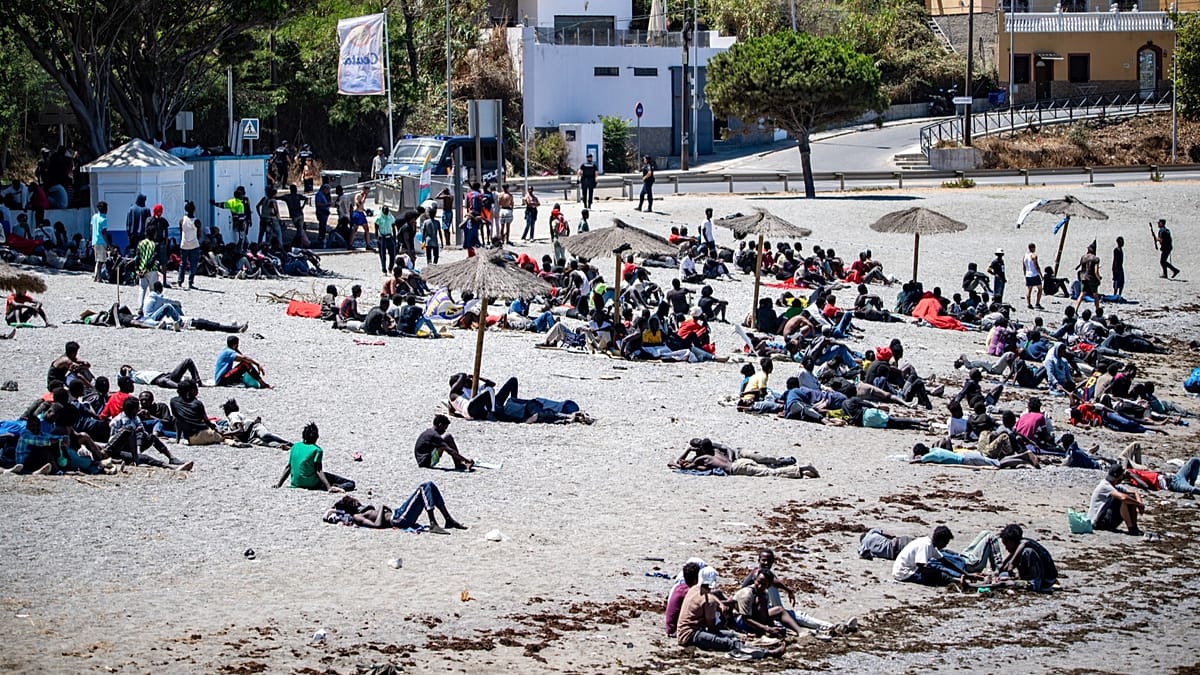
Three Moroccan nationals who entered the Spanish enclave of Ceuta during the late-July mass crossing have been arrested over alleged sexual assaults, as local courts and police investigate a series of complaints filed since the end of July. The alleged victims are also migrants, several of them underage girls.
The arrests follow reports by minors who said they were sexually assaulted after crossing the border and staying in the autonomous city. By 11 August, the National Police had registered six complaints lodged by minors, the force confirmed to the news portal maldita.es.
Both the complainants and the alleged perpetrators are believed to have arrived from Morocco during the mass entry, which saw thousands of people cross into Ceuta in a single day. The cases are being examined individually to clarify the circumstances of each complaint and establish responsibility.
Two held in pre-trial detention
Of the three detainees, two remain in pre-trial detention, while a judge has ordered the expulsion of the third, according to court records in Ceuta. The two prison committals relate to cases involving minors.
One suspect is accused of an alleged sexual assault involving penetration and of an offence against public health, as he is also said to have forced the victim to sell drugs. Ceuta's Investigating Court No. 4 ordered that he be remanded in custody without bail.
The other imprisonment was ordered by Investigating Court No. 5. In this case, police are investigating an alleged sexual assault involving touching of another minor.
The third case concerns an adult woman who reported being groped. The suspect was in an irregular immigration status in Spain, and Investigating Court No. 4 ordered his expulsion.
Complaints since the mass crossing
The situation of underage girls who arrived in Ceuta has become one of the most sensitive issues in the migrant influx. Medical services had already treated at least four underage migrants last week for possible sexual assaults, while courts in the city had received at least six complaints related to these offences.
One of the first investigations to come to light was opened after a minor who had entered Ceuta during the mass arrival reported an alleged assault. The National Police then took charge of the inquiries to establish what happened.
The developments have intensified pressure on Spanish authorities, with Ceuta's leader calling for a detention center to manage the influx. The city has also seen protests escalating as Madrid faces mounting pressure over the care of unaccompanied minors.
Doctors in Ceuta have reported rapes of migrant girls following the border surge, adding to the urgency of the situation. The Spanish government has yet to announce specific measures to address the allegations, but the courts are moving swiftly to process the cases.
The mass crossing has also reignited diplomatic tensions, with Morocco renewing its claims over Ceuta and Melilla amid the abuse accusations. The Spanish enclaves remain a flashpoint in EU-Morocco relations, and the latest incidents are likely to complicate efforts to manage migration cooperatively.
As investigations continue, human rights groups have urged Spanish authorities to ensure that all victims, particularly minors, receive appropriate protection and support. The cases highlight the vulnerabilities of migrants in transit and the challenges faced by frontline cities like Ceuta in upholding the rule of law while managing humanitarian needs.