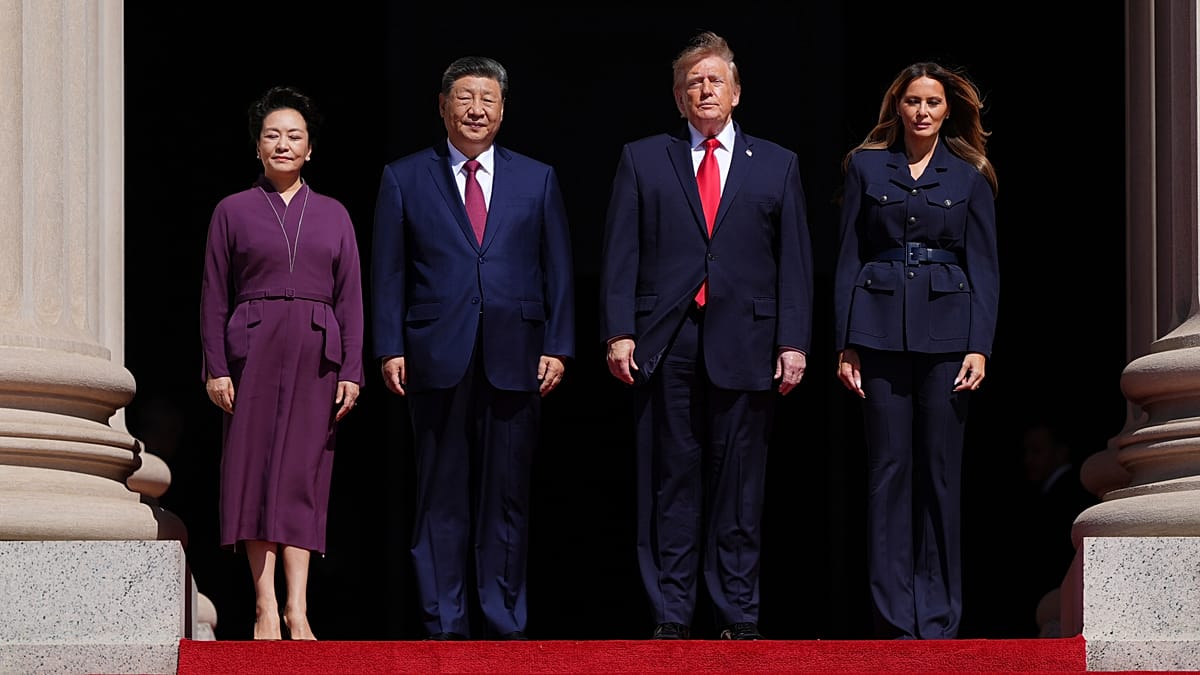
Chinese President Xi Jinping's state visit to Washington drew to a close on Friday, marked by elaborate ceremonial displays and a carefully curated message of harmony between the world's two largest economies. The visit, which included a private 90-minute meeting with US President Donald Trump on Thursday, was framed by both leaders as an opportunity to manage their nations' rivalry without confrontation.
According to the official Chinese readout, the two leaders discussed the Middle East, Ukraine, and the Korean Peninsula. The White House, however, has remained silent on the specifics of the talks, leaving open questions about any progress on contentious issues such as trade imbalances and the governance of artificial intelligence. The lack of detail has fueled speculation among diplomats in Brussels and other European capitals about the direction of US-China relations, a dynamic that carries significant implications for Europe's economic and security interests.
A display of shared heritage
The visit was punctuated by symbolic gestures. On Friday, Trump escorted Xi to the National Archives in Washington, where the Declaration of Independence, the Constitution, and the Bill of Rights are housed. Trump described these documents as "some of the greatest treasures of that proud history," and drew parallels between the American founding and China's own historical trajectory.
"Just as our ancestors reached across the ocean centuries ago to trade, to learn, and to build a better world, our two countries do really the same thing, and we're very proud of it," Trump said. The choice of venue underscored the administration's effort to frame the bilateral relationship in terms of shared values and mutual benefit, rather than strategic competition.
On Thursday evening, Trump and First Lady Melania Trump hosted a black-tie state dinner in honor of Xi and his wife, Peng Liyuan. The guest list read like a who's who of American technology and business leaders, including Amazon founder Jeff Bezos, Tesla and SpaceX CEO Elon Musk, OpenAI CEO Sam Altman, Nvidia CEO Jensen Huang, Dell Technologies chairman Michael Dell, and Google and Alphabet CEO Sundar Pichai. Bernard Arnault, CEO of French luxury goods giant LVMH, was also in attendance, a nod to the transatlantic business community that watches US-China relations closely.
In his toast, Trump emphasized the personal rapport between the two leaders: "President Xi and I both understand we represent different systems, but the ties between our people endure, and we've never gotten along better." He added that together they could "continue to build a relationship that promotes prosperity and security for future generations."
Xi, for his part, acknowledged the ideological divide while stressing common goals. "President Trump has pledged to make America great again," he said, "and China is committed to achieving great national rejuvenation." The carefully calibrated remarks reflected a mutual desire to project stability, even as underlying tensions remain unresolved.
Trump also presented Xi with an eagle statue, which he said was designed "in personal collaboration with Melania and myself." The gift, like much of the visit, was rich in symbolism but light on substantive policy announcements.
For European observers, the summit's outcome is being watched with particular interest. The EU has a significant stake in US-China trade dynamics, as evidenced by recent extensions of the trade truce that affect global supply chains. Analysts note that any US-China agreement on technology standards or export controls could have ripple effects across European industries, from automotive to semiconductors.
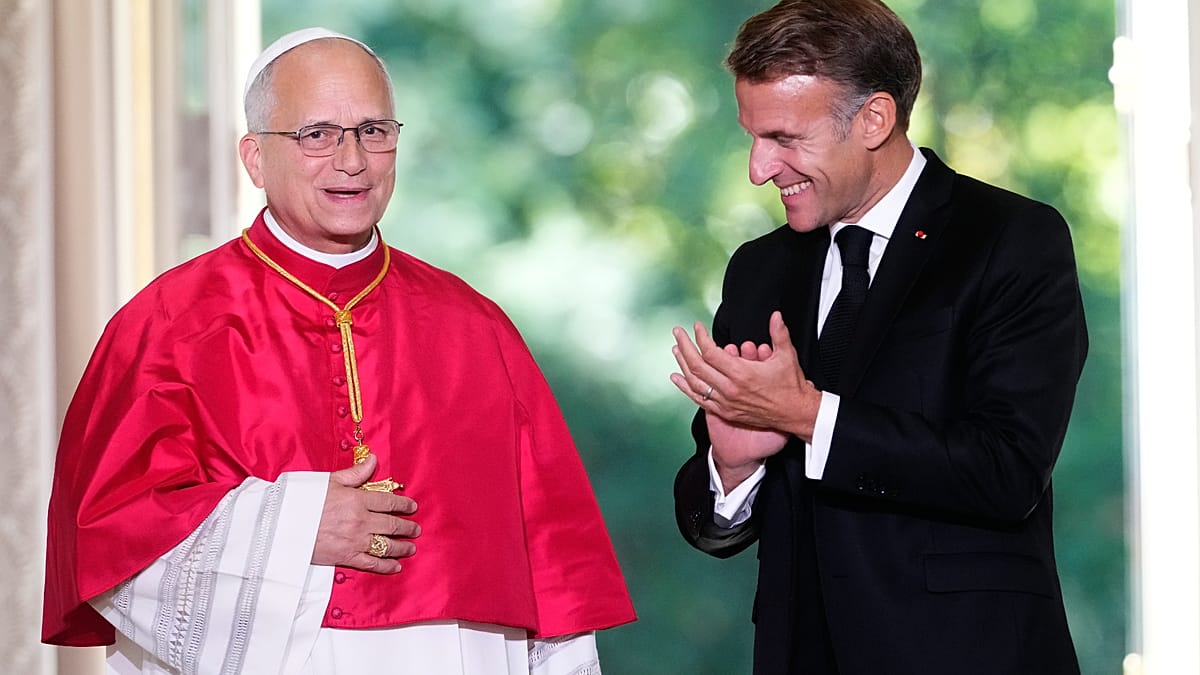
The visit also comes amid broader geopolitical shifts, including Pope Leo XIV's first official visit to France, which underscores Europe's own diplomatic engagements. Meanwhile, European leaders are grappling with how to position themselves in a world where Washington and Beijing are increasingly defining the rules of engagement.
Despite the harmonious tone, key questions remain unanswered. Will the two leaders follow through on their pledge to manage AI risks? Can they bridge differences on trade and technology transfer? And how will their relationship shape Europe's strategic autonomy? The lack of concrete outcomes from the private talks leaves these issues open, and European policymakers will be watching closely for signals in the coming weeks.
As Xi departs Washington, the visit's legacy may hinge less on the pomp and ceremony and more on the unspoken details of what was—and was not—agreed behind closed doors.