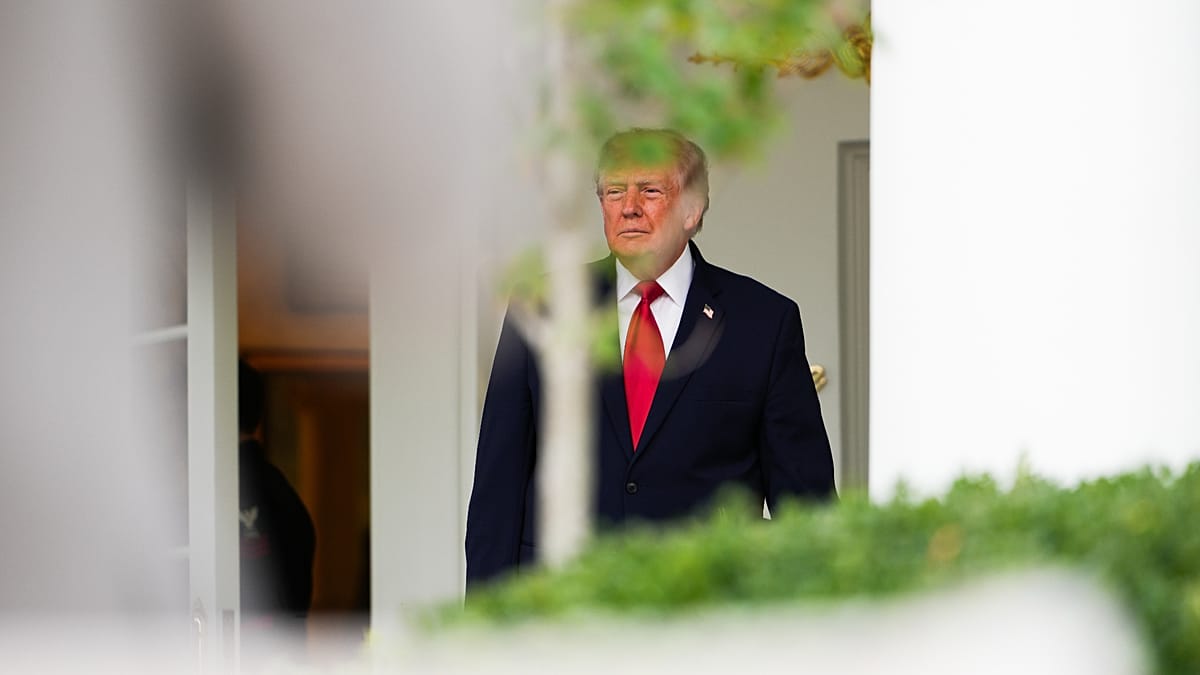
US President Donald Trump has defended his decision to negotiate with Russia over diesel supplies, saying he prefers making deals to criticising foreign leaders. "I have to make deals with people, so I don't go around calling them names. I'm a dealmaker," Trump said on October 13, responding to a question about Republican Senator Dan Sullivan's criticism of Russian President Vladimir Putin and opposition to the agreement.
Sullivan has described Putin as a dictator and authoritarian leader, highlighting divisions within the Republican Party over Trump's approach to Moscow. Trump blamed former US President Joe Biden for the war in Ukraine, arguing that the conflict would never have started had he been in office. He also repeated his unsubstantiated claim that the 2020 presidential election was rigged.
The agreement, announced by Trump on October 9, provides for an initial shipment of more than 300,000 metric tonnes of Russian diesel, followed by further deliveries in the coming months. The administration's move to ease restrictions on Russian diesel exports has drawn criticism from lawmakers who argue that it could weaken efforts to pressure Moscow over its invasion of Ukraine.
European reactions and implications
The deal has significant implications for Europe, which has been grappling with energy security since Russia's full-scale invasion of Ukraine. European leaders have largely condemned the agreement, seeing it as a strategic win for the Kremlin. EU foreign policy chief Kaja Kallas has called it a strategic win for Putin, while Italian Prime Minister Giorgia Meloni has described it as "very risky" and a legitimisation of Moscow. Latvian MEP Sandra Kalniete has accused Trump of dubious motives, and Meloni's warning echoes broader concerns across the continent.
However, not all European voices are united in opposition. Bulgarian Prime Minister Boyko Borissov has broken with EU consensus by backing the deal, citing economic pragmatism. This divergence highlights the delicate balance between energy needs and political solidarity with Ukraine.
The deal also comes at a time when the International Energy Agency (IEA) has warned that diesel prices in Europe may climb as a global supply crunch persists. The IEA's warning underscores the potential impact of the agreement on European consumers and industries, which are already facing high energy costs.
Critics argue that the deal undermines the transatlantic unity that has been crucial in imposing sanctions on Russia. By easing restrictions on Russian diesel, the US may be sending a signal that economic interests can override geopolitical principles. This could embolden Moscow and weaken the resolve of European allies who have borne significant costs in supporting Ukraine.
Supporters of the deal, including Trump, argue that engaging with Russia is necessary to stabilize global energy markets and avoid further price spikes. They point to the practical benefits of securing diesel supplies, especially as winter approaches and demand increases. However, opponents counter that such deals only serve to finance Russia's war machine and prolong the conflict.
The controversy also reflects a broader debate within the Republican Party about the appropriate stance toward Russia. While some, like Sullivan, advocate a hardline approach, others see value in pragmatic engagement. This internal division could have implications for US foreign policy and its relations with European allies.
For Europe, the deal is a reminder of the continent's continued dependence on Russian energy, despite efforts to diversify. The EU has made significant strides in reducing its reliance on Russian gas, but diesel remains a critical import. The agreement may force European leaders to reconsider their own energy strategies and accelerate the transition to alternative sources.
As the situation develops, European policymakers will be watching closely to see whether the deal leads to further easing of sanctions or if it remains an isolated move. The coming months will test the unity of the transatlantic alliance and the commitment to holding Russia accountable for its aggression in Ukraine.