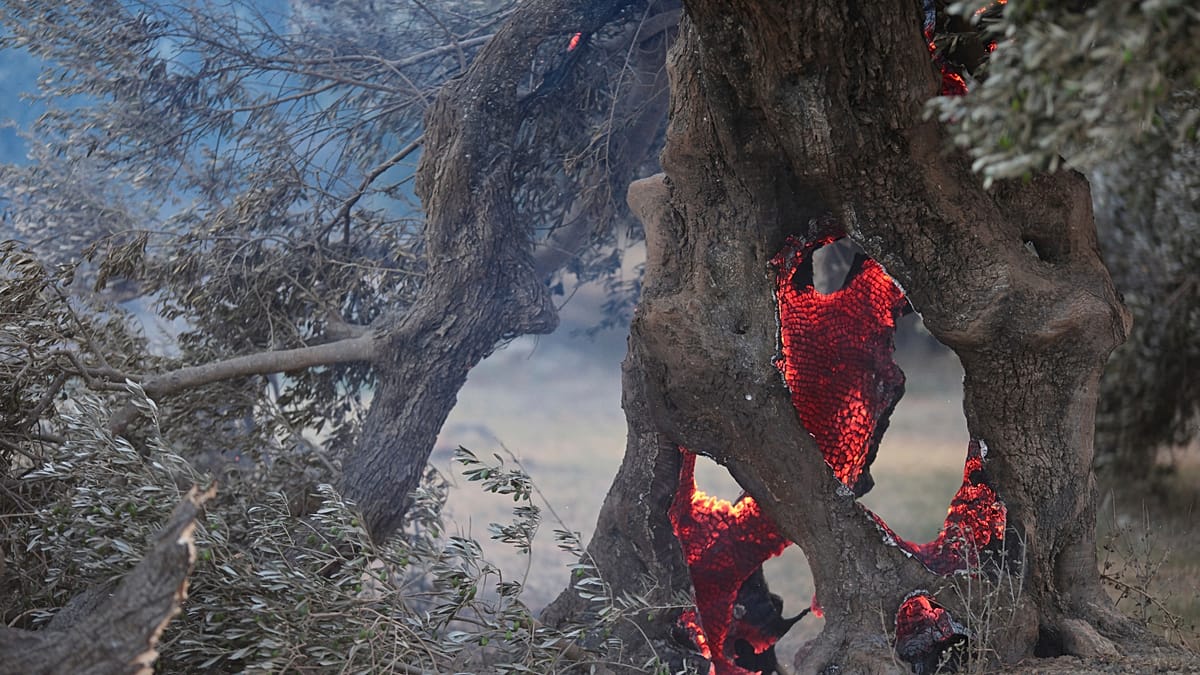
Two firefighters have died while battling wildfires on the Greek island of Crete, as strong winds continued to drive flames across parched terrain. The deaths were confirmed on [date] as authorities scrambled aircraft and ground crews to contain multiple fronts.
The victims, whose names have not yet been released, were part of a team tackling a blaze near the village of [village name] in the island's [region] district. According to local officials, they were overtaken by a sudden shift in wind direction, a common hazard in Mediterranean firefighting.
Fierce conditions hamper firefighting efforts
Greece has been battling an unusually intense wildfire season, with temperatures soaring above 40°C in many areas and vegetation left tinder-dry after months of below-average rainfall. On Crete, the fires have forced evacuations of several settlements, including parts of the popular tourist area around Chania and Rethymno.
Firefighting aircraft, including Canadair water bombers and helicopters, have been operating since dawn, dropping water and retardant on the advancing flames. Ground crews, supported by volunteers and municipal workers, are working to protect homes and critical infrastructure.
"The situation remains extremely difficult," said Vassilis Vathrakogiannis, spokesperson for the Greek Fire Service, in a televised briefing. "We are doing everything possible to protect lives and property, but the wind is making the fire unpredictable."
The deaths bring the toll from this summer's wildfires in Greece to at least [number], with several other injuries reported. Earlier this month, two helicopter crew members died in a crash while battling a blaze near Athens, as the capital region remained on high alert.
The European Union has activated its Civil Protection Mechanism, with Italy, France, and Spain sending additional aircraft and firefighting teams. The bloc's wildfire response tools are under strain, as southern Europe faces a longer and more intense fire season linked to climate change.
"We are seeing a pattern across the Mediterranean," said Dr. Elena Papadopoulou, a fire ecology researcher at the University of Athens. "The fire season is starting earlier and ending later, and the intensity of the blazes is beyond what our current prevention and response systems were designed for."
In recent weeks, wildfires have also forced evacuations in Spain, where a heatwave triggered toxic alerts, and in the Netherlands, where a forest fire near the German border spread to 100 hectares. The heatwave has also led to French reactor shutdowns as cooling water temperatures rose.
On Crete, the immediate priority is containment. Firefighters are using bulldozers to create firebreaks, while water-dropping aircraft target the hottest spots. The Greek government has declared a state of emergency for the affected municipalities, allowing for rapid deployment of resources.
"We are heartbroken," said the mayor of [town name], where the two firefighters were based. "They gave their lives protecting our community. We will honor their memory."
The deaths have reignited debate over firefighting safety and prevention. Critics argue that Greece and other EU member states have focused too heavily on response rather than on measures like controlled burns, forest management, and early warning systems. A recent reader discussion on EU wildfire strategy highlighted the divide between those calling for more investment in prevention and those insisting on stronger response capabilities.
As the sun set over the Aegean, the fires on Crete continued to burn, but officials said the wind was expected to ease overnight, offering a window for crews to gain ground. "We are cautiously optimistic," Vathrakogiannis said. "But we remain on high alert."