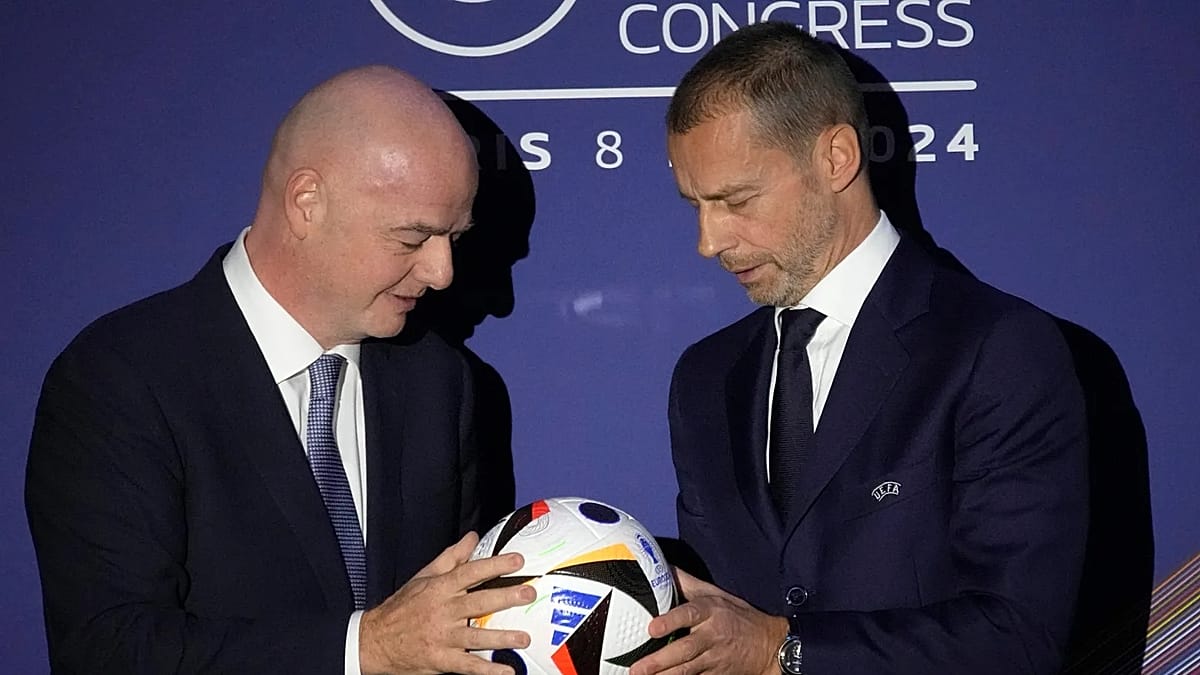
European football's governing body, UEFA, has made clear that FIFA's recent apology over its handling of a proposed private investment scheme does not go far enough. In a statement issued on Thursday, UEFA said the conditions set by its 55 member associations for participating in FIFA competitions have not been met, leaving the threat of a boycott firmly on the table.
The dispute centres on the FIFA Forward Enterprise (FFE), a plan that would have allowed third-party investors to acquire minority, non-controlling stakes in a new subsidiary managing FIFA's commercial and event operations. The proposal, valued at around $20 billion, was met with widespread opposition across the football world, prompting UEFA to announce that its members would boycott FIFA competitions while the plan remained active.
Following a crisis meeting in Rabat, Morocco, on Wednesday, FIFA acknowledged that "mistakes" were made and issued an apology to its member associations. However, UEFA's response was unequivocal: "Yesterday's announcement that some people employed by the FIFA President (and whose careers depend on his favour) agree with him changes nothing."
UEFA's statement went further, reiterating the two conditions that must be met before any participation in FIFA events can resume. "First, the proposals to sell off the major competitions had to be withdrawn and secondly, assurances have to be made that such attempts to disfigure the game in this way will never be made again," the statement read. "These conditions have not been met."
Infantino's position under scrutiny
The Rabat meeting was convened to discuss the fallout from the FFE's failure and to chart a way forward for world football's governing body. FIFA emerged from the talks with a statement affirming that President Gianni Infantino had the "full support" of Secretary General Mattias Grafström and the FIFA management board. Yet that show of solidarity has done little to quell the criticism from European quarters.
UEFA's stance is not isolated. FIFPRO, the global players' union, issued a scathing rebuke of both the FFE and FIFA's handling of the affair, describing it as "not merely a governance failure" but a "profound abuse of presidential power." The organisation's statement added weight to the growing chorus of discontent surrounding Infantino's leadership.
The controversy has also sparked political fallout within the sport. Wales has already withdrawn its support for Infantino's re-election, and other national associations are reportedly considering similar moves. Meanwhile, Luis Figo has called for Infantino to resign, accusing him of "debasing" the presidency, and Prince Ali has alleged blackmail in the ongoing leadership crisis.
The rift between UEFA and FIFA is not new, but the FFE episode has brought it into sharp relief. UEFA and CONCACAF have both turned against Infantino following the scrapping of the investment plan, and the prospect of a European boycott of FIFA events, including the World Cup, remains a real possibility.
For now, UEFA's position is clear: without a full withdrawal of the FFE proposal and binding assurances that similar plans will not resurface, European teams will not take part in FIFA competitions. The ball, as it were, is in FIFA's court.