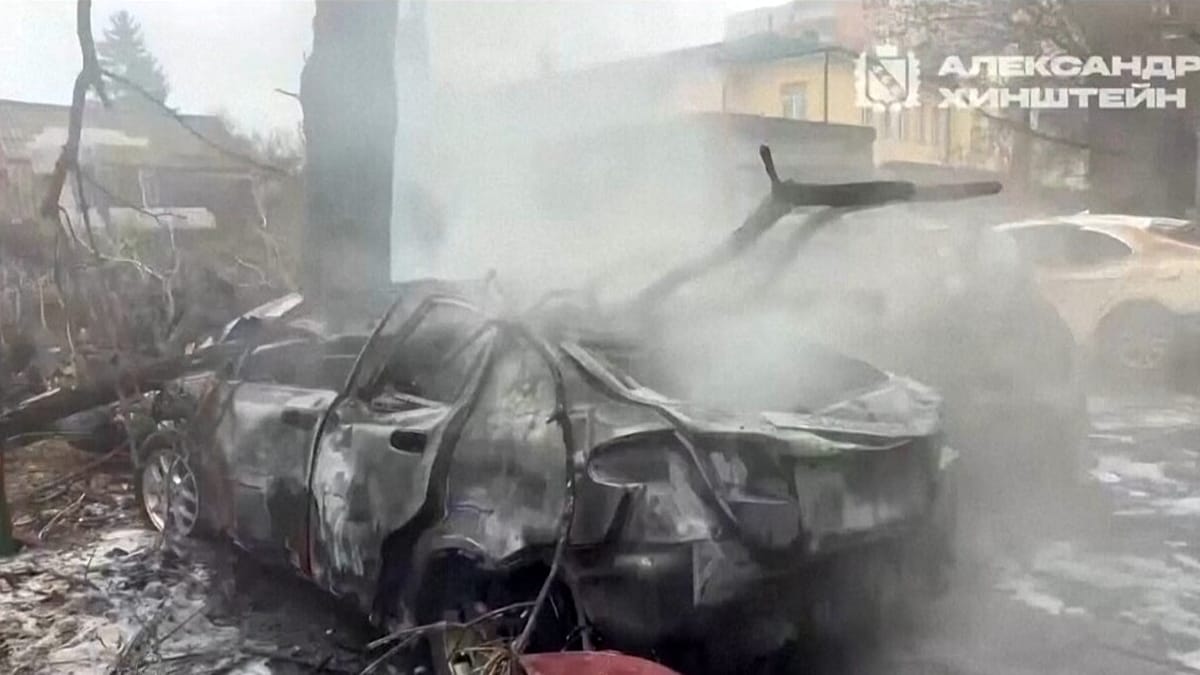
At least 11 people were injured on Thursday when a Ukrainian strike hit the Russian city of Kursk, according to regional governor Alexander Khinshtein. The daytime attack damaged an apartment building, several private homes, and a range of public facilities, including a regional court, a central library, a medical college, and the facade of a trauma centre.
Khinshtein, who was appointed governor of the Kursk region in late 2024, said the injuries were caused by falling debris and blast waves from weapons he did not identify. He described the victims' injuries as minor, but the incident underscores the continued vulnerability of Russian border cities to Ukrainian long-range strikes.
Civilian infrastructure in the crosshairs
The attack on Kursk is part of a broader pattern of Ukrainian strikes on Russian territory, particularly in regions bordering Ukraine. While Kyiv rarely claims responsibility for such attacks, they are widely seen as a response to Russia's ongoing bombardment of Ukrainian cities. Just days earlier, a Russian strike on the historic centre of Odesa killed four people and wounded 13, highlighting the reciprocal nature of the conflict.
The damage to civilian buildings in Kursk—including a court and a library—raises questions about the accuracy of Ukrainian targeting and the potential for unintended harm. However, Ukrainian officials have consistently argued that such strikes are aimed at military infrastructure and logistics hubs that support Russia's invasion.
The incident also comes amid heightened tensions over the use of long-range weapons. European allies have debated whether to allow Ukraine to use Western-supplied missiles for deeper strikes inside Russia, a topic that remains contentious. The EU's latest sanctions package is partly designed to pressure Moscow economically, but military escalation continues on the ground.
Regional impact and European security
Kursk, located about 100 kilometres from the Ukrainian border, has been a frequent target of Ukrainian drones and missiles. The region has also seen ground incursions by Ukrainian forces, most notably in August 2024, when Kyiv launched a surprise offensive that captured territory in the Kursk oblast. That operation, which was not officially acknowledged by Ukraine, marked the first time foreign troops had entered Russian territory since World War II.
The ongoing attacks on Russian soil have complicated diplomatic efforts to end the war. While the United States and European nations have pushed for direct peace talks, Russia has stalled, insisting that its military objectives remain unchanged. The Kremlin has also used such attacks to rally domestic support, framing them as evidence of Western aggression.
For European observers, the strikes on Kursk are a reminder that the war is not confined to Ukrainian territory. The conflict has already had wide-ranging consequences for the continent, from energy security to migration flows. The recent NATO posture in Norway and the drone incident over Moldova illustrate how the war's ripple effects extend far beyond the front lines.
As the war enters its fourth year, the cycle of strikes and counter-strikes shows no sign of abating. The damage in Kursk is a stark reminder that civilians on both sides of the border continue to bear the brunt of the conflict. While the injuries in this attack were relatively light, the psychological and infrastructural toll is significant.
European leaders, meanwhile, are grappling with how to support Ukraine without escalating the conflict further. The debate over long-range missiles and the tightening of sanctions are just two facets of a complex policy puzzle. For now, the people of Kursk—and those in Ukrainian cities like Odesa—remain caught in the middle.