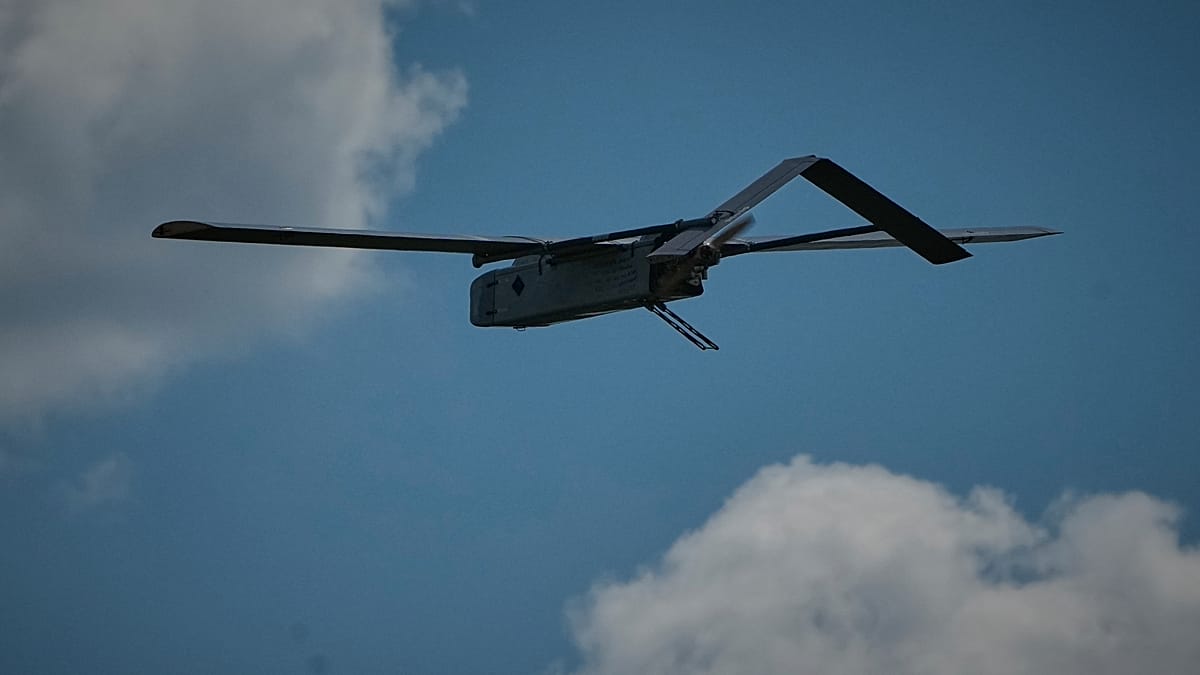
New US tariffs of up to 100% on drones and certain drone components came into force on Thursday, as Washington moves to cut its dependence on Chinese suppliers in a sector where Beijing holds a commanding lead. The duties, signed into effect by President Donald Trump in August, are framed as a response to what the White House calls "the national security threat posed by imports of drones and their components."
The measures are designed to bolster domestic supply chains and reduce vulnerabilities in a technology that has become central to modern warfare and surveillance. The war in Ukraine has starkly demonstrated the strategic importance of drones, and US officials argue that reliance on Chinese-made systems—chiefly those produced by market leader DJI—leaves American military and critical infrastructure exposed to disruption, espionage, and battlefield disadvantage.
Tariff structure and scope
Drones with a takeoff weight exceeding 25 kilograms, as well as those equipped with thermal imaging capabilities or docking stations, will face a 100% tariff. Smaller drones are subject to a 25% duty. Certain drone components deemed "not particularly sensitive" will also be hit with tariffs, though those measures will not take effect until 9 February next year.
The move is part of a broader US strategy to reshore manufacturing of advanced technologies, a trend that has already seen the EU impose its own levies on Chinese imports in other sectors. European policymakers are watching closely, as the tariffs could reshape global supply chains and affect European drone manufacturers that rely on Chinese components.
China's response
Beijing swiftly condemned the tariffs. A spokesman for China's commerce ministry said the duties would "disrupt the global drone supply chain and further undermine a fair and competitive market environment," adding that China firmly opposed the move and urging Washington to withdraw them.
DJI, founded in 2006, has captured more than two-thirds of the global drone market in recent years, according to several studies. The company has been on a US list of Chinese firms linked to the country's military since 2022, which restricts its access to American technology. DJI has contested its inclusion on that list.
The tariffs come amid a broader trade confrontation between Washington and Beijing, with G20 finance chiefs meeting in Asheville under the shadow of US pressure on tariffs and other issues. European allies are also navigating their own trade disputes with the US, as seen in Canada's counter-tariffs on US goods and the ongoing tensions over automotive tariffs.
For Europe, the implications are twofold. On one hand, European drone manufacturers could benefit from reduced Chinese competition in the US market, potentially opening new export opportunities. On the other, the tariffs may accelerate a fragmentation of global supply chains, forcing European firms to diversify their sourcing and production—a challenge that the EU's defence strategy is already grappling with in other areas.
Analysts note that the US move is unlikely to immediately dent DJI's dominance, given the company's scale and technological lead. However, the tariffs could spur investment in American and European drone startups, particularly in the military and commercial sectors. European countries, including France, Germany, and Poland, have been increasing their drone capabilities, and the new US tariffs may prompt a reassessment of supply chains across the continent.
The long-term impact remains uncertain, but the tariffs signal a clear shift in US policy toward strategic decoupling from China in critical technologies. For European businesses and governments, the message is clear: the era of cheap, readily available Chinese drones may be coming to an end, and adaptation will be necessary.