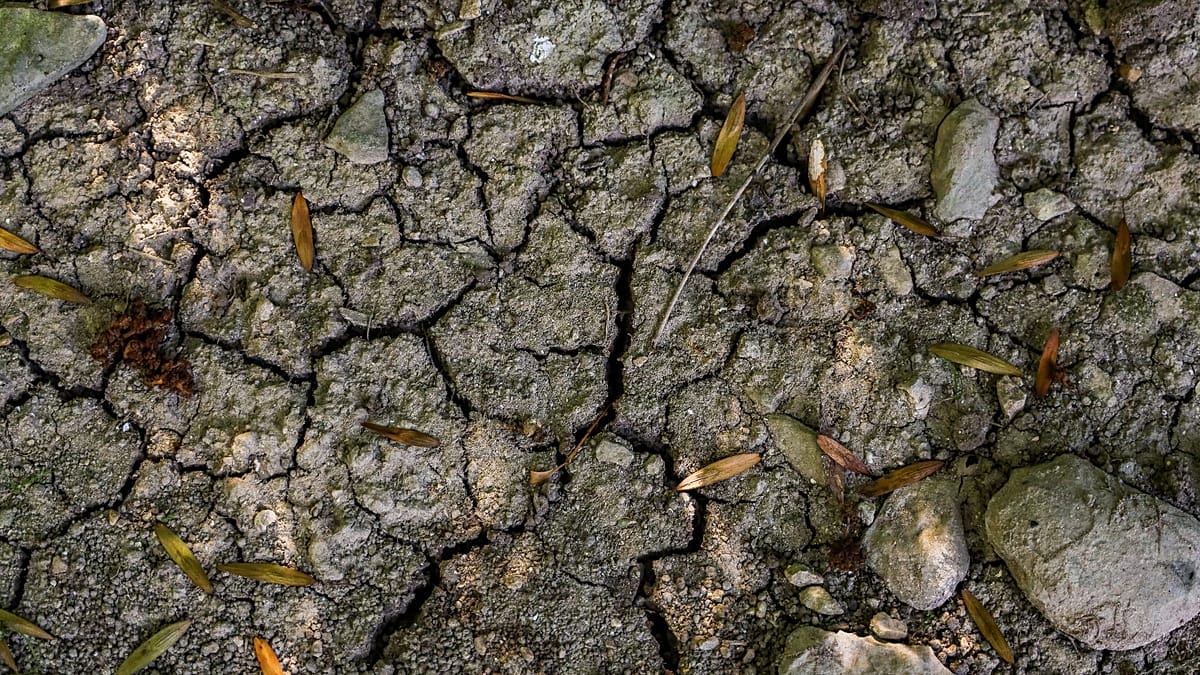
France is entering the autumn season with a deeply worrying hydrological picture. According to the latest bulletin from the French Geological and Mining Research Bureau (BRGM), published on 8 October, 66% of groundwater monitoring points across the country are below seasonal norms as of 1 October. Even more concerning, 81% of these levels are still falling, while only 7% have begun to rise.
The natural cycle of groundwater replenishment, which typically begins in autumn as rains seep into the soil, has been slow to materialise this year. After a summer marked by exceptional drought, the ground remains parched, and the first rains have largely been absorbed by dry surface soils rather than reaching deeper aquifers. Evapotranspiration, driven by lingering warmth and vegetation, is also diverting a significant share of precipitation before it can infiltrate.
A deficit that mirrors 2022
The situation is already far worse than it was a year ago. On 1 October 2025, only 31% of monitoring points were below normal; today that figure has doubled to 66%. The BRGM describes the current state as "as worrying as in 2022," a year when an exceptional drought, combined with scant rainfall and heavy abstraction, led to an exceptionally severe low-water situation across much of the country.
This year, the problem is not confined to the so-called "reactive" aquifers that respond quickly to rainfall. Even the slower-moving "inertial" aquifers, which can take months or longer to recover, are showing significant deficits. In regions such as Limousin, Morvan, Livradois, Forez, Vivarais, and the eastern belt from Champagne to Lorraine, through northern Alsace and into the Jura, levels are particularly low. By contrast, several aquifers in the south-east still show more favourable conditions, according to the BRGM's latest map.
The stakes are high. Groundwater supplies nearly two-thirds of France's drinking water and more than one-third of the water used in agriculture, a sector already hit hard by the 2026 drought. The autumn recharge is critical to rebuilding reserves before the next dry season.
Whether the aquifers can recover depends on sustained, substantial rainfall over the coming weeks. Isolated showers will not be enough to offset the accumulated deficit. The BRGM warns that the slowest-responding aquifers will likely continue to decline until the end of autumn, and that a wetter-than-normal winter may be necessary in the most depleted areas to bring levels back close to normal.
Forecasts remain uncertain. Météo-France has not yet identified a clear scenario for whether the autumn will be generally dry or wet across the country. The coming weeks will be decisive, but the early signs are not encouraging.
For a broader perspective on how drought is affecting other parts of the world, see Sri Lanka's central drought. Closer to home, France's political and economic challenges continue to make headlines, as seen in the country's debt spiral. Meanwhile, the government's handling of domestic unrest remains a topic of debate, with acknowledgments of student anger and a decision to halt stun grenades at protests.