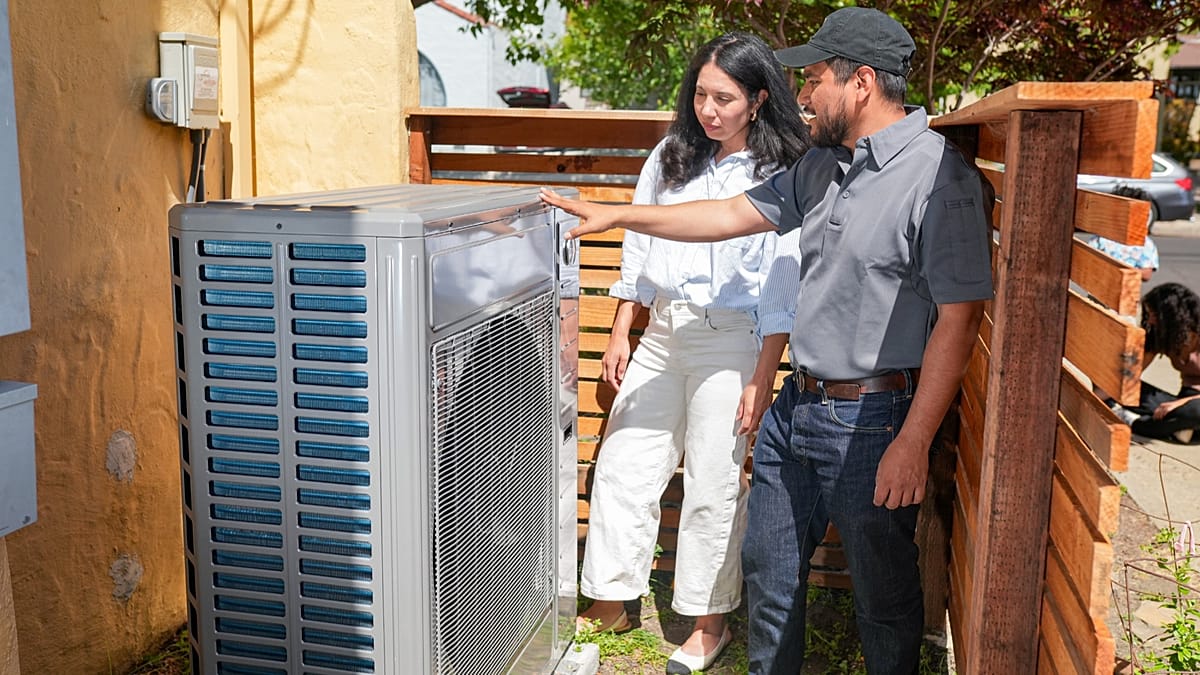
Heat pumps could eliminate roughly a quarter of the European Union's energy-related emissions, according to new analysis from the European Heat Pump Association (EHPA). The technology, which extracts heat from air, water, or ground rather than burning fossil fuels, is already deployed in around 30 million homes across the continent. Yet the pace of installation is falling short of what is needed.
The EHPA calculates that if every building and suitable industrial process in the EU were fitted with a heat pump powered by renewable electricity, the bloc would avoid about 600 million tonnes of CO2 each year. That figure is larger than the annual emissions of Germany, the EU's largest economy, and exceeds the combined output of the 17 smallest member states.
How heat pumps work
Heat pumps operate on the same principle as a refrigerator, but in reverse. A liquid refrigerant absorbs ambient energy from the air, water, or ground, then is compressed into a hot gas. That gas releases heat to a building's central heating system, cools, and returns to liquid form to repeat the cycle. For every kilowatt-hour of electricity consumed, a typical heat pump delivers three to four kilowatt-hours of heat, making it far more efficient than conventional electric resistance heating.
According to the EHPA, each residential heat pump installed displaces on average 1,100 cubic metres of natural gas and two tonnes of CO2 per year, assuming the electricity used is from renewable sources. With about three million units added in 2025, the EU is one million short of the European Commission's annual target of four million installations.
Despite the clear benefits, heat pumps have become the target of a wave of misinformation questioning their performance in cold climates, their noise levels, and their suitability for older buildings. The EHPA has repeatedly debunked these claims, pointing to successful installations in Nordic countries and renovated historic structures across Europe.
Leaders urged to act
Paul Kenny, director general of the EHPA, did not mince words: “Leaders need to stop fiddling while the world burns and do what works. Heat pumps are already delivering emissions cuts and protection from fossil fuel prices.”
Kenny called on national governments to simplify the installation process, provide upfront financial support, ensure affordable clean electricity, and streamline grid connections. “Climate change does not wait and nor should we,” he added.
The urgency is underscored by recent energy market volatility. While EU household energy prices dipped in early 2026, experts warn that relief may be short-lived. Meanwhile, fossil fuel emissions are projected to fall slightly in 2026, but the decline is far from sufficient to meet climate targets.
The geopolitical dimension adds further weight. Russian strikes on Ukrainian energy infrastructure have repeatedly disrupted supplies, and the UAE has pledged steady energy supplies to Europe amid regional turmoil. Reducing dependence on imported fossil fuels through electrification and heat pumps is a strategic priority for the continent.
The EHPA's analysis comes as the EU reviews its building energy performance directives and national energy and climate plans. Member states such as Germany, France, and Poland are grappling with how to accelerate the transition while managing costs for households and businesses.
For Kenny, the path is clear: “We have the technology, we have the know-how. What we need is political will and consistent policy.”