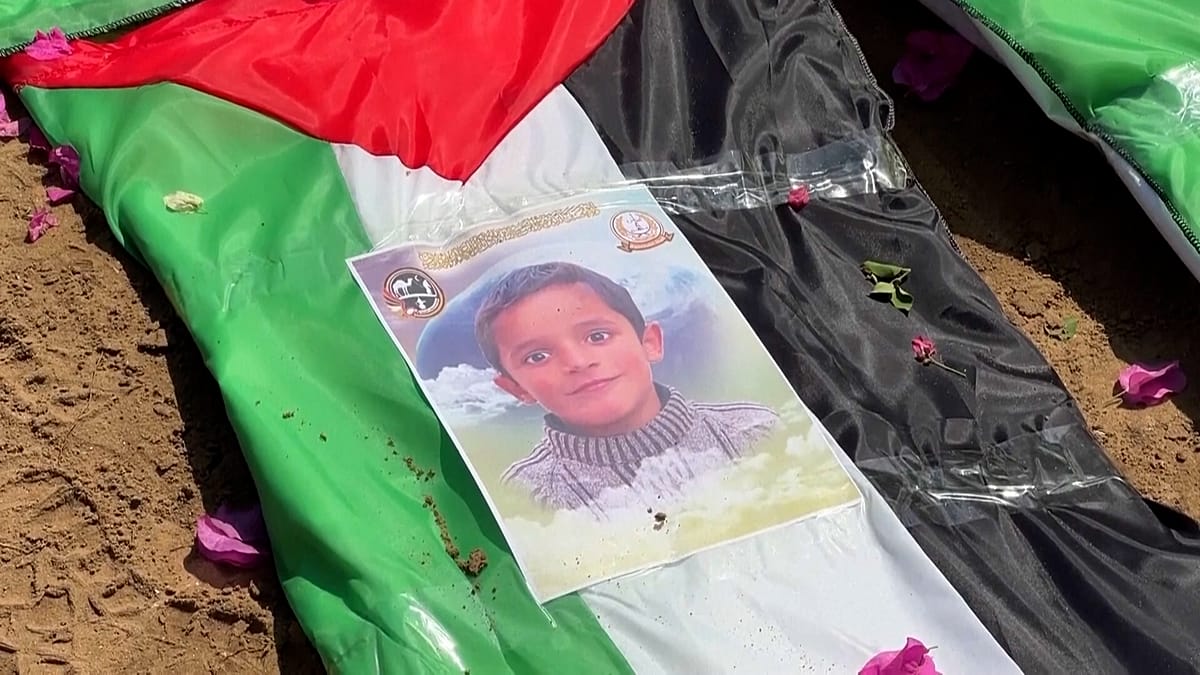
Gaza witnessed a mass funeral on [date] as crews recovered 112 bodies from the site of an air strike that occurred in 2023. The recovery operation, which has been ongoing for weeks, has brought a somber closure to some families, but many victims are still unaccounted for, believed to be trapped under the debris.
The air strike, which devastated a residential area, has become a symbol of the conflict's toll on civilians. Local authorities and humanitarian workers have been working tirelessly to identify the remains, using DNA testing and personal belongings to match them with families. The mass funeral, attended by hundreds, was a collective moment of grief for a community that has endured immense loss.
Recovery efforts and ongoing search
Rescue teams, equipped with heavy machinery and sniffer dogs, have been sifting through the rubble for months. According to Gaza's health ministry, the death toll from the 2023 strike is expected to rise as more bodies are uncovered. The site has become a grim landmark, drawing international attention to the humanitarian crisis in the region.
"Every body we recover is a life that mattered, a family that deserves closure," said a local rescue worker, who asked not to be named due to the sensitivity of the situation. "But the scale of destruction is overwhelming, and we fear many more are still buried."
The recovery operation has been hampered by a lack of resources and ongoing security concerns. Despite these challenges, crews continue their painstaking work, often in dangerous conditions. The international community has been urged to provide more support for the recovery and identification efforts.
For many families, the wait for news is agonizing. "I have been coming here every day, hoping to find my brother," said a woman at the funeral, her voice breaking. "The uncertainty is unbearable."
The mass funeral was held in a cemetery on the outskirts of Gaza City, where rows of freshly dug graves awaited the victims. Religious leaders led prayers, and mourners paid their respects, many clutching photographs of their loved ones. The ceremony was a stark reminder of the human cost of the conflict, which has displaced thousands and left deep scars on the community.
As the recovery efforts continue, the focus remains on providing closure to the families and ensuring that the victims are remembered. The tragedy has also reignited calls for accountability and a renewed push for a ceasefire, as the region grapples with the aftermath of years of violence.
While the immediate focus is on the victims and their families, the broader implications of the strike resonate beyond Gaza. The conflict has drawn in regional and international actors, with European nations closely monitoring the situation. The European Union has repeatedly called for restraint and a return to diplomatic negotiations, while also providing humanitarian aid to the affected populations.
In a related development, the EU has recently channeled €1.4 billion from frozen Russian assets to Ukraine following deadly strikes there, highlighting the bloc's commitment to addressing conflict-related crises. Meanwhile, other parts of Europe face their own challenges, such as Greek crews racing to contain a wildfire near Athens before winds return, and overnight Russian strikes killing 15 in Kyiv, sparking large fires.
As Gaza mourns, the international community is reminded of the urgent need for a sustainable peace that respects the rights and dignity of all people. The mass funeral is not just an end, but a call to action—to prevent such tragedies from recurring and to bring hope to a region that has known too much sorrow.