Russian strikes across Ukraine over the past 24 hours have killed at least 11 people and injured dozens more, local authorities reported on Saturday. The attacks, which included missile and drone barrages, targeted residential neighborhoods and critical infrastructure in several regions, from the northeastern border with Russia to the southern front lines.
In Kharkiv Oblast, Governor Oleh Syniehubov said five people were killed and 15 wounded in Russian attacks. The strikes hit the villages of Lypkuvativka, Velykyi Burluk, and Slatyne, as well as the cities of Kharkiv and Balakliia. Russian forces fired two missiles, five guided aerial bombs, and nearly 60 drones at targets across the region, according to the governor.
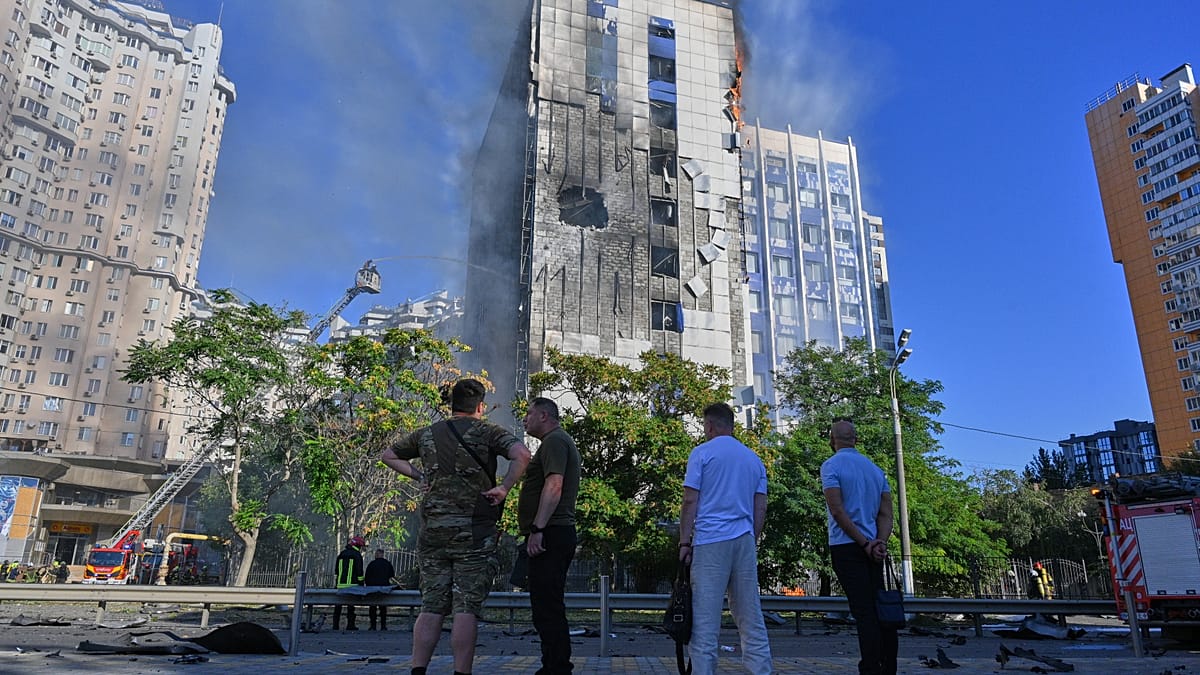
Further south, in the Kherson region, two people were killed and five injured following a wave of drone attacks, air strikes, and artillery shelling. The Kherson Regional State Administration said in a statement on Telegram that Russian troops struck critical and social infrastructure, as well as residential areas, damaging five high-rise buildings and seven private homes. Administrative buildings, stores, a cell tower, a utility building, a gas pipeline, and private vehicles were also destroyed.
In the eastern Donetsk region, one person was killed in the city of Kramatorsk, while 13 others were injured across the wider area. In Sumy Oblast in the north, a 51-year-old man and a 45-year-old woman died after a guided missile hit a high-rise building, and a 32-year-old man was killed in a drone attack. The Sumy Regional Military Administration reported 50 attacks on 21 settlements from Friday to Saturday morning, involving drones, mortars, artillery, and guided aerial bombs.
Overnight missile and drone barrage
The Ukrainian air force reported that Russian forces had fired two “Zircon” hypersonic missiles from the Kursk region, as well as 174 drones, at Ukraine overnight. “According to preliminary data, as of 8 am, air defence forces shot down or neutralized 141 targets,” the air force said, adding that strikes had been recorded at 15 locations.
The attacks come amid heightened tensions across the region, with Poland’s Armed Forces Operational Command saying on Saturday that it had activated air defence measures and scrambled military aircraft in response to the Russian drone attacks on Ukraine. “These measures are preventive in nature and are aimed at securing and protecting Polish airspace, especially in regions adjacent to threatened areas,” the command said in a statement.
The Polish response underscores the broader European security implications of the ongoing conflict. As Poland scrambles jets and NATO allies remain on alert, the war continues to spill beyond Ukraine’s borders. Earlier this week, Polish Prime Minister Donald Tusk warned of the risk of Russian drone strikes on Poland and other NATO members, reflecting growing concerns in Warsaw and other capitals.
The latest casualties add to a mounting toll as Russia intensifies its aerial campaign. In recent days, Russian strikes hit Kyiv and Kharkiv, while Ukrainian drones have targeted a plant in Russia’s Kursk region. The cross-border nature of the conflict has also raised questions about the effectiveness of air defence systems and the need for continued Western support.
European leaders have been grappling with how to respond to Russian hybrid threats, including energy sabotage and disinformation. French President Emmanuel Macron has called for a G7 energy summit to counter Russian hybrid threats, while the EU is working on a €90bn loan package for Ukraine, with Canada moving to join the initiative. The attacks underscore the urgency of these efforts, as Ukrainian cities and villages bear the brunt of Russia’s relentless bombardment.
As the war enters another winter, the human cost continues to mount. The strikes on Kharkiv, Kherson, Donetsk, and Sumy are a stark reminder of the daily toll on civilians, with residential buildings, schools, and hospitals frequently hit. International condemnation has been swift, but the fighting shows no sign of abating.