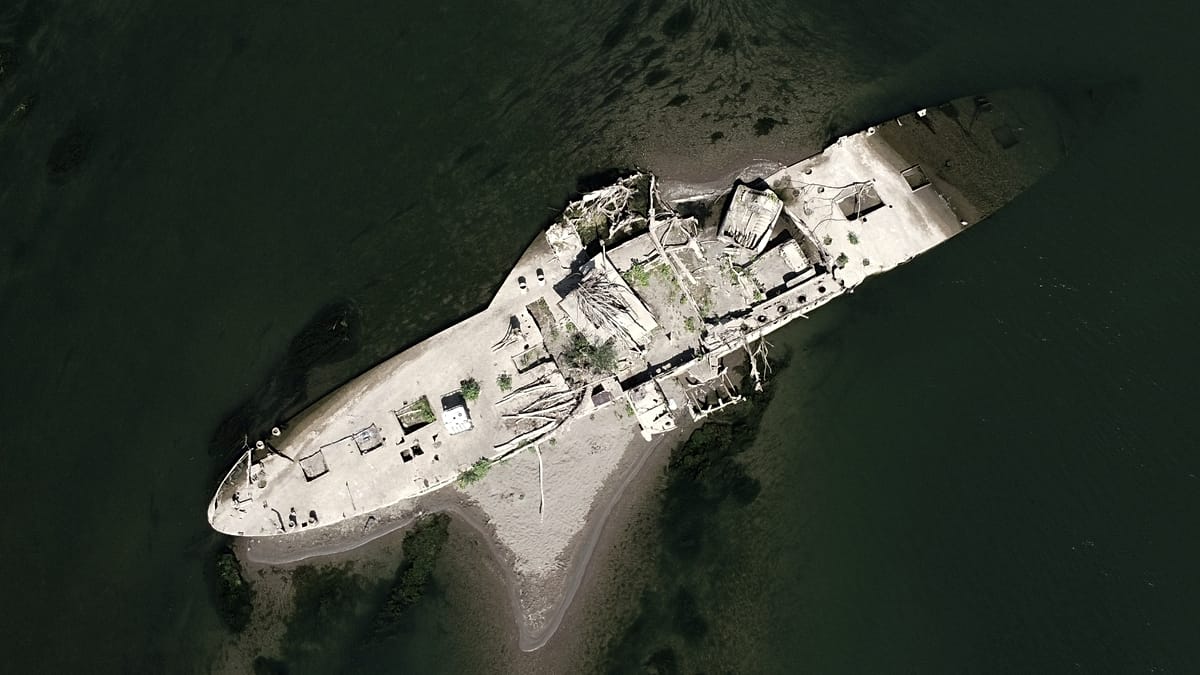
Prolonged heat and drought across the Balkans have taken a toll on agriculture and water supplies, but they have also brought an unexpected piece of history to the surface. In Serbia, the receding waters of the Sava River near the town of Sremska Mitrovica have revealed the rusting hull of a steam-powered tugboat, believed to date back to the early 20th century and likely sunk during World War II.
The vessel, which locals say was a common sight on the river in its heyday, has been lying on the riverbed for decades. Its emergence is a direct result of the exceptionally low water levels caused by a summer of relentless heat and minimal rainfall. The Sava, which flows through Slovenia, Croatia, Bosnia and Herzegovina, and Serbia before joining the Danube in Belgrade, has seen its banks retreat dramatically in recent weeks.
A relic of wartime Europe
Historians and local enthusiasts have flocked to the site to examine the wreck. Preliminary assessments suggest the tugboat was built in the early 1900s and may have been scuttled or sunk during the chaotic final years of World War II, when retreating forces often destroyed vessels to prevent their capture. The exact circumstances of its sinking remain unclear, but the discovery adds to a growing list of wartime relics exposed by Europe's drought.
Similar finds have been made along the Danube, where low water levels have revealed the remains of German warships and even soldiers' identity tags. The Danube's low waters have turned the river into an unintended archaeological site, drawing attention to the human cost of the conflict that reshaped the continent.
Drought's wider impact
The drought that exposed the tugboat is part of a broader pattern affecting much of Europe. In Hungary, lakes and rivers have hit record lows, while France has seen its potato harvest suffer its worst slump in decades. The severe drought in Hungary has forced authorities to restrict water use and has raised concerns about the long-term viability of river transport.
In Serbia, the situation is equally dire. The government has declared a state of emergency in several municipalities, and farmers are struggling to irrigate crops. The Sava's low levels have also disrupted navigation, with barges carrying goods and fuel forced to reduce their loads. The exposed tugboat is a stark reminder of how climate change is altering the continent's waterways.
Preserving the past
Local authorities are now considering how to preserve the tugboat, which could become a tourist attraction or a memorial. Some experts argue that the vessel should be left in place, as it has become part of the river's ecosystem, while others suggest raising it and placing it in a museum. The decision will likely depend on the condition of the hull and the resources available.
For now, the tugboat remains a silent witness to history, visible only because of the extreme conditions that have gripped the region. As climate scientists warn that such droughts may become more frequent, the Sava may continue to yield secrets from its depths, offering a glimpse into a past that was long submerged.
The discovery also echoes other drought-related events across the continent, such as the wildfires in Serbia's Deliblatska Peščara that forced evacuations earlier this summer. The heat and dryness have created a tinderbox in many areas, compounding the challenges faced by emergency services.
As Europe grapples with the consequences of a changing climate, the emergence of this WWII-era tugboat serves as both a historical curiosity and a warning. The rivers that once served as highways for trade and war are now shrinking, revealing the scars of the past while raising urgent questions about the future.