Washington's diplomatic missions across the Middle East have moved to a higher state of alert following a fresh wave of Houthi attacks on Saudi Arabia. In coordinated advisories, embassies in Bahrain, Israel, Iraq, Jordan, Kuwait, Lebanon, Oman, Qatar, Saudi Arabia, and the United Arab Emirates urged American citizens to maintain "heightened vigilance," noting that the "military conflict has the potential to escalate rapidly" and that the security environment remained "complex."
The alerts specifically warned of "potential flight cancellations, airspace closures, and travel disruptions," a practical concern for the thousands of Western expatriates and business travellers who transit the Gulf daily. The warnings come as the Iran-aligned Houthi movement, which controls much of northern Yemen, intensifies its campaign against the kingdom.
Missiles over Riyadh
On Saturday, the Houthis announced they had launched two operations using ballistic and cruise missiles as well as drones. The first, they claimed, targeted "sensitive sites in the Saudi capital, Riyadh," while the second struck Aramco facilities in the Red Sea port of Yanbu. A spokesperson for the Saudi-led coalition—formed in 2015 to restore Yemen's internationally recognised government—confirmed that Royal Saudi Air Defense Forces intercepted a ballistic missile headed for Riyadh. The coalition also reported attacks on the cities of Baish, Taif, Farasan, and Yanbu.
Residents of Riyadh reported seeing flames and smoke near King Khalid International Airport, with social media footage showing a column of smoke rising from the vicinity. Flight tracking service Flightradar24 noted "major problems" at the airport, though it remained operational. The incident underscores the vulnerability of critical infrastructure in the region, a theme that resonates far beyond the Arabian Peninsula.
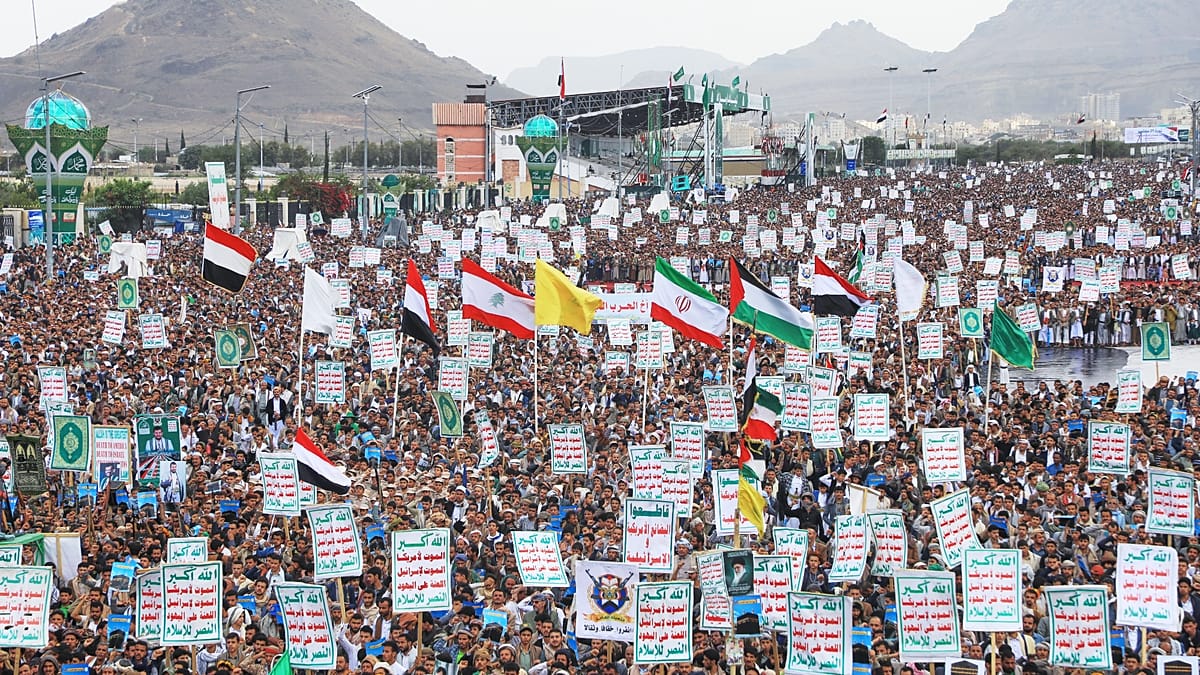
The Houthis, who declared a naval blockade of Saudi Arabia in July, have steadily expanded their reach, targeting both Saudi cities and commercial shipping in the Red Sea. Their advances this month—seizing vast stretches of Yemeni territory in a lightning offensive—have further destabilised a region already on edge.
European stakes
For Europe, the conflict is not a distant sideshow. The Red Sea is a vital artery for European energy imports and trade, and any disruption to Saudi oil infrastructure has immediate knock-on effects. As a recent analysis highlighted, attacks on Saudi pipelines expose the continent's fragile oil security. European capitals are watching nervously as they scramble to shield motorists from tightening oil markets. The Houthi campaign, coupled with broader Gulf tensions, threatens to push energy prices higher just as the EU seeks to diversify its supplies.
The United Nations has voiced growing alarm. In a press briefing on Friday, Stéphane Dujarric, spokesperson for the UN Secretary-General, detailed the human cost: "Since hostilities escalated in August, the Human Rights office has documented 110 civilian casualties in 31 incidents, including 28 killed and 82 injured, across Taizz, Al Hudaydah and Marib. Insecurity and access constraints continue to hamper our ability to verify the actual number as you can imagine is very likely higher."
Dujarric appealed for restraint: "We urge all parties, and those with influence over them, to act immediately to de-escalate, protect civilians and facilitate humanitarian access. Every effort must be made to prevent further loss of life."
The Houthi attacks come amid a broader regional realignment. The US has been seeking to reduce its military footprint in the Middle East, while European nations, including France and Italy, maintain naval presences in the region. The EU's recent security blueprint under Ursula von der Leyen has emphasised the need for greater strategic autonomy, but the bloc remains dependent on Gulf energy and stability.
For now, the immediate concern is the safety of civilians and the integrity of air travel. The US advisories are a stark reminder that the conflict is not confined to Yemen's borders. As the Houthis show no sign of backing down, and Saudi Arabia continues its retaliatory strikes, the risk of a wider conflagration—one that could draw in regional powers and disrupt global energy markets—remains dangerously high.
European travellers and businesses should heed the warnings. The situation is fluid, and as the US embassies note, it could "escalate rapidly." For a continent already grappling with energy security and geopolitical uncertainty, the Houthi campaign is another unwelcome reminder of how interconnected—and fragile—our world has become.